• 3 min de lectura
• 3 min de lectura
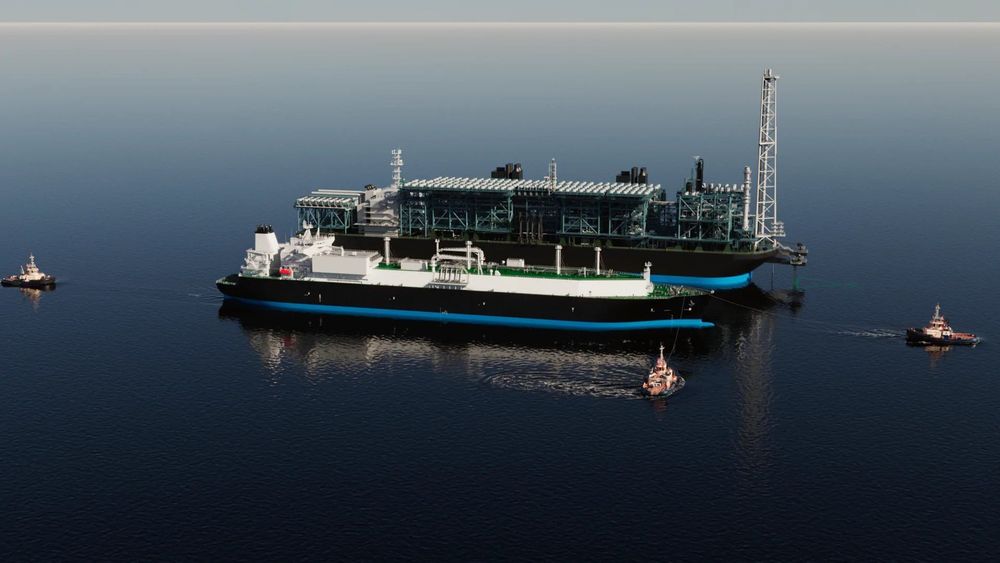
The Trump administration is touting a major milestone for U.S. energy exports after Delfin Midstream reached a final investment decision (FID) on the first phase of its offshore liquefied natural gas export project off the coast of Louisiana.
The U.S. Department of Transportation's Maritime Administration (MARAD) on Tuesday highlighted the $5 billion investment in Delfin FLNG 1, which is expected to become the first floating LNG export facility operating in U.S. waters when it enters service later this decade.
The announcement follows Delfin's June 3 disclosure that a consortium led by Global Infrastructure Partners, now part of BlackRock, had approved funding for the project's first floating liquefaction vessel. Existing investors include Mitsui O.S.K. Lines (MOL), Vitol, and Diameter Capital Partners.
For the Trump administration, the investment represents one of the first major projects to move forward under its push to expand LNG exports after reversing the Biden administration's pause on new export approvals.
"Every cargo that leaves this port is a commitment the United States is able to keep," MARAD Administrator Stephen Carmel said during remarks marking the milestone.
The project is also a notable achievement for MARAD, which oversees the licensing of offshore energy terminals under the Deepwater Port Act. Delfin's deepwater port license, issued in 2025, was the first ever granted for an offshore LNG export facility in U.S. history.
Unlike traditional LNG export terminals built along the coast, Delfin's development will utilize floating liquefaction vessels connected to existing offshore pipeline infrastructure roughly 41 nautical miles off Cameron Parish, Louisiana. Supporters say the approach reduces onshore construction requirements while allowing U.S. producers to bring additional export capacity online more quickly.
Delfin FLNG 1 is designed to export up to 4.4 million metric tons of LNG annually. The company ultimately plans to deploy three floating LNG vessels with combined liquefaction capacity of 13.2 million metric tons per year, equivalent to approximately 1.8 billion cubic feet of natural gas per day.
The first vessel is being built by South Korea's Samsung Heavy Industries and is expected to begin production in 2030.
The project has secured long-term LNG sales agreements with major buyers including Centrica, Germany's SEFE, Vitol, and Gunvor, providing commercial backing for the initial phase.
Transportation Secretary Sean Duffy has made accelerating deepwater port approvals a priority since announcing earlier this year that MARAD would streamline the federal licensing process. The agency has since issued two deepwater port licenses, including the approval for Texas GulfLink, a proposed offshore crude oil export terminal off the Texas coast.
The Delfin project has been under development for more than a decade and is widely viewed as a test case for whether floating LNG technology—already deployed in regions such as Australia, Africa, and Southeast Asia—can be successfully adapted to large-scale U.S. natural gas exports.
Fuente: GCAPTAIN_NEWS