• 2 min de lectura
• 2 min de lectura
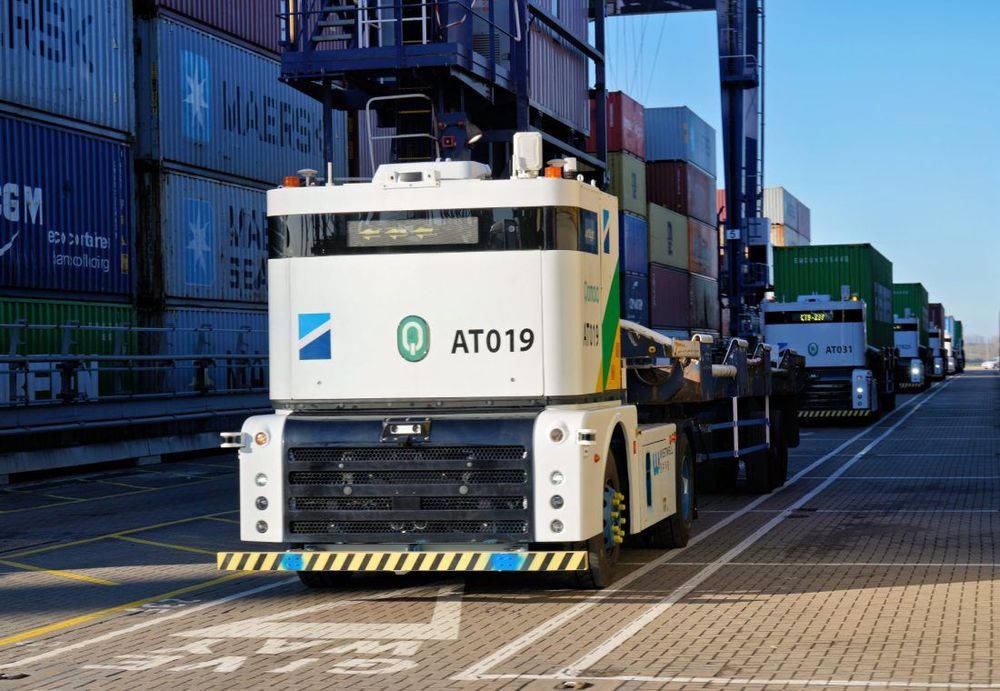
The Port of Felixstowe, owned by Hutchison Ports, confirmed the order for the third batch of autonomous trucks from Shanghai Westwell Technology Co. Ltd. (Westwell), increasing its fleet to 100 vehicles.
This latest order builds on the introduction of autonomous trucks into Felixstowe's mixed-traffic container terminal operations, the first deployment of its kind in Europe.
Regarding the order, Clemence Cheng, Executive Director of Hutchison Ports and CEO of the Port of Felixstowe, stated that "this new investment represents another significant step in the Port of Felixstowe's journey towards smarter, safer, and more sustainable port operations."
"Expanding our autonomous truck fleet to 100 vehicles demonstrates our confidence in the technology and the benefits it is already bringing to our customers, employees, and operations. Felixstowe has pioneered the safe, large-scale deployment of autonomous trucks in a real port environment, and this latest order reinforces our commitment to innovation, operational resilience, and our goal of achieving carbon neutrality for Scope 1 and 2 emissions by 2035," the executive indicated.
The new trucks will incorporate advanced sensor and perception technology, including 128-line LiDAR and state-of-the-art camera systems, allowing for a more detailed understanding of the operational environment and facilitating safe, precise, and reliable operation in a busy, mixed-traffic terminal. In the previous announcement regarding the autonomous truck order, similar technology was referenced as part of the next phase of the port's operational development.
The investment also includes a second automated battery swap station. The existing station at the port allows autonomous trucks to swap discharged batteries for fully charged units in just five or six minutes, helping to maximize fleet availability and minimize operational disruptions.
This capability is supported by the port's private 5G network, one of the largest private industrial 5G deployments in the UK. The network provides fast, secure, and highly reliable communications, enabling real-time connectivity between autonomous trucks, control systems, and terminal infrastructure, ensuring safe, efficient, and responsive operations for both autonomous and conventional equipment.
The autonomous trucks are fully electric. Since April 2023, the port has only used electricity certified as coming from renewable sources, and the fleet expansion will contribute to the port's goal of achieving net-zero Scope 1 and 2 emissions by 2035.
Source: Portal Portuario