• 3 min de lectura
• 3 min de lectura
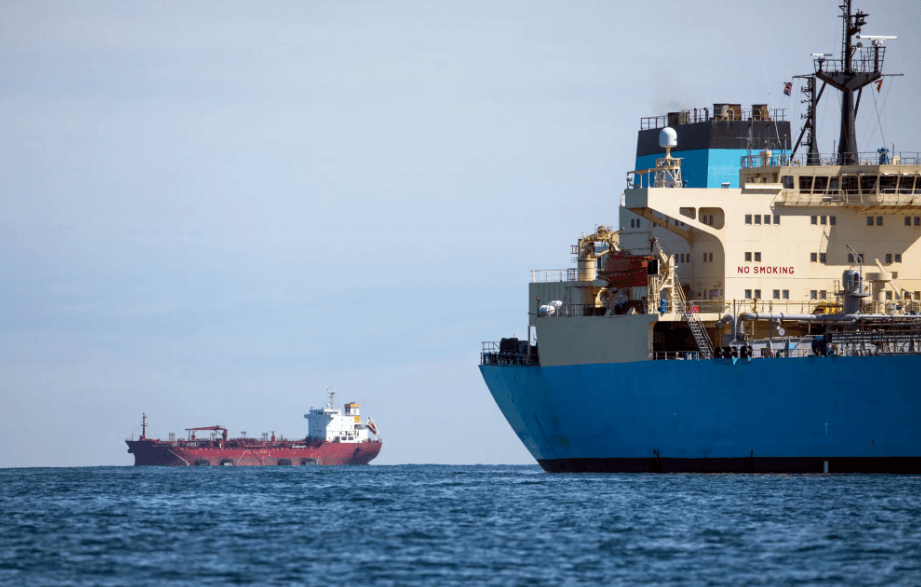
Producers in the Middle East are continuing with oil and liquefied natural gas (LNG) shipments despite recent aggressions against vessels in the Strait of Hormuz and new clashes between the United States and Iran in recent days, according to shipping data.
Energy maritime transport in the waterway slowed after attacks on a container ship on Thursday, June 25, and an oil tanker on Saturday, June 27, triggered mutual retaliatory measures, jeopardizing the provisional peace agreement between Washington and Iran.
Meanwhile, on Sunday, June 28, a U.S. official stated that both countries had agreed to cease recent hostilities and resume talks on the strategically important waterway.
Recently, a fourth Very Large Crude Carrier (VLCC), capable of transporting 2 million barrels of oil, was seen loading at Saudi Arabia's Ras Tanura Terminal on Monday, June 29, according to LSEG data.
Three other VLCCs have loaded oil and sailed with their transponders turned off to reduce the risk of attack while navigating the Persian Gulf.
One of these supertankers reappeared on Monday, June 29, after exiting the strait, and is now heading to Japan, data showed.
Two VLCCs entered the strait on Sunday, June 28, and have docked at a terminal in the United Arab Emirates to load crude, LSEG data revealed.
Two oil product tankers and a smaller fuel tanker sailed through the strait on Monday, June 29, with overall traffic lower than last week.
Previous traffic reached its highest level since the conflict began in late February, with 29 tankers sailing on June 24, an analysis by Kpler showed.
Shipping activity remains far from pre-conflict levels, when 125 daily departures were recorded.
Despite everything, Iran is accelerating oil loadings after Washington suspended sanctions on its exports for 60 days.
Tehran simultaneously loaded at its two export terminals on Kharg Island on Saturday, June 27, for the first time in almost a week, according to maritime intelligence firm Windward.
Kpler data showed that the Iranian-flagged VLCCs Dan and Hawk entered the strait on Saturday, June 27, and that approximately 8 million barrels of Emirati and Qatari crude departed on four VLCCs over the weekend.
The increase in exports from the Persian Gulf, a region that accounts for a third of the world's oil supply, is causing a drop in global crude prices; Brent fell 10.6% last week, marking its third consecutive weekly decline, although the weekend attacks pushed prices up on Monday, June 29.
"If one assumes the stance that the strait will continue with an irregular reopening in the coming weeks and months, then crude oil is reasonably priced right now, with a downward trend," said Tony Sycamore, market analyst at IG.
"However, if one considers that there is a risk that one of these weekend outbreaks of tension could cause the conflict to reignite more broadly, then crude oil prices at this level are simply too cheap," he added.