• 3 min de lectura
• 3 min de lectura
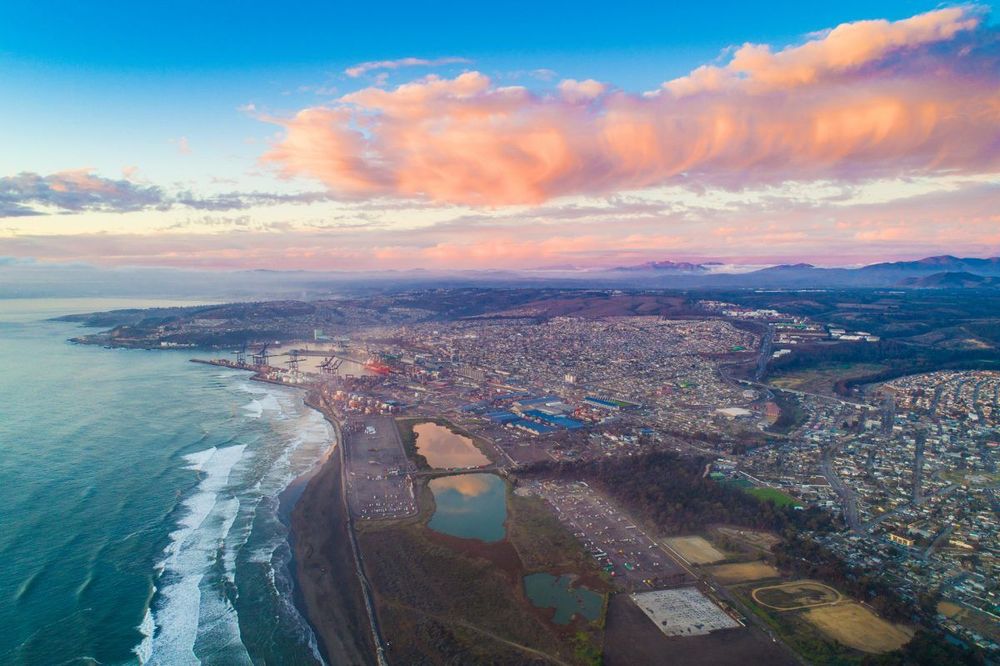
Greenpeace South Pacific, the legal entity through which the transnational environmental organization operates in the region, filed an appeal before the Committee of Ministers against the Environmental Qualification Resolution (RCA) for the San Antonio Outer Port project.
The action seeks to reverse the approval granted on June 9, 2026, by the Evaluation Commission (Coeva) of the Valparaíso Region and demands, instead, the rejection of the initiative promoted by the San Antonio Port Company (EPSA).
According to the environmental organization, the environmental authority committed a flaw by not considering or adequately responding to the observations raised during the Citizen Participation (PAC) stages.
Greenpeace argues that the formal responses provided by the Environmental Assessment Service (SEA) in the RCA lack technical support. In the NGO's opinion, the authority dismissed without sufficient rigor the occurrence of severe, permanent, and irreversible impacts on the coastline and local ecosystems.
Among the main shortcomings reported in the appeal is the lack of evaluation of how the works will affect sediment transport on beaches located north of the port, such as Ensenada de Cartagena. The project foresees the construction of a breakwater that would intercept the flow of sand from the Maipo River and littoral drift.
The NGO points out that the authority dismissed an increase in erosion in Cartagena on the premise that this area depends on local dynamics, but without having carried out a sedimentary balance study or a cell delimitation that technically proves such independence.
A second critical aspect of the appeal questions the robustness of the analyses regarding the San Antonio Canyon. It is reported that the project owner's own studies admitted to having deactivated the digital simulation within this submarine trench due to software limitations, which prevented evaluating the hydrodynamics of the area and clearly defining the expected sedimentation rate.
Regarding water resources, the appeal questions that the baseline does not adequately reflect seasonal variability or the impacts of prolonged drought. Greenpeace argues that the owner's analyses were based on indirect estimates and static models that do not allow for predicting the monthly behavior of surface and groundwater.
As for the Ojos de Mar Urban Wetland, Greenpeace acknowledges that the original port design was modified to avoid filling the Llolleo Lagoons, but warns that the authority did not evaluate the chain reaction that the work will cause.
In the NGO's opinion, the study of how the barrier of the new port facility and the change in the coastline will alter the entry and exit of saltwater, which could transform the hydrological balance and biodiversity of the lagoons, was omitted.
For Greenpeace, the deficiencies in the file prevent ruling out impacts on beach sedimentation, the San Antonio Canyon, the water basin, and the Ojos de Mar Wetland. They argue that the megaproject does not meet the legal conditions to maintain its favorable qualification.
After receiving a favorable recommendation from the SEA, it should be remembered, the Coeva of the Valparaíso Region unanimously approved the San Antonio Outer Port project, granting it its respective RCA. However, with the opening of the administrative challenge phase before the Committee of Ministers, the initiative faces conflicting positions.
Thus, while EPSA seeks to make certain technical and operational requirements more flexible, a social and community alliance demands the reversal of the approval. The counterpart—through various appeals—denounces omissions in public participation, harm to local quality of life, and a disregard for ecological damage in the Maipo River estuary and the Ojos de Mar Wetland.