• 4 min de lectura
• 4 min de lectura
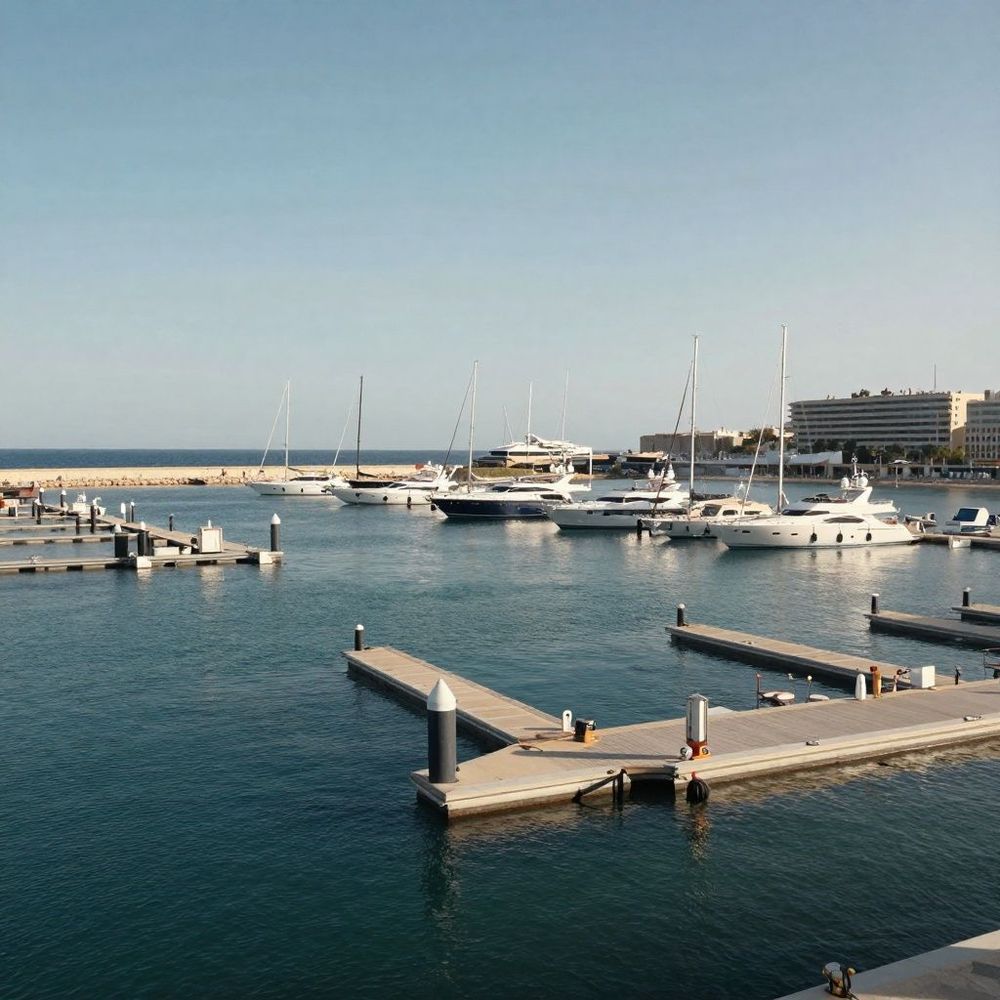
Palma de Mallorca, May 29, 2026. The President of the Port Authority of Santander (APS), César Díaz, highlighted this morning, during his speech at the XX Symposium on Marinas held in Palma de Mallorca, that the comprehensive redevelopment project for Marina del Cantábrico, which arises as a result of the end of this concession after fifty years of activity, constitutes "a unique opportunity" to "give a new impulse to the area."
"It is a strategic enclave for sports nautical activities in the arc of Santander Bay, and its role is to become the engine of the region's blue economy, as outlined in the APS Strategic Plan 2030," he added.
The operation, which involves an investment of forty million euros, is divided into three different concessions that are currently in a bidding process, with the deadline for submitting bids ending on August 17th.
The objective of the proposed concessions, which will last thirty years, is, as Díaz explained, to plan for the continuity of the existing moorings in the dock, to generate new berths "that meet the growing demand, paying special attention to transit vessels" and to offer specialized services to the nautical sector in general, with the installation of a new dry dock.
The area known as Marina Zona Este substantially coincides with the current one and aims to ensure the continuity of the nautical-sports activity currently housed in the Marina del Cantábrico dock.
According to the head of the APS, it seeks to revitalize the area through the modernization and improvement of infrastructures and the activation of the space in which it is integrated, "creating a meeting place and development of sports and leisure activities linked to the sea."
The minimum capacity established by the concession conditions is 850 moorings and includes the current Captaincy building, which must be open to the public and can be used for offices, toilets, showers, restaurants, or the development of social and cultural activities.
For its part, Marina Zona Oeste was created with the aim of responding to the growing demand for mooring berths, offering between 600 and 700 new ones, and accommodating larger vessels.
It includes a plot where uses and services associated with nautical-sports exploitation can be developed, as well as a fuel service station to meet the needs of vessels and, optionally, vehicles.
As for the Dry Dock, it is a concession intended for the construction, adaptation, and exploitation of an installation for hauling out, maintenance, repair, construction, and dry-docking of vessels, which will allow meeting the growing demand for these services linked to nautical activity.
This operation will involve, as Díaz confirmed, the relocation of the dry dock activity from the Maliaño dock, "freeing up this vital space for citizen use and contributing very significantly to the transformation of said environment, through a project in which we are working in coordination with the City Council through the Permanent Port-City Forum."
Related to this forum and the good practices between both institutions, the president of the APS took advantage of his intervention to also point out that the maritime-port front of Santander is "a paradigmatic example" since, over four decades, it has been revaluing its heritage by transforming it into cultural facilities "that contribute to boosting activity and strengthening a cultural scene that is attractive to both residents and visitors."
Furthermore, he congratulated ASMAR and the Port Authority of the Balearic Islands for organizing this congress, which he described as "necessary" to "share experiences and reflect on the future challenges of marinas, and their evolution towards more sustainable and competitive facilities."
In the expert panel of this Symposium, Díaz shared space with the president of the Port Authority of Almería, Rosario Soto, and with the presidents of the Port Authorities of Bilbao and the Balearic Islands, Iván Jiménez and Javier Sanz, respectively.
Source: puerto de santandert