• 3 min de lectura
• 3 min de lectura
The number of shipping containers lost at sea more than doubled in 2025 as several high-profile maritime casualties and severe weather events pushed losses above recent averages, according to the World Shipping Council's latest Containers Lost at Sea Report.
The industry estimates that 1,478 containers were lost overboard last year out of approximately 280 million containers transported worldwide—equivalent to just 0.0005% of global container movements. That's up from 576 containers lost in 2024, though still well below historical highs.
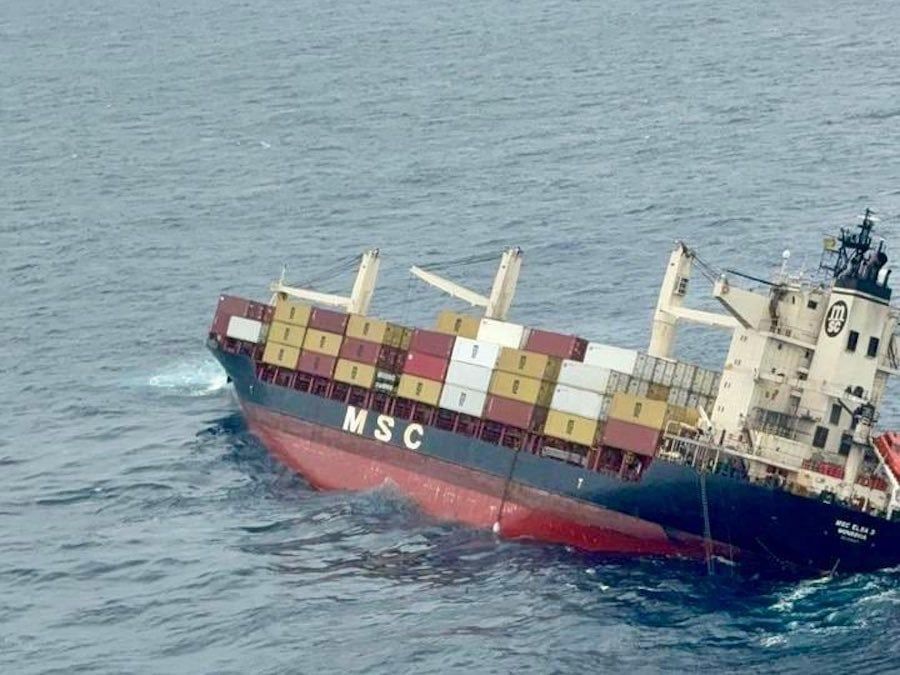
The increase was driven largely by a handful of major incidents rather than a broad deterioration in container shipping safety. One vessel casualty alone, the Liberian-flagged MSC ELSA 3 which sank off the coast of Kochi, India, accounted for 640 lost containers, representing about 43% of all containers lost worldwide during the year.
"The 2025 data again demonstrates that annual totals are heavily influenced by isolated high-impact events," the report said, noting that several additional incidents involving severe weather, cargo shifts and stack collapses also contributed to the annual total.
The World Shipping Council cited challenging weather in the North Atlantic and North Pacific, including warmer ocean temperatures and more unpredictable storm conditions, as major contributors to container losses. Fire-related incidents, cargo shifts in heavy seas, groundings and total vessel losses also played a role.
Despite the increase, the report highlights that container losses remain rare compared to the scale of global trade. The highest annual total recorded by the WSC remains 2013, when 5,578 containers were lost, while the lowest came in 2023 with just 221 containers.
One encouraging trend was container recovery. Carriers reported recovering 128 containers in 2025, the highest figure since the WSC began tracking recoveries in 2023, reflecting improved coordination between shipping companies and coastal authorities following incidents.
The report comes as new international reporting rules took effect on January 1, 2026. Amendments to the International Convention for the Safety of Life at Sea (SOLAS) now require all containers lost or observed drifting at sea to be reported, while flag states must also report annual container losses to the International Maritime Organization. The WSC, which has advocated for mandatory reporting for years, said the new rules should improve global data quality and maritime safety.
The council also highlighted several ongoing initiatives aimed at reducing container losses, including its AI-powered Cargo Safety Program launched last year to identify misdeclared dangerous goods before loading. The report follows the release earlier this week of new Allianz data showing a container ship fire now occurs approximately every 17 days, with misdeclared dangerous goods remaining a leading cause of shipboard fires.
Other industry efforts include updates to the Code of Practice for Packing of Cargo Transport Units (CTU Code), recommendations from the TopTier Joint Industry Project on preventing container losses, and new International Maritime Dangerous Goods (IMDG) Code requirements requiring all charcoal shipments to be treated as dangerous goods.
The WSC's annual survey is based on data submitted by member companies representing approximately 90% of global container vessel capacity, with the figures extrapolated to estimate industry-wide losses. While mandatory IMO reporting is now in force, the organization said it plans to continue publishing its annual report to maintain consistency and transparency.
Fuente: GCAPTAIN_NEWS