• 3 min de lectura
• 3 min de lectura
CMA CGM showed an acceleration in its capacity increase during the first half of this year, according to analyses by the consultancy Alphaliner, which showed that it has displaced Mediterranean Shipping Company in receiving new vessels.
According to the consultancy, in the first six months of the year, the French shipping company added 235,500 TEU to its fleet, equivalent to a 5.7% increase, surpassing the 205,000 TEU incorporated by MSC in the same period.
With a total capacity of 4.39 million TEU, CMA CGM has significantly reduced the distance with Maersk, which operates 4.73 million TEU, and is well on its way to surpassing the Danish company as the second largest global operator in 2027.
Rodolphe Saadé, Chairman and CEO of CMA CGM, publicly reiterated his intention to achieve that position before the end of that year.
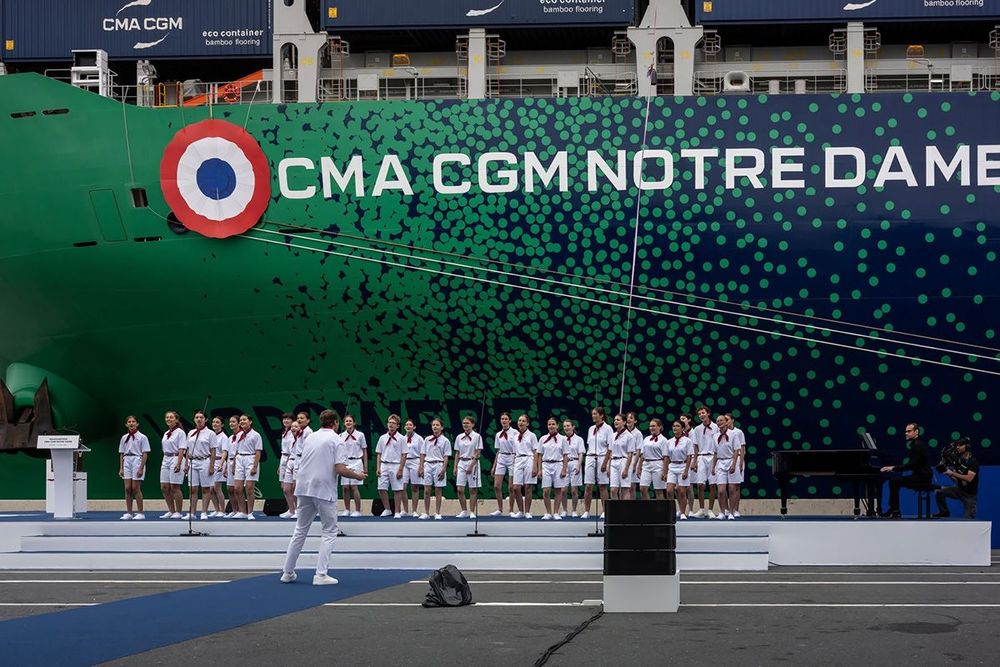
CMA CGM's momentum is explained by the delivery of 12 new vessels, including the LNG-powered CMA CGM Notre Dame, of 24,212 TEU, which became the new flagship of the French fleet. Also joining the fleet were the CMA CGM Grand Palais, of 23,872 TEU, also LNG-powered, and ten methanol-fueled units with capacities between 13,130 and 16,180 TEU.
Alphaliner further detailed that the average increase in the global liner fleet reached 2% in the first half, while the average for the top ten operators reached 2.7%.
MSC registered an advance of 2.9%, just above the average, well below the 831,400 TEU it added in 2025, when it widely led the expansion of the top-10 with an annual increase of 11.7%. On this occasion, its growth was mainly supported by the delivery of eight new vessels, including the MSC Claire, of 16,169 TEU, and seven units of between 10,300 and 11,480 TEU.
Yang Ming was the operator that grew the most in percentage terms, with an advance of 5.8% thanks to the incorporation of the 15,600 TEU vessels YM Willpower, YM Worthiness, and YM Wayfinder, which contributed an additional 41,200 TEU.
Maersk, for its part, maintained a moderate pace of expansion, although slightly below the top-10 average. The Danish shipping company added 116,500 TEU, equivalent to a growth of 2.5%.
Its capacity increase was due to the delivery of the new methanol-powered vessels Maersk Barcelona, of 17,480 TEU, Tangier Maersk, of 9,016 TEU, two sister units, and three vessels of 5,915 TEU. In addition, it chartered two 13,092 TEU vessels from Seaspan, which had operated for Cosco Shipping Lines since 2011.
The Cosco group registered limited growth of 1.3%, as the loss of two neo-panamax vessels operating as Cosco Glory and Cosco Pride partially offset the delivery of the OOCL Wisdom, of 24,168 TEU.
ONE showed a performance superior to the market average, with an increase of 84,500 TEU, equivalent to 4.1%. The Japanese company based in Singapore received four new vessels of the S series, of 13,832 TEU, in addition to the chartered vessel Navios Cyan, of 7,883 TEU.
Among the top ten operators, only Hapag-Lloyd and ZIM reduced capacity in the first half, albeit marginally. The German company, meanwhile, decreased by 0.2%, while ZIM reduced its fleet by 1.6%.