• 3 min de lectura
• 3 min de lectura
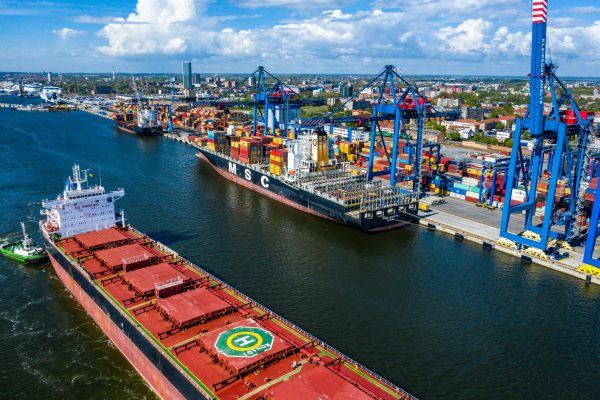
The Port of Klaipeda recorded a positive performance in the first half of the year, where containerized cargo, the port's most important cargo segment, continued to be the main growth driver. This is because it handled 7.2 million tons of containerized cargo, 12% more than in the same period of 2025.
Regarding container volume, the port started the second half of the year with almost 700,000 TEUs handled.
This increase was due to the rapid growth of sea transit volume, the launch of a new long-distance shipping service connecting Klaipeda directly with Asia, the continuous expansion of short-sea shipping services, and long-term investments in port infrastructure.
The Ro-Ro segment also continued to grow. Cargo transported by ferries reached 3.4 million tons, representing a 4% increase.
The number of cargo vehicles transported through the Port of Klaipeda also increased, reaching 173,505 units, compared to 169,280 in the same period last year. Growth was particularly notable in ferry services connecting Klaipeda with Germany and Sweden.
Petroleum products also showed positive results. The port handled 2.3 million tons, an increase of 12%, or 242,000 tons, compared to the first half of last year, mainly driven by a higher volume of exports.
One of the largest growths was recorded in the liquefied natural gas (LNG) segment. Processing volume reached 1.6 million tons, 37% more than the previous year. This increase was due to stable regional demand and the growing flow of cargo destined for Ukraine.
Fertilizer handling also continued to recover, reaching 894,000 tons, representing a 14% increase, or 112,000 tons, compared to the previous year.
Vegetable oils and fats recorded one of the fastest growth rates among all cargo groups, increasing by 58% to reach 294,000 tons. Meanwhile, scrap volume remained stable at 565,000 tons, matching last year's performance.
The shipbuilding and repair industry remains an important factor for the port's resilience and competitiveness. During the first half of the year, 46 vessels were repaired or modernized in the Port of Klaipeda, representing a 31% increase compared to the same period last year.
Grain exports reached 1.3 million tons during the first half of the year, a figure slightly lower than the 1.4 million tons of the previous year. The volume of wood cargo also decreased by 153,000 tons compared to the same period in 2025.
The construction materials and minerals segment also recorded lower volumes, with 943,000 tons handled, compared to over a million tons in the first half of last year.
Klaipeda was the only Baltic port that increased its cargo volume during the first half of the year. As a result, it increased its market share among Baltic ports to 44%. If the national market is considered, instead of individual ports, Lithuania—summing the results of the Port of Klaipeda and the Butinge oil terminal—now accounts for over 54% of the total cargo handling market of the Baltic States.