• 2 min de lectura
• 2 min de lectura
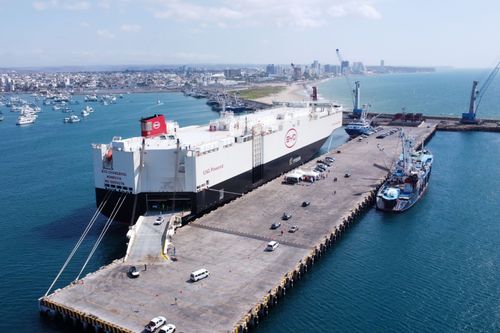
After losing an amparo lawsuit in the second instance, the operator of the Port of Chancay, Cosco Shipping, managed to get the Constitutional Court (TC) to admit an appeal with which it seeks to prevent Ositran from exercising supervision and oversight functions over the terminal, arguing that it is privately owned infrastructure.
August 3, 2026.- The dispute between the Chinese-Peruvian consortium Cosco Shipping Ports Chancay Perú and the Supervisory Body for Investment in Public Use Transport Infrastructure (Ositran) over the Port of Chancay reached the Constitutional Court (TC), after the Second Constitutional Chamber of Lima – through a resolution issued on July 24 – granted the Constitutional Grievance Appeal (RAC), a tool that the company's lawyer, Ramiro Portocarrero, had anticipated would be used to overturn the ruling in the Superior Court.
This stems from an amparo lawsuit filed by Cosco Shipping against Ositran and the Presidency of the Council of Ministers (PCM) to prevent the public entity from exercising its functions of regulation, supervision, and oversight over the Port of Chancay.
As it is privately owned infrastructure, the company argued that the regulatory body did not have the authority to supervise its operations, except in relation to the determination of tariffs when port regulations so establish. However, Ositran's president, Verónica Zambrano, argued that Chancay is not an exclusive-use port, but rather for public use.
It should be remembered that, in the first instance, the Judiciary declared the lawsuit founded through a sentence issued on January 29 of the current year. However, the situation changed in the second instance with Resolution of View N.° 13, of June 17, 2026, when the Second Constitutional Chamber revoked that ruling, declaring the amparo lawsuit inadmissible.
Therefore, the company appealed to the TC. Now Cosco has requested that the highest interpreter of the Constitution annul the appeal judgment, considering that it violated its right to due motivation of judicial resolutions, and order the issuance of a new pronouncement, thus resolving the merits of the case.