• 3 min de lectura
• 3 min de lectura
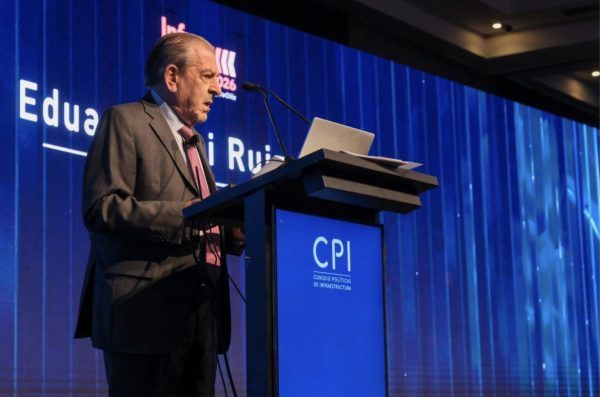
The former president of Chile and president of the Infrastructure Policy Council (CPI), Eduardo Frei Ruiz-Tagle, highlighted the importance of private investment in the country's port terminals, in the context of the upcoming process to renew port facility concessions, five of which expire in 2030.
Within the framework of the InfraChile 2026 seminar, organized by the CPI, the former president told PortalPortuario that "the most important thing is that between the end of this year and the next two or three years, the concessions expire. The 12 ports were conceded in their time, the Law has never changed and they remain in the same status. Even the Government has talked about having a single company, instead of having 12, but that is a Government decision to avoid bureaucracy."
"The port issue will be resolved in these two or three years, because the fundamental criterion is that port investments are made by private entities if there are no state resources. This will be decided when the tenders come, because then it will have to be clarified that large investments in ports are made through concessions," Frei Ruiz-Tagle elaborated.
During his speech to the audience present at the seminar, the head of the CPI remarked that "public-private partnership is the key to the development of countries. Today there is no alternative in the world but this, public and private sectors united, facing the great challenges and making new investments."
In his address, the former president of the Republic also emphasized the importance of railways as a means of mobilizing goods to and from ports, highlighting the small number of maritime facilities that have railway access.
"How many Chilean ports do we have with railway access for cargo? Or do we continue with ports like San Antonio, which wants to be a major port and has 3,000 trucks a day totally collapsed and congested roads. There are few ports in Chile that have railways, perhaps Mejillones; they don't function without it," Frei stated.
Likewise, the president of the Infrastructure Policy Council mentioned the works of the future Bioceanic Corridor that will connect the Atlantic maritime terminals in Brazil with those of the Pacific in northern Chile, passing through Paraguay and Argentina. The head of the entity commented on the integration of Bolivia and Uruguay into the interoceanic road logistics axis.
"I come from Brazil, there we were looking at the new construction of the Bioceanic route that starts in Santos and ends in Chilean ports, a work that began more than 20 years ago and will be inaugurated at the end of this year. 3,400 kilometers to unite Santos with Paraguay, Argentina, Chile and, in addition, Bolivia and Uruguay will then come, which are the ones missing to access the Asia Pacific markets," said Eduardo Frei Ruiz-Tagle.