• 3 min de lectura
• 3 min de lectura
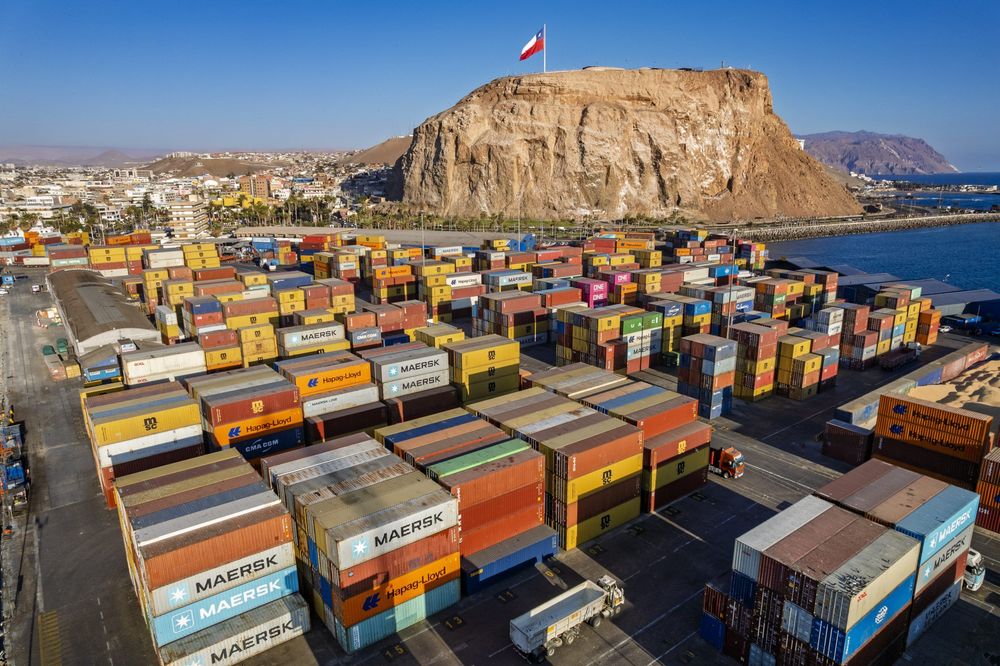
The Port Services Administration-Bolivia (ASP-B) implemented an exceptional plan to accelerate the departure of cargo to extra-port facilities. The initiative seeks to mitigate operational congestion at the Terminal Puerto Arica (TPA), caused by road blockades that paralyzed Bolivian logistics for more than 50 days and, with this, guarantee the fluidity of the landlocked country's foreign trade.
The measure would allow decongesting the maritime station by mobilizing cargo to authorized warehouses where deconsolidation, entry, and subsequent withdrawal of merchandise operations are carried out, depending on the operational availability of each destination facility.
In line with the information provided by the Bolivian public entity, to access the benefit, Foreign Trade Operators (OCE) or cargo-owning companies must submit a formal request addressed to the ASP-B administration in the Port of Arica.
The process requires the submission of the Cargo Transfer Request Letter, the Power of Attorney granted to the authorized representative with the corresponding photocopy, photocopies of the legal representative's verification (NIT and identity card, passport, or RUN), and the validated Port Dispatch (DP) for the destination facility.
Likewise, the company must formally commit in writing to withdraw all containers from the extra-port facility within the deadline set in its declaration.
In the submitted documents, it is mandatory to precisely record the operational identification data of the cargo. This required information includes the Bill of Lading (B/L) number, the DPU-B Reception number, the identification of each container, and the specific name of the destination extra-port facility.
Furthermore, the designated attorney is fully authorized to carry out actions and procedures before the ASP-B, the National Customs of Bolivia (AN), the National Customs Service of Chile, and the extra-port operator itself.
Once the supporting documentation is received, the ASP-B manages the authorization through a written note to the AN in Arica. The customs entity evaluates the file and issues the corresponding Administrative Resolution that authorizes the transfer of the cargo, or rejects the request in case of non-compliance with applicable regulations or required conditions.
Regarding financial logistics, the regulation establishes a division of the economic expenses generated by the operation. The costs associated with storage and other services in the extra-port facility are assumed and paid directly by the consignee of the merchandise.
Meanwhile, the loading services in the Port of Arica and the ASP-B agency services are paid through the Port Dispatch (DP), in accordance with administrative procedures and the current tariff.
It is worth mentioning that Terminal Puerto Arica reinforced its operation and adjusted internal processes due to the logistical contingency that affected Bolivia for more than 50 days. This allowed an average of 1,282 weekly dispatches in the last three weeks, 40% above the usual under normal conditions.