• 3 min de lectura
• 3 min de lectura
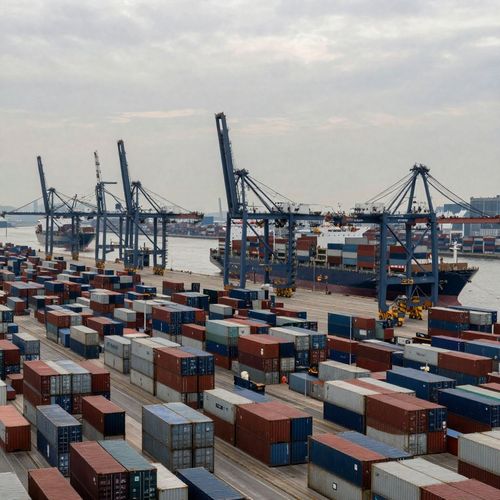
The Port of Barcelona closed the first half of 2026 with a positive evolution in its main movement indicators, handling 35.87 million tons, 3.5% more than in the same period of the previous year.
Container traffic reached 1.93 million TEUs (+4.3%), with a notable increase in imports, which grew by 6.7% to 380,000 TEUs. Liquid bulk (+4.1%), solid bulk (+5.1%), vehicles (+6.5%), and Ro-Ro traffic (+2.8%) also registered increases.
In terms of passengers, the Port recorded 2.44 million movements (+4.1%). Ferry traffic showed positive growth, with an increase of 2.5%, and cruise visitors to the city increased by 3.4%, slightly exceeding one million people.
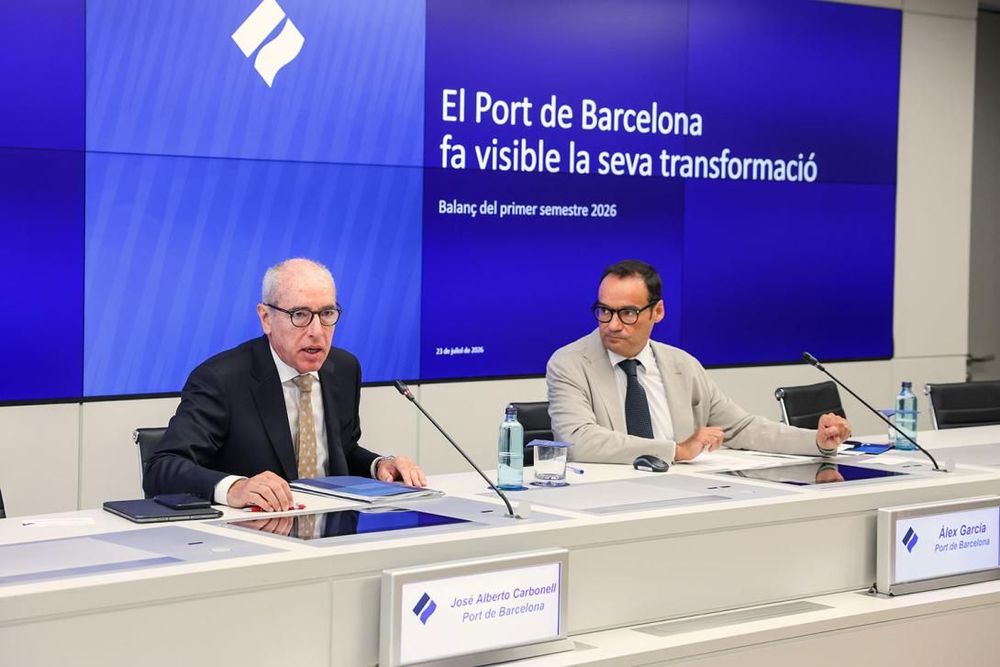
During the presentation of the results, the Director General of the Port of Barcelona, Àlex Garcia, highlighted the port's capacity to maintain positive growth in an international context marked by geopolitical tensions and commercial uncertainty.
In this regard, he stated that "the traffic figures for the first half of the year demonstrate the Port of Barcelona's adaptability and resilience in an increasingly complex global environment. The diversification of markets, clients, and logistics chains allows us to continue growing and maintain the competitiveness of our business fabric."
One of the factors that has influenced traffic evolution in recent months has been the situation in the Persian Gulf and tensions related to the Strait of Hormuz. Despite this context, the Port maintained growth in liquid bulk thanks to the diversification of supply origins and the good performance of chemical products and biofuels.
The other major growth driver for the semester was vehicle movement. With 386,000 units moved, the Port of Barcelona registered an increase of 6.5%, driven especially by imports, which grew by 36%. This result further strengthens Barcelona as one of the main entry points to Southern Europe for Asian manufacturers, especially for electrified vehicles. Currently, 45% of imported vehicles are hybrids, plug-in hybrids, or electric, while China accounts for 50% of all imports.
The transformation of the Port of Barcelona is also advancing in the energy sector. During the semester, progress was made in the electrification of docks, with the awarding of the OPS system for the future Cruise Terminal G and the electrical infrastructure needed to power the terminals at the Adossat dock.
In parallel, the Port continues to strengthen its role as a leading energy hub in the Mediterranean by promoting alternative fuels and zero-emission mobility. In this regard, the construction and operation of the Port's first hydrogen refueling station have been awarded, and one of the first bioethanol supply operations to a container ship was recently carried out.