• 2 min de lectura
• 2 min de lectura
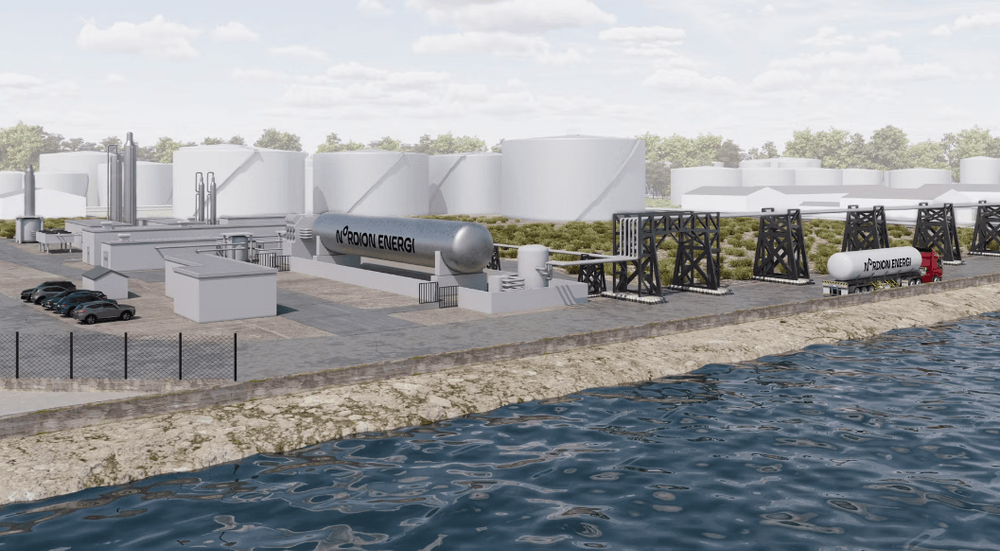
The Port of Gothenburg announced that construction has begun on a liquefied biogas plant, owned by Nordion Energi.
The plant's objective is to enable biogas producers connected to the gas grid to access new markets. By liquefying the gas, it can be transported and used in sectors such as shipping, heavy transport, and industry, even in areas far from the current gas grid.
"Our goal is to drive the gas grid's transition towards 100% renewable gas, and the liquefied biogas plant at the Port of Gothenburg will play a key role in this change. It will also facilitate the transition of shipping, heavy transport, and industries located further away from the gas grid," stated Carolina Wistén, Director of Customers and Gas Network at Nordion Energi.
Biogas is a renewable fuel with a low climate impact and can replace fossil alternatives in various sectors. Interest in liquefied biogas is growing rapidly, especially in the maritime sector, where the demand for sustainable fuels continues to increase.
"For the maritime sector's transition to gain real momentum, the entire value chain needs to be consolidated and function in an integrated manner, something for which the Port of Gothenburg's maritime cluster is recognized. This plant strengthens the port's position in supplying renewable fuels for vessels and will allow liquefied biogas to be offered to the maritime sector on a larger scale," added Therese Jällbrink, Head of Renewable Energies at the Port of Gothenburg.
Producers and users are already present at the port, ready to utilize the liquefaction plant once it is operational. Several shipping companies that regularly call at the port already use biogas to power their vessels. They will be able to increase their use once the plant is completed.
In terms of production, St1 Biokraft is among the companies that have already signed an agreement to secure part of the plant's capacity.
The new plant is expected to be completed in early 2027 and to become operational before the end of the year. Once fully operational, it will have a capacity of approximately 50 tons of liquefied biogas per day.