• 2 min de lectura
• 2 min de lectura
Last updated on 01 Jun, 09:48
Published 01 Jun, 09:48
Table of physical attacks on vessels as of June 1
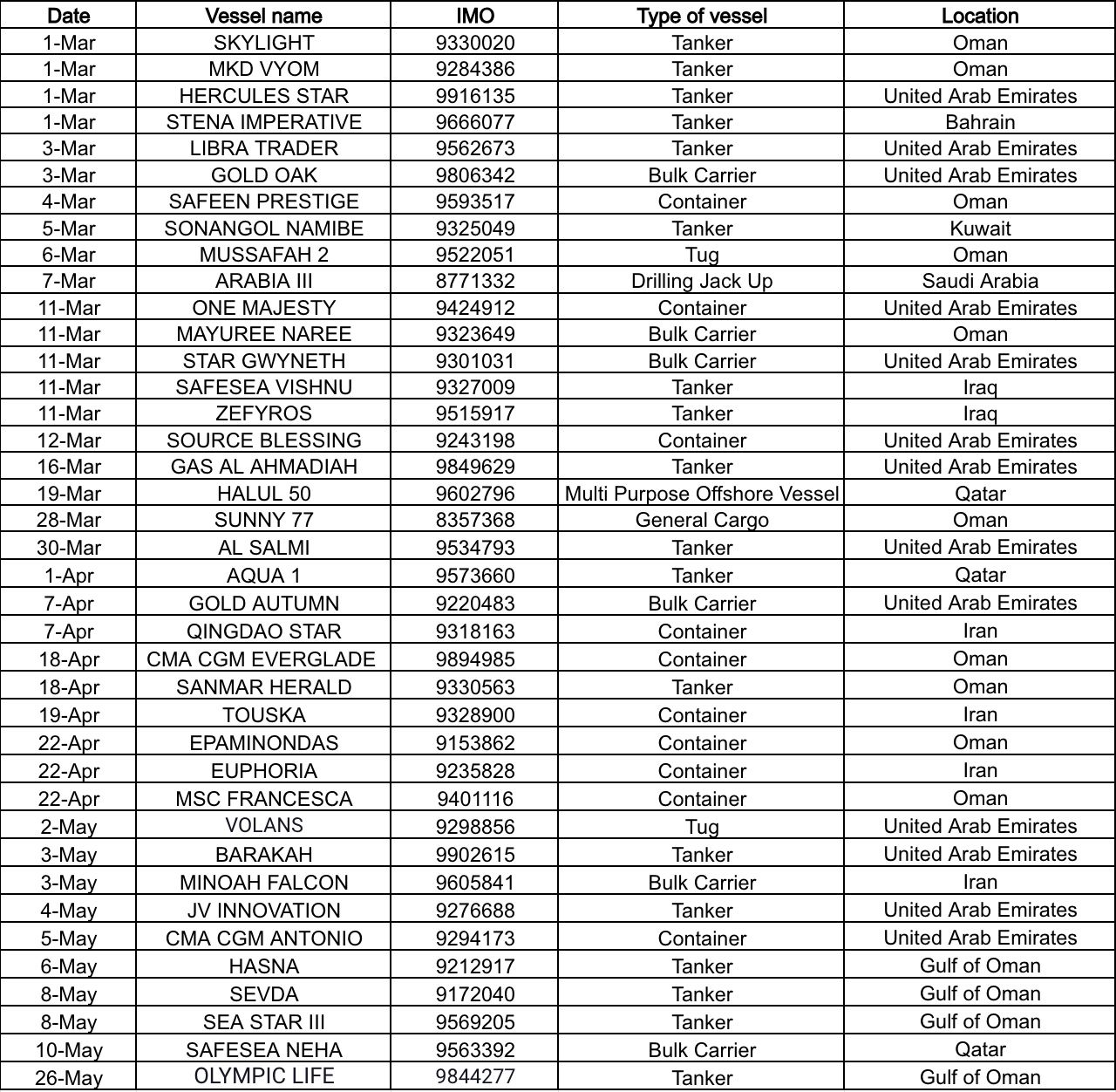
Source: Kpler Risk and Compliance, IMO
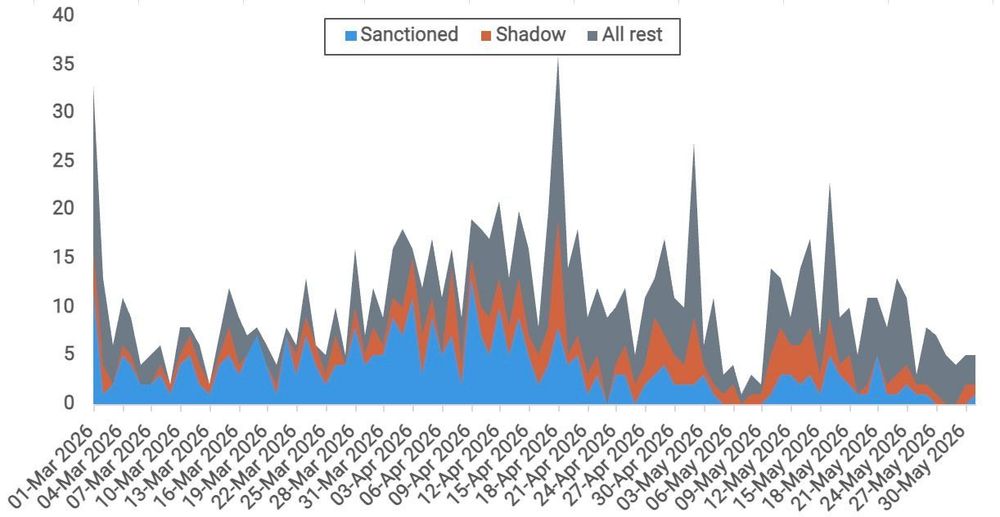
Vessels crossed SOH by risk level as of May 31
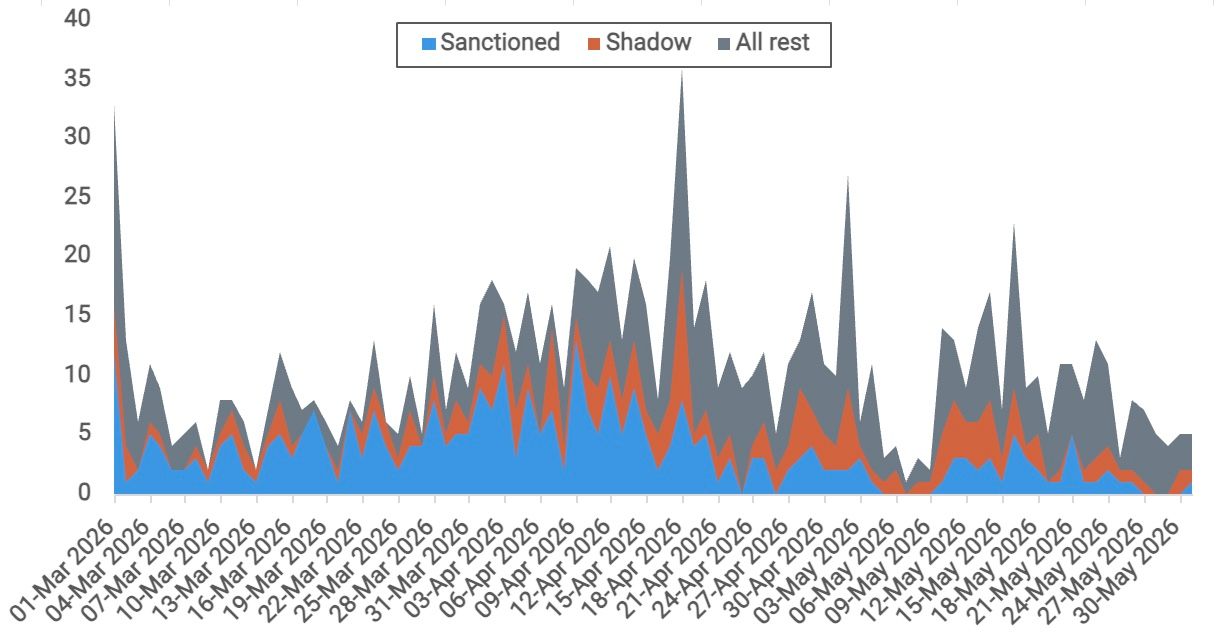
Source: Kpler Risk and Compliance; full traffic data is available including non-commercial vessel tracking from MarineTraffic
Vessels crossed SOH by direction of crossing as of May 31
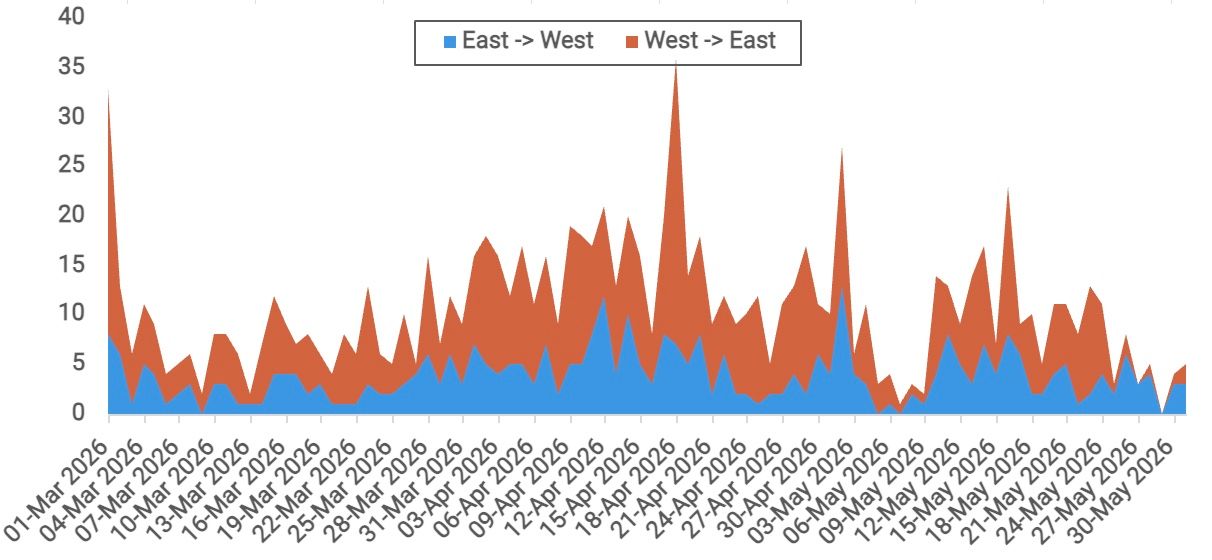
Source: Kpler Risk and Compliance
Confirmed Strait of Hormuz crossings across the monitored zone held at 10 over the weekend, down by 14 from the previous weekend and below the recent weekend-led recovery trend. Shadow and sanctioned vessels accounted for only a small share of activity, while most crossings were low-risk and east-west. The traffic mix was also heavily non-commercial, with only limited commercial participation. Two Iranian-flagged non-commercial vessels crossed, including a container ship and a landing craft.
All weekend crossings used the Iranian Route, which has now been the only observed route for seven consecutive days. This confirms that traffic is still moving through the Strait, but under a narrower and more controlled routing pattern than pre-crisis. No new attacks have been recorded since 26 May, but transit risk remains elevated amid ongoing security threats and the continued absence of a return to IMO-designated routing.
The negotiation track remains unresolved and directly relevant for Hormuz flows as recent US strategy has pushed for tougher language on both Iran's nuclear commitments and the reopening of the Strait, while Iran continues to treat control over Hormuz as a core sovereignty issue rather than a purely maritime-security file. That leaves the Strait embedded in the wider settlement package: ceasefire extension, sanctions pressure, nuclear concessions and navigation rights are now being negotiated together.
All vessel movements cited in this analysis are manually verified daily by Kpler analysts, providing high-confidence classification across sanctioned, shadow and standard fleet activity.
Fuente: marinetraffic_maritimenews