• 3 min de lectura
• 3 min de lectura
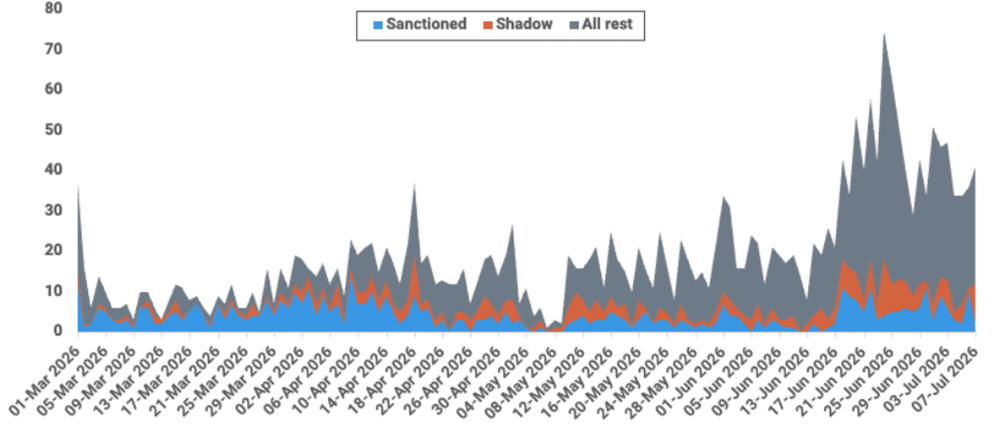
Table of physical attacks on vessels as of July 8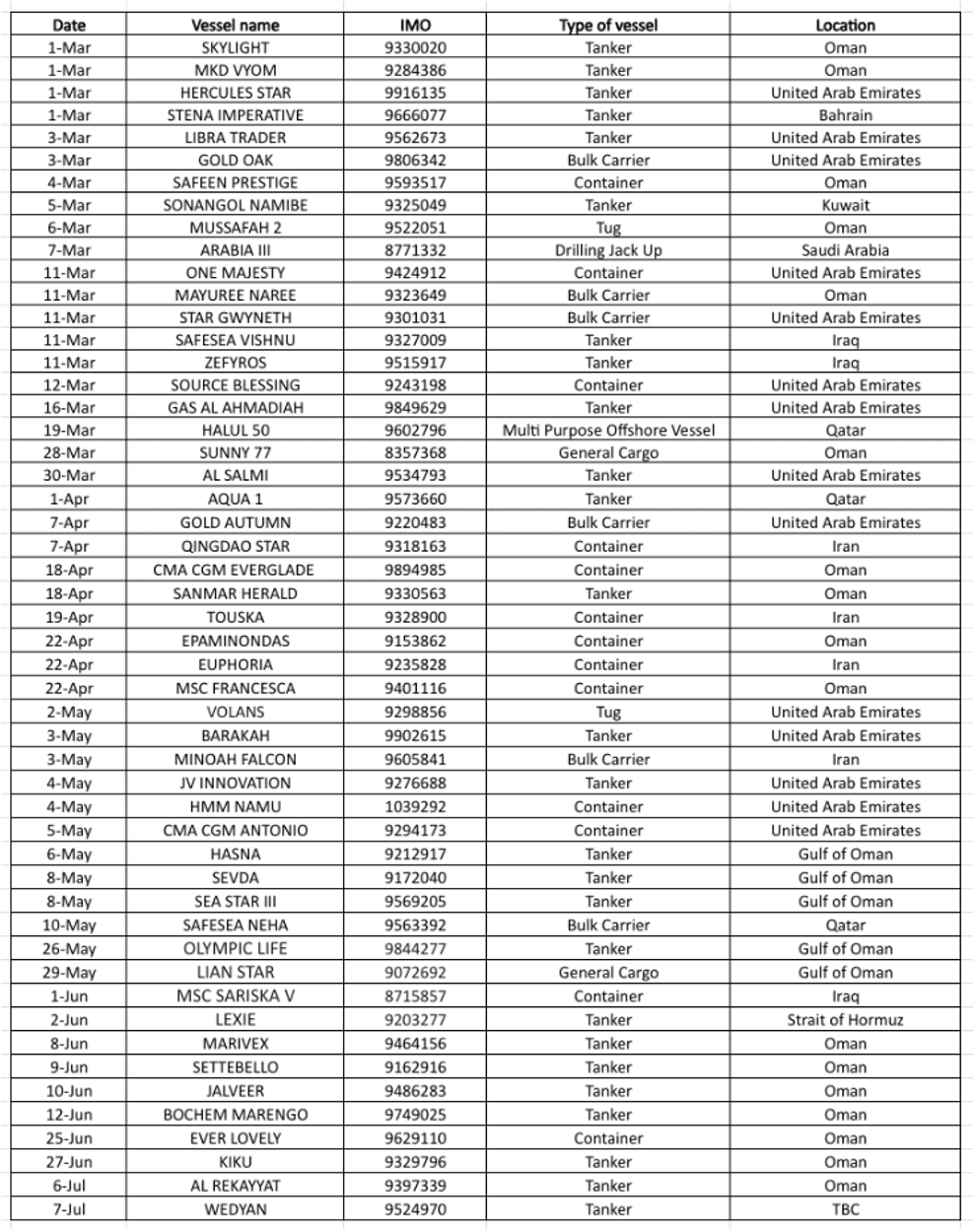 Source: Kpler Risk and Compliance, IMO
Vessels crossed SOH by risk level as of July 7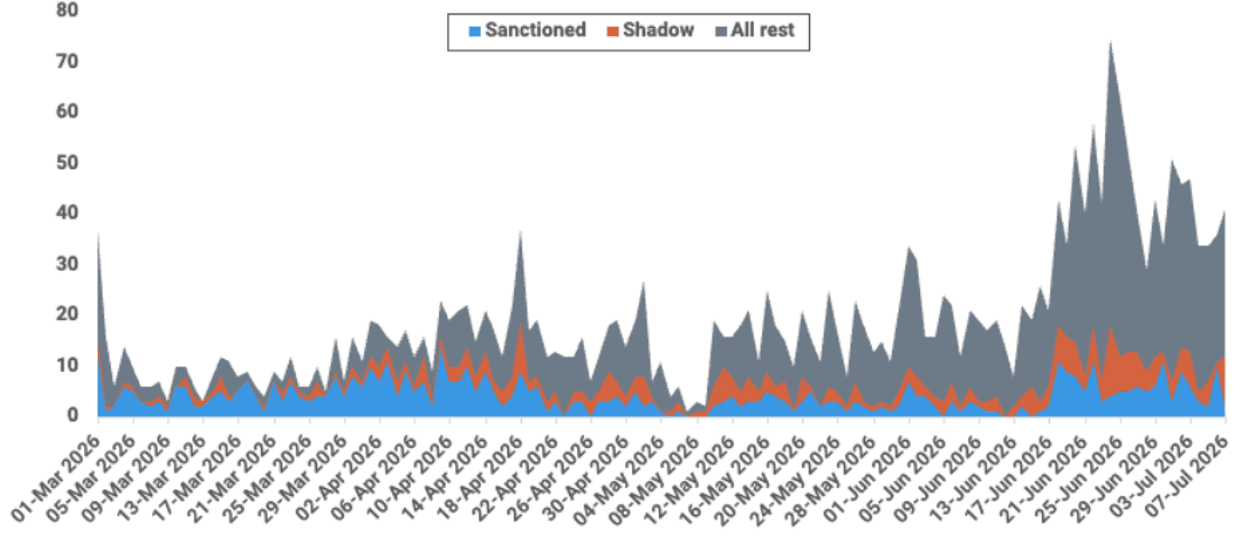 Source: Kpler Risk and Compliance; full traffic data is available including non-commercial vessel tracking from MarineTraffic
Vessels crossed SOH by direction of crossing as of July 7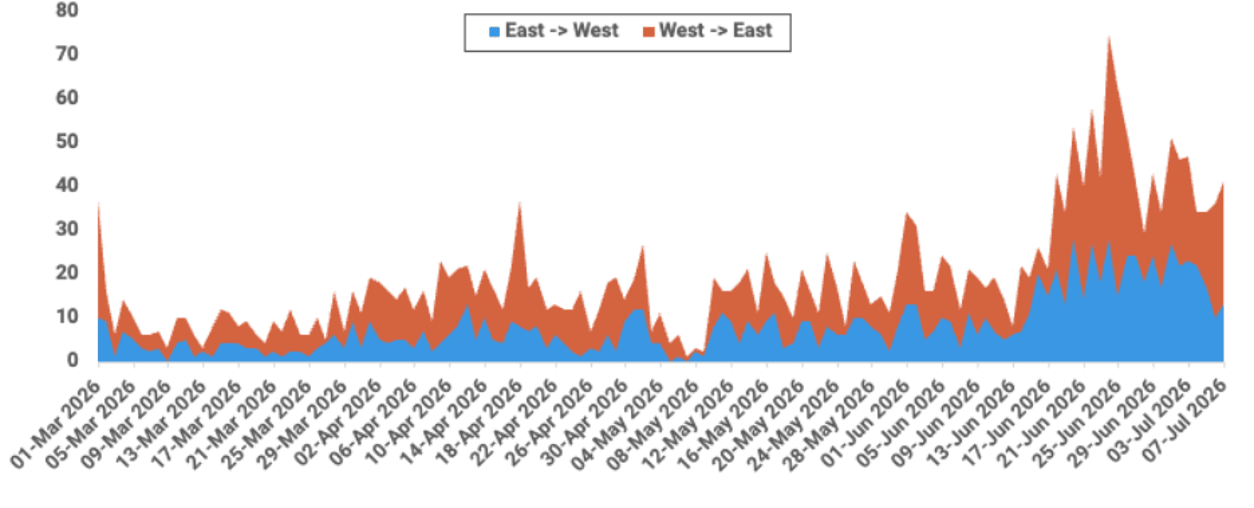 Source: Kpler Risk and Compliance
Confirmed crossings through the monitored Strait of Hormuz zone increased on 7 July, with 41 verified transits, up from 36 the previous day. Commercial west-east movements continued to dominate the flow. Sanctioned vessel activity fell to two crossings, while laden traffic remained material at 19 voyages, mostly carrying crude, dry bulk and LPG. Iranian-flagged activity stood at six crossings.
Routing shifted away from the Iranian Route, which fell to 11 crossings after spiking the previous day. The IMO route rose to 15 crossings and Dark/Unknown movements increased to 13, while the Omani route recorded only two crossings, extending its recent decline. The route mix points to a fragmented operating picture: some operators appear to be rotating back toward IMO routing, but the high share of Dark/Unknown passages and weak Omani-route uptake show confidence remains uneven.
The security backdrop deteriorated after IMO's highlighted incident tracker listed 51 confirmed incidents in the Strait of Hormuz and wider Middle East as of 7 July. The latest entries were Al Rekayyat (IMO 9397339), an LNG tanker damaged off Oman on 6 July, and Wedyan (IMO 9524970), a crude tanker damaged on 7 July at a location yet to be confirmed, likely near Oman. IMO reported damage to both vessels with no pollution recorded, while no injuries were reported aboard Wedyan. These are the first newly confirmed incidents since 27 June and confirm that physical security risks around the Strait remain active, coinciding with the route adjustments observed on 7 July.
The diplomatic and compliance backdrop also weakened as OFAC revoked General License X on 7 July and replaced it with General License X1, converting the previous June 21 authorization for Iranian-origin crude, petroleum and petrochemical transactions into a revocation and wind-down framework. The move followed the latest attacks on commercial vessels near Hormuz and signals a sharp rollback of the sanctions relief that had supported the recent traffic recovery. For operators, the reopening framework is now less commercially supportive and more compliance sensitive. With GLX1 narrowing the authorized window and physical incidents returning, confidence is likely to shift from volume recovery toward intensified risk triage, especially for owners weighing Iranian-linked cargoes, route selection and exposure to future enforcement action.