• 3 min de lectura
• 3 min de lectura
Alberto Undurraga is a former Minister of Public Works and advisor to the Infrastructure Policy Council (CPI).
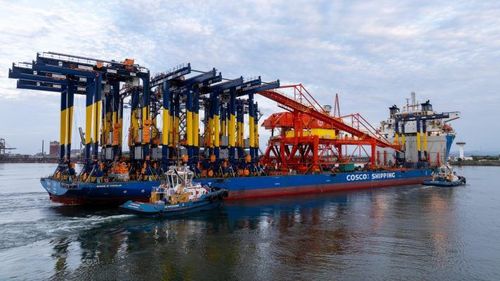
The environmental approval of the San Antonio Outer Port by the Environmental Assessment Commission of the Valparaíso Region this week is great news for Chile. It is not just a relevant permit: it is a decisive milestone for a project that has been maturing for years and that can mark our competitiveness for decades.
Our country needs to grow again, and for that, it needs new infrastructure. San Antonio is already the main port nationwide and the largest logistics gateway for the central macro-zone. An essential part of what we produce, consume, and export enters and leaves through it.
Its expansion is not a local or sectoral project: it is a condition for exports not to lose competitiveness, for imports not to become more expensive, and to respond to larger vessels and increasingly demanding logistics.
The Outer Port - which represents an investment of USD 4.450 million, with public and private participation - is also important because it can be an opportunity for the commune that hosts it to transform into a better city. The challenge is not to choose between port and city, but to do both well.
The new infrastructure must be accompanied by road and rail access, technology, environmental mitigations, public spaces, and a more balanced relationship with San Antonio. A good port not only moves cargo: it organizes territory, generates employment, and opens urban opportunities.
As we can see, this is a state project. Different governments have completed different stages: the realization of engineering studies; the selection of its location; the environmental assessment process (which began in 2020), financing, and tendering. This institutional continuity is valuable.
We have been able to build challenging works: the Malleco Viaduct, the Valparaíso breakwater, and the Bridge over the Chacao Channel, to mention some initiatives. All faced doubts, costs, and resistance, but when the authorities rose to the occasion, they became a heritage for everyone; a pole of development.
With environmental approval achieved, the focus shifts. The responsibility now lies with the authorities of the port company and national authorities - especially those of the Ministry of Transport and Telecommunications - to decisively push the ongoing tender and ensure it comes to a successful conclusion, with competition, transparency, and strategic sense, and then begin construction.
Experience tells us that in initiatives of this magnitude, technical, budgetary, and coordination difficulties always arise. Precisely for this reason, leadership, conviction, and a long-term state vision are required.
San Antonio is more than a port. It is a test of whether Chile can still build a future, grow with better cities, and transform major agreements into concrete works. History has shown that it can.
Source: portalportuario