• 5 min de lectura
• 5 min de lectura
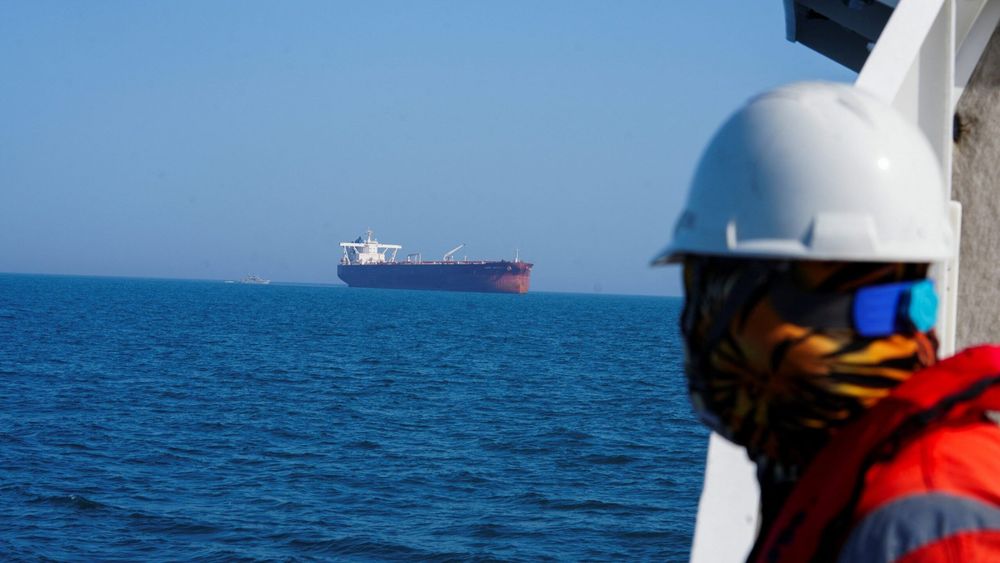
President Donald Trump's claim that a covert U.S. military operation has helped hundreds of commercial ships transit the Strait of Hormuz appears to be corroborated by an advisory earlier this month from INTERTANKO, the world's largest tanker trade association, which describes a tightly controlled nighttime passage system operating along the Omani coast under close coordination with the U.S. Navy.
These new details come one day after Trump publicly disclosed what he described as a previously undisclosed U.S. effort to support commercial shipping through the Strait. In a post on Truth Social Wednesday, the president said he had directed the military last month to carry out a "secret mission" that ultimately enabled more than 200 commercial ships and over 100 million barrels of oil to transit the waterway. Trump said the operation demonstrated that "the UNITED STATES of AMERICA CONTROLS the Strait of Hormuz — NOT Iran."
Speaking from the Oval Office on Thursday, Trump expanded on those claims, saying the Strait had effectively remained "open" for months through a little-known U.S. military operation supporting commercial shipping.
"The strait is open. But the straits have been open for a number of months already and you just didn't know about it," Trump told reporters.
"We've been taking out many ships that nobody knew. Not even the fake news knew it. Quietly at night. We bombed their radar and everything so they couldn't see."
Trump said some nightly transit groups included between 14 and 26 vessels, adding that U.S. forces had helped move commercial traffic through the waterway while degrading Iranian surveillance capabilities.
While the White House has released few operational details, the INTERTANKO advisory from June 5 describes a so-called "Omani route" operating under close coordination with the U.S. Navy. According to the association, vessels provide transit timings and waypoints to U.S. forces before entering the route.
"The US has continued to strike Iranian targets around the SoH which have been used to launch drones or facilitate attacks against shipping," INTERTANKO wrote in the advisory reviewed by gCaptain.
"These US attacks have been in support of shipping within the so-called Omani route."
The advisory goes on to describe a highly unusual transit procedure. "Whilst underway in the route, the US advise that the ship should be blacked out with navigational lights off. Radar use should be minimised and AIS turned off," the association said.
Trump's comments regarding specifics of the operation and transit figures are broadly consistent with numbers cited by INTERTANKO. The advisory said approximately 15 vessels per day were using the route, with movements conducted at night and timed to allow inbound and outbound traffic to pass safely in designated areas.
"Transits take place at night and the numbers are split between both directions," the association wrote, while also stressing that the groups were not formal convoys but coordinated transit windows.
"For the deconfliction between vessels, the timing of the in-bound and out-bound groups (not convoys) enables the ships to pass in wider areas," INTERTANKO wrote.
The guidance offers one of the clearest industry-level descriptions yet of how commercial shipping has continued through Hormuz despite months of conflict between the United States and Iran.
Until now, U.S. officials had repeatedly denied reports that formal escort operations had resumed.
In May, U.S. Central Command stated that Project Freedom had not restarted and that U.S. forces were not escorting merchant vessels through the Strait.
The INTERTANKO advisory does not describe formal naval escorts. However, it does depict a tightly managed transit system operating under military coordination and supported by ongoing U.S. strikes against Iranian positions around the Strait.
The advisory also highlights the navigational challenges created by the arrangement.
According to INTERTANKO, vessels are sailing close to the coastlines of Oman and the UAE while operating with AIS disabled, navigational lights extinguished, and limited radar use. The association said it has raised concerns about navigational safety and proposed route modifications to improve safety margins.
"INTERTANKO has raised concerns over the safety of navigation and suggested amendments to the routes to facilitate a higher level of navigational safety," the advisory states.
The document was issued in the context of ongoing negotiations between Washington and Tehran over a proposed memorandum of understanding that could eventually reopen the Strait without restrictions, remove the U.S. blockade, and establish terms for broader peace talks.
Whether Trump's claim that the Strait has remained "open" is accurate may ultimately depend on how the term is defined. According to the advisory, commercial traffic has continued to move through Hormuz, but under a highly managed system of nighttime transits, electronic silence, and military coordination far removed from normal commercial operations.
Nevertheless, the document offers one of the clearest industry accounts yet of how shipping has continued despite months of conflict. What remains unclear is whether the current system is a temporary wartime workaround or a preview of how commercial navigation in Hormuz may operate until a broader agreement between Washington and Tehran is reached.
Fuente: GCAPTAIN_NEWS