• 6 min de lectura
• 6 min de lectura
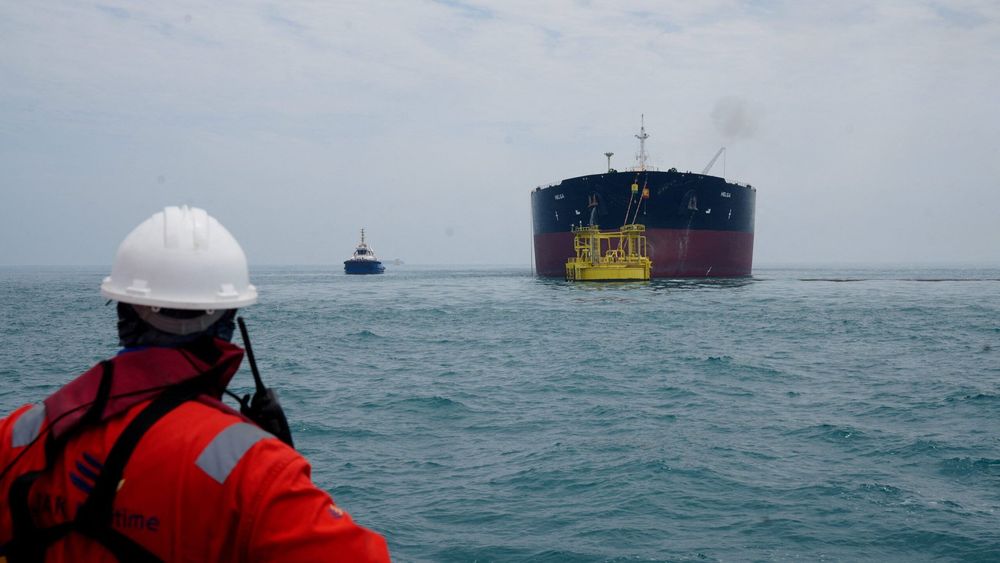
The Strait of Hormuz is open again, but shipping companies are returning to a waterway that looks very different from the one that existed before the war.
Commercial traffic is slowly recovering following last week's U.S.-Iran memorandum of understanding. Oil tankers, LNG carriers and dry bulk ships are moving through the Strait again after months of conflict, blockade and intermittent closures. But two major issues remain unresolved: mines are still present in and around the shipping lanes, and vessels now face a choice between an Iranian-controlled northern route and a U.S.-backed southern corridor.
U.S. Central Command said Saturday that commercial traffic through the Strait increased on June 20, with 55 merchant ships transiting the waterway carrying cargo and more than 17 million barrels of oil to global markets.
"Safe passage through the international waterway remained intact," CENTCOM said, adding that U.S. forces remain in the area to support freedom of navigation and ensure the agreement with Iran is upheld.
The statement is Washington's clearest message yet that it intends to remain the primary security guarantor in the Strait even as Iran resumes oil exports and reasserts influence over maritime traffic.
At the same time, the U.S.-led Joint Maritime Information Center (JMIC) has acknowledged that commercial traffic is now flowing through two distinct routes. "Strait of Hormuz traffic began increasing, with commercial vessels continuing to route south of the TSS via Omani territorial waters and via the northern Iranian-controlled route," JMIC said in its latest regional update.
To the north, Iran is building a separate framework for managing commercial traffic. The northern corridor is controlled by Iran's Persian Gulf Strait Authority, or PGSA, the organization the U.S. Treasury sanctioned in May for allegedly working with the Islamic Revolutionary Guard Corps to impose a permission-based transit regime in the Strait.
INTERTANKO said in a recent security update that the northern route is fully operational, but Iran is actively directing traffic.
"Overnight, 18/19 June, Iran called several ships stating that they do not have permission to transit," the tanker owners' association said.
The development raises difficult questions for shipowners and insurers. The Strait may be open, but vessels using the northern route may now face a transit regime administered by an Iranian authority that remains under U.S. sanctions.
The southern route offers a different approach. Under JMIC's latest Strait of Hormuz transit procedures, vessels may use the southern corridor day or night with AIS switched on, radars operating, navigation lights illuminated and standard VHF communications in use. Ships are strongly encouraged to coordinate with the U.S. Navy's Naval Cooperation and Guidance for Shipping (NCAGS), but participation is not mandatory.
That is a sharp contrast to the final weeks of the conflict, when many vessels using the Omani route sailed blacked out at night with AIS disabled and movements closely coordinated with U.S. naval forces.
CENTCOM said the southern route provides passage "free of arbitrary requirement claims or impediments," language that appears to draw a clear distinction with the PGSA-administered northern corridor.
The result is a Strait operating under two very different systems: one centered on freedom of navigation and voluntary coordination, the other on Iranian oversight and transit permissions.
Even with those routes open, risks remain.
JMIC continues to classify the Strait's threat level as "Moderate" and warns mariners that mines remain in and around the Traffic Separation Scheme. Recent NAVAREA IX warnings have identified both a suspected floating mine and a confirmed mine near the main shipping lanes.
INTERTANKO says mine clearance has not officially begun. Under the memorandum, Iran bears primary responsibility for de-mining operations, though it remains unclear whether European mine countermeasure forces are in the area or have permission to assist.
That uncertainty helps explain why traffic remains below historical norms.
JMIC estimates the Strait handled about 138 vessel transits per day before the conflict. While volumes are increasing, recent traffic remains well below that level. JMIC reported 22 transits on June 18, 19 on June 19 and 28 on June 20, while CENTCOM's broader count put June 20 traffic at 55 merchant ships.
Oil and LNG shipments are nevertheless returning quickly. Reuters reported Monday that four Qatar-controlled LNG carriers entered the Gulf through the Iranian route for the first time since the conflict began in late February. Tankers carrying Iranian crude have also resumed voyages, including several previously sanctioned VLCCs loaded at Kharg Island.
The rebound has been aided by a major shift in U.S. policy. The Trump administration has ended its maritime blockade and issued Iran General License X, authorizing transactions related to the production, sale and shipment of Iranian oil through August. The waiver covers vessel management, crewing, bunkering, pilotage, insurance, classification and other maritime services, and also permits U.S. dollar-denominated payments for authorized transactions.
The move marks a significant departure from the "maximum pressure" campaign that sought to isolate Iran from global oil markets.
Iran has moved quickly to take advantage. Officials say more than 25 million barrels of crude have passed through the former blockade zone since last week, with additional exports moving from Kharg Island and Chabahar.
Oil markets have responded just as quickly. Wood Mackenzie this week cut its Brent forecast to an average of $78 per barrel in 2027, saying the memorandum had shifted expectations away from a prolonged closure of Hormuz.
"A prolonged closure would have pushed Brent well above $150 a barrel," said Alan Gelder, Senior Vice President of Macro Oils at Wood Mackenzie. "The MoU changed that trajectory."
Still, the consultancy warned that recovering oil production, inventories and shipping flows will take months.
BIMCO has offered a similar assessment, cautioning that the memorandum should not be interpreted as a return to normal trading conditions. Sanctions issues, insurance coverage, contractual risks and uncertainty over Iran's transit regime remain unresolved.
The Strait of Hormuz is open again. But between mines, competing transit systems and a rapidly evolving sanctions landscape, it is becoming increasingly clear that the post-war Strait will not look much like the one that came before it.
Fuente: GCAPTAIN_NEWS