• 2 min de lectura
• 2 min de lectura
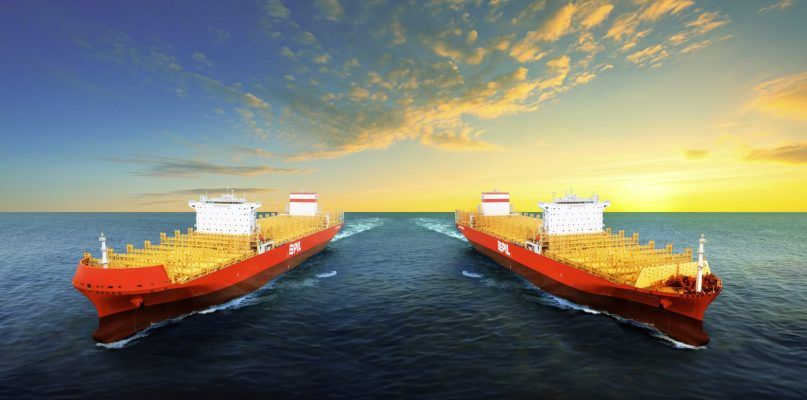
Pacific International Lines (PIL) celebrated a significant milestone in its fleet renewal program with the dual christening ceremony of its new 13,000 TEU LNG dual-fuel container ships, Kota Elok and Kota Elan, at the Hudong-Zhonghua shipyard in Shanghai.
Built by Hudong-Zhonghua Shipbuilding (Group) Co., Ltd., these two vessels are the first in a series of 13 new 13,000 TEU ships designed to enhance PIL's operational capabilities. They form a fundamental part of the company's fleet renewal strategy, which aims to modernize its vessels, increase competitiveness and capacity, while improving efficiency and sustainability.
Both vessels are equipped to operate on liquefied natural gas (LNG) and low-sulfur fuel oil, allowing for significant reductions in greenhouse gas emissions. Their deployment reinforces PIL's commitment to sustainable shipping and its long-term goal of achieving net-zero emissions by 2050.
Lars Kastrup, CEO of PIL, stated that "the designation of the Kota Elok and Kota Elan vessels highlights PIL's acceleration of its fleet modernization process and the strengthening of our position on major trade routes. These vessels will enable us to meet growing commercial demand, expand capacity, and offer greater efficiency to our customers."
"At the same time, they reflect our ongoing commitment to sustainability. By investing in LNG dual-fuel technology and advanced vessel designs, we are taking significant steps to reduce our carbon footprint and achieve our net-zero emissions targets," he added.
The vessels incorporate a series of advanced technological and energy-saving features, including an optimized hull shape for improved hydrodynamic performance, highly energy-efficient systems, and premium hull coatings that reduce fuel consumption. Both ships are also equipped with digital technologies, including artificial intelligence (AI) and the Internet of Things (IoT), to optimize operational performance and enable greater automation on board.
Kota Elok also incorporates a bow windshield to improve aerodynamics, contributing to greater fuel efficiency and lower emissions during long-distance voyages.
Source: Portal Portuario