• 3 min de lectura
• 3 min de lectura
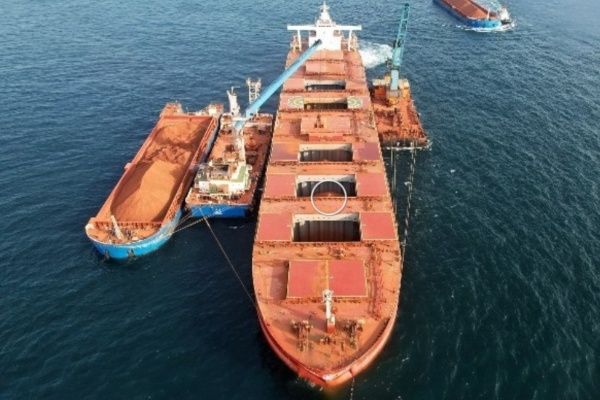
The maritime material handling solutions provider Genma announced the commissioning of its new floating transshipment system, which is scheduled to be deployed in West Africa to support mineral export operations.
This solution addresses a critical logistical challenge in global mining, where large vessels cannot access shallow-water ports. Genma's solution allows small barges to load minerals at the dock, sail to deeper waters, and transfer the cargo to the large vessel using the transshipment system. This way, the large vessel does not need to enter the port.
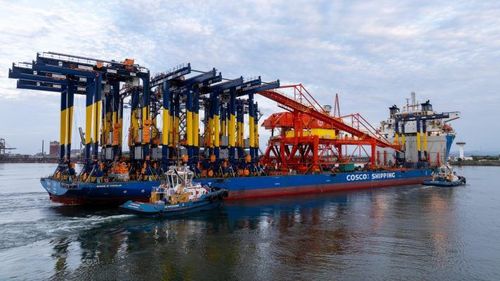
This system includes two deck cranes, two large hoppers, a conveyor belt, and a ship loader. The cranes pick up the mineral from the barge and deposit it into the hoppers; these feed the conveyor belt, which in turn transfers the material to the ship loader, which continuously loads it into the vessel's hold.
The cranes use continuous speed control, with smooth acceleration and braking. Even with heavy loads, operators can make millimeter adjustments for precise, spill-free landing. The box-type boom remains stable under load, minimizing ship movement. The large hoppers handle high discharge rates, keeping the conveyor belt fed without interruptions.
Saltwater corrosion severely affects equipment. Genma's cranes are designed to the highest offshore standards: key components are internally sealed and feature a multi-layer anti-corrosion coating. Their low center of gravity and light weight improve stability in rough seas, resulting in faster and safer operations.
The ship loader adapts to the constant movement between vessels (tides, waves). Its telescopic chute and luffing boom ensure that material falls smoothly with minimal breakage, regardless of the movement of the two vessels.
To minimize downtime caused by a breakdown without spare parts or technicians nearby and ensure operational continuity, the equipment is designed for easy maintenance. Integrated hydraulic power units mean fewer pipes and leak points; key joints are self-lubricating; a standard diagnostic port quickly identifies problems.
Genma already has service centers and spare parts warehouses in Tangier (Morocco) and Mombasa (Kenya). The warehouse in Boffa (Guinea) is almost ready and will open mid-year. In addition, highly experienced field service engineers are located locally.
Every motor, sensor, and control system of this Genma transshipment system has passed individual and integrated tests. Commissioning is complete.
Following successful commissioning, the system will be deployed in West Africa, where it will become our customers' most reliable and efficient bulk cargo transfer tool, helping them perform their work effectively, trip after trip.