• 2 min de lectura
• 2 min de lectura
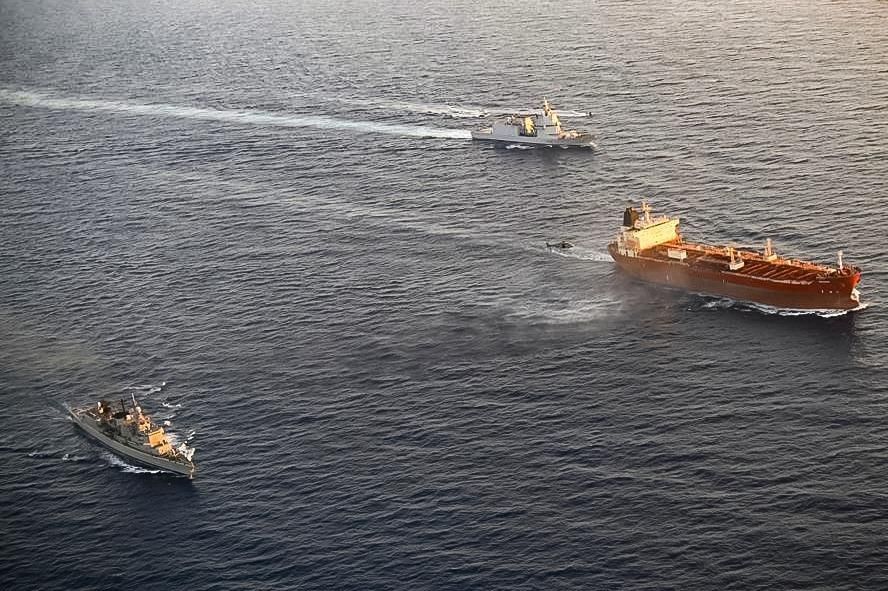
A European Union (EU) naval mission led by Italy boarded a tanker belonging to Russia's "shadow fleet." This is the second such operation in less than two weeks, as Europe intensifies surveillance of vessels helping Moscow circumvent sanctions.
The Italian Ministry of Defense stated that the Toa Payoh, an EU-sanctioned tanker, was intercepted west of the Sicilian island of Pantelleria while sailing from Benin to Istanbul.
The vessel had changed its registration to Cameroon just last week, according to a source familiar with the operation. Maritime authorities initiated the inspection to verify if the vessel had the legal right to sail under the African country's flag and if its registration documents were valid.
The source noted that the EU naval mission, named operation Eunavfor Med Irini, did not have the authority to seize vessels during this type of inspection, meaning the Toa Payoh was not detained.
However, the documentation collected during the boarding is still being examined and could be used by national authorities for a subsequent seizure or embargo if necessary.
The captain of the Toa Payoh initially did not cooperate with the EU mission, which led to a team of Italian military personnel boarding the vessel from a helicopter launched from the Thaon di Revel, the flagship of the EU's Eunavfor Med operation.
The inspection, carried out with the support of a Greek vessel and a Polish maritime patrol aircraft, lasted about two hours and was completed safely, the ministry reported. There was no immediate comment from Russia.
Sunday's operation on August 2nd follows the boarding of the MV South Star on July 20th, another tanker linked to Russia's shadow fleet that was inspected by Irini forces on suspicion of also sailing under a false flag.
The European Union has imposed sanctions on dozens of vessels that it claims are part of a "shadow fleet" used by Russia to circumvent restrictions on its oil exports since its invasion of Ukraine.
Eunavfor Med Irini is a European Union naval mission launched in 2020 to enforce the United Nations (UN) arms embargo on Libya. Since then, EU governments have expanded its scope, authorizing it to conduct verification boardings.