• 2 min de lectura
• 2 min de lectura
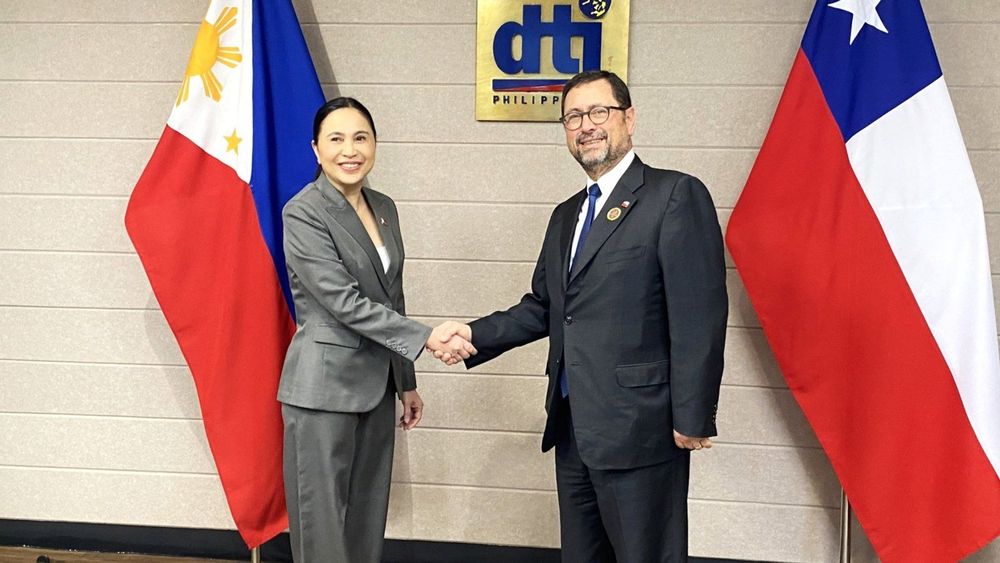
After more than a year of discussions, Chile and the Philippines concluded negotiations to sign a Comprehensive Economic Partnership Agreement (CEPA). The announcement is part of the South American country's strategy to deepen trade relations with Southeast Asian nations.
In this regard, the Chilean Foreign Minister, Francisco Pérez Mackenna, provided details of the agreement, stating that it "will contribute to deepening the economic-commercial relationship with Southeast Asia, a region characterized by its high dynamism and the emergence of new economies. Furthermore, it reaffirms Chile's commitment to an open trade policy aimed at diversifying markets, strengthening its presence in Asia, and generating new opportunities for the development of foreign trade."
The foreign minister also added that the CEPA "represents another step in the strategy of diversifying the export basket and the destinations of Chilean products. The Philippines is a significant importer of agricultural and food products, sectors in which Chilean export offerings have great growth potential."
In a statement, the Chilean Ministry of Foreign Affairs elaborated on the importance of deepening relations with the Asian archipelago, noting that "the Philippines is one of the most dynamic economies in Southeast Asia, with over 110 million inhabitants, a young population, and a market growing at rates exceeding 4% annually, sustained by a strategy of openness to the world, fiscal deficit reduction, and attraction of foreign investment promoted since the 1980s."
"It is the sixth largest importer of Chilean products within ASEAN, after Singapore, Vietnam, Thailand, Malaysia, and Indonesia, markets with which Chile already has existing bilateral or multilateral agreements," the circular added.
Furthermore, it was indicated that "with this agreement, Chile will have preferential treatment on more than 10,467 tariff lines for exports to the Philippines. Preferential access extends to approximately 90% of the value of current exports to that market. For its part, the Philippines will have preferences on approximately 8,632 tariff lines, which include 99% of the value of Chile's imports from that market," the circular concluded.