• 2 min de lectura
• 2 min de lectura

A proposal led by Shanghai Qiyao Technology Group to treat onboard carbon mineralization as permanent storage has received in-principle support from the International Maritime Organization (IMO), which will allow captured CO2 to be converted into stable minerals for construction materials.
The proposals argue that captured CO2 can be converted into stable carbonates, such as calcium carbonate, through mineralization, a permanent storage method that also produces usable construction materials without carbon leakage.
Conventional CO2 storage relies on geological storage, which involves high costs and limited reception infrastructure. Mineralization offers a commercially viable alternative, transforming the element from a costly burden into a valuable industrial resource.
"We consider this attention from the IMO an important step. Closing the loop, from onboard capture on ships to onshore mineralization, can make carbon accounting more practical and economically attractive for the industry," said the head of Qiyao's OCCS team.
One of the proposals details the technical and environmental arguments in favor of mineralization as equivalent to permanent sequestration. The other is based on Qiyao's actual demonstration project, which discloses data from the entire chain, from onboard capture, ship-to-ship liquid CO2 transfer, land transport, to final mineralization, demonstrating that the process is traceable, quantifiable, and verifiable.
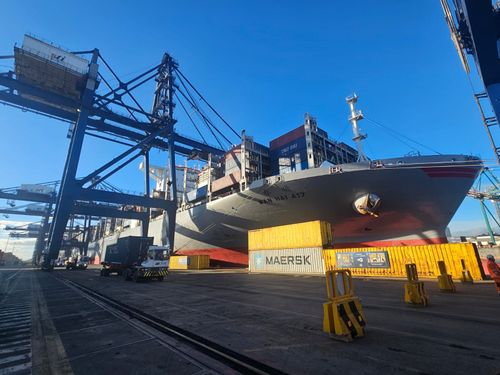
Shanghai Qiyao Technology Group has already installed a large-scale OCCS system on a 14,000 TEU container ship and has carried out the world's first ship-to-ship liquid CO2 transfer for onshore mineralization. The company is collaborating with global partners to offer integrated solutions for the modernization and green transition of global maritime transport.
Source: Portal Portuario