• 2 min de lectura
• 2 min de lectura
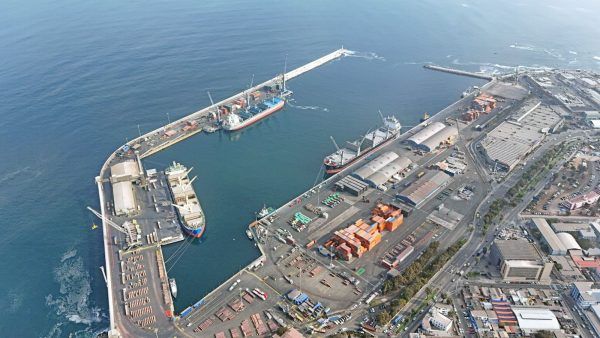
Within the framework of Environment Month, Empresa Portuaria Antofagasta (Port Antofagasta) received a new Organizational Excellence Seal from the HuellaChile Program, awarded by the Ministry of the Environment to organizations that advance in comprehensive and verifiable management of their greenhouse gases.
In this regard, Port Antofagasta reached the Excellence level in the management of its Greenhouse Gas (GHG) emissions, in accordance with the program's requirements. Compliance with these criteria was verified by SGS Chile.
This distinction adds to the Excellence Seal received for the first time in 2024, associated with 2023 management. In this way, Port Antofagasta consolidates a sustained trajectory in HuellaChile, a program in which it has participated since 2019, with previous recognitions in quantification and reduction of emissions.
The general manager of Port Antofagasta, Carlos Escobar Olguín, highlighted that "this result is possible thanks to the commitment of the different teams at Port Antofagasta, who from their respective areas contribute to meeting increasingly demanding standards, processes, and requirements. Environmental management is part of an organizational culture oriented towards efficiency, operational continuity, sustainability, and the ability to project logistical infrastructure prepared for future challenges."
To achieve the 2024 Excellence level, Port Antofagasta accredited five attributes defined by the program: commitment, cooperation, environmental co-benefits, continuous improvement, and gender. These elements reflect climate management that incorporates institutional policies, management systems, alliances, projects, and concrete actions aimed at raising the organization's environmental performance.
Among the main supports considered are the Integrated Management System Policy, the Sustainability and Climate Change Policy, participation in the Race to Zero initiative, collaborative work developed through the Port Antofagasta Logistics Community, COPA, and participation in Clean Production Agreements, including Certificado Azul in Chile.
The process is also linked to the consolidation of certified systems in environment, quality, and information security, under ISO 14001, ISO 9001, and ISO 27001 standards, along with the implementation of the energy management system under ISO 50001. Added to this are EcoPorts certification and various energy efficiency and renewable energy initiatives, such as the incorporation of solar water heaters, photovoltaic panels, and solar lighting in areas of the port facility and public use areas.