• 3 min de lectura
• 3 min de lectura
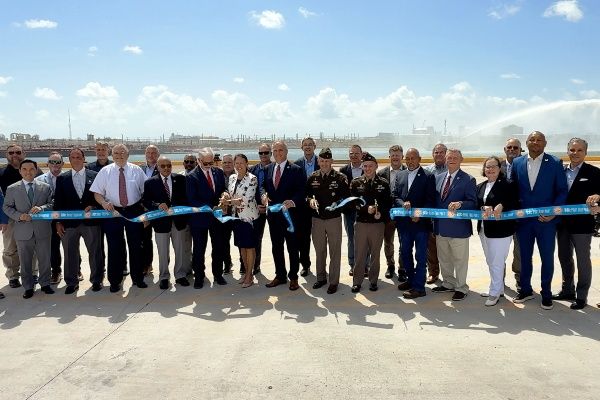
The U.S. Army Corps of Engineers (USACE) Galveston District and the Port of Freeport celebrated the completion of the Port of Freeport Channel Improvement Project during a ceremony. This federal navigation project deepens and partially widens the channel, improves the upper turning basin, and smooths the lower channel curve.
These advancements provide greater vessel access, operational flexibility, and navigation capacity at one of Texas's major commercial ports. The deeper, higher-capacity channel will improve access for larger global vessels, reduce navigation restrictions, and strengthen the transport of energy products, vehicles, containers, chemicals, agricultural products, heavy machinery, and other cargo.
"This project demonstrates the excellence of the Army Corps of Engineers, how to turn public investment and strong partnerships into navigation capacity that generates lasting national value. A deeper, higher-capacity Port of Freeport channel strengthens the Texas port system, expands access to global markets, and reinforces the supply, energy, and trade chains that underpin America's economic strength and national resilience," stated Brigadier General George H. Walter, Commander of the USACE Southwestern Division.
"The execution of this project required years of rigorous engineering and construction, as well as close coordination among the Galveston District, the Port of Freeport, and the maritime community. The result is safer navigation, greater flexibility for vessels, and durable infrastructure that will benefit the Port of Freeport, its customers, and surrounding communities for generations," affirmed Colonel David W. Dake, Commander of the USACE Galveston District.
The Port of Freeport ranks 17th nationally by commercial tonnage and serves as a major gateway for energy, automotive, container, chemical, agricultural, and industrial cargo. The channel improvement project strengthens the port's capacity to serve current customers, leverage future opportunities, and accommodate a wider range of international vessels.
"This milestone is more than the completion of a major infrastructure project; it represents years of vision, collaboration, and commitment. As the deepest port on the American Gulf, the Port of Freeport is better positioned to serve our customers, strengthen U.S. supply chains, and create new opportunities that will benefit Texas and the nation," expressed Phyllis Saathoff, Executive Director of the Port of Freeport.
The project also strengthens the overall Texas port system that supports American energy, manufacturing, agriculture, and international trade. Cargo transiting through reaches communities across the country via interconnected networks of highways, railways, pipelines, and distribution.
"This project is the type of infrastructure investment that yields lasting results for working families, businesses, and communities. A stronger Port Freeport drives Texas jobs, energy exports, manufacturing, and international trade. Furthermore, it strengthens the supply chains our country depends on and offers American businesses a better platform to compete in the global economy," assured U.S. Representative Randy Weber, of Texas's 14th Congressional District.
Greater channel depth affects more than just vessel size. It can increase cargo capacity, provide additional operational margin, and reduce some of the limitations associated with channel depth and geometry. Improvements to the upper turning basin and the lower channel curve will also contribute to safer and more efficient vessel movements.
"Ports are national strategic assets, and their value depends on the infrastructure that connects them to the world. The Port of Freeport Channel Improvement Project demonstrates how investment in navigation capacity strengthens an entire transportation and supply chain network," concluded Sang Yi, President and CEO of the American Association of Port Authorities.