• 3 min de lectura
• 3 min de lectura
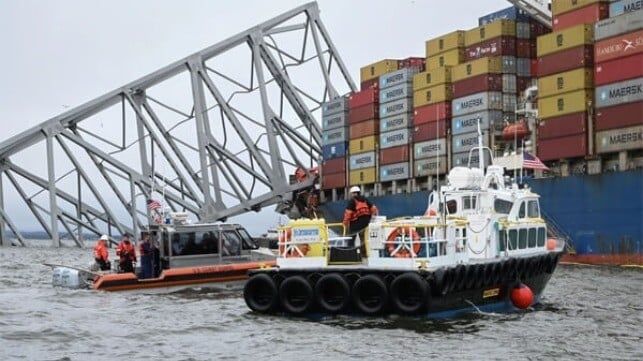
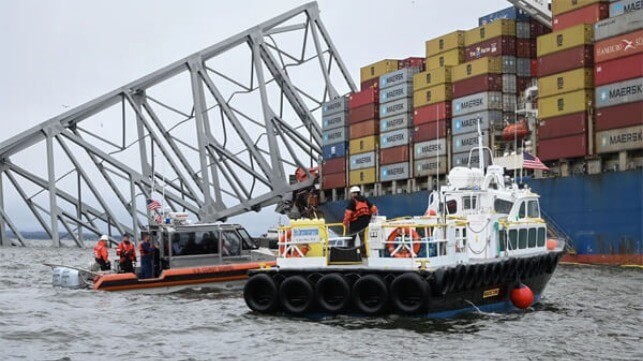
Dive teams recovered the bodies of the six victims while one person was rescued after the bridge collapsed
As the civil trial approaches its start on Monday, June 1, additional settlements have been finalized with families of those killed in the Dali incident and other plaintiffs. Legal experts anticipate the proceedings could extend three weeks and rank among the most significant cases in U.S. maritime law.
Following the March 2024 allision in which the containership Dali lost power and struck the Francis Scott Key Bridge in Baltimore, the vessel's owners Grace Ocean and operators Synergy Marine filed with the U.S. District Court to invoke the 1851 Limitation of Liability Act. This 19th-century statute permits companies to cap liability to the value of the vessel and cargo.
The law has precedent in major maritime disasters. The Titanic loss in 1912 and the Deepwater Horizon incident both invoked this protection. In the Deepwater Horizon case, Transocean initially sought to limit liability to approximately $27 million but ultimately settled for $1.4 billion in criminal and civil penalties.
Grace Ocean and Synergy Marine have requested the court limit their liability to just over $40 million. Judge James Bredar will preside over the bench trial's first phase, which begins next week and will address the limitation arguments. A second phase would follow to address individual claims.
On Thursday, lawyers representing five of the six victims announced they have reached settlements and will withdraw from the case. The families described the outcome as bittersweet, acknowledging their ongoing losses while noting they can now move forward. Six roadworkers died when the bridge collapsed; a seventh was rescued from the water. One family had previously settled, and the remaining five have now come to terms.
Beyond the victims' families, additional parties have reached agreements. Brawner Builders, the road crew's employer, and Baltimore Gas and Electric have both settled. The State of Maryland previously announced a record settlement of $2.25 billion.
Several parties continue pursuing claims in court, including the one survivor from the incident. The City of Baltimore and the County maintain active claims, as do numerous local businesses asserting financial losses from the bridge destruction and harbor closure.
According to reporting by the Baltimore Banner, five subpoenas were issued to compel testimony, though the crew has exercised its right against self-incrimination. Multiple crewmembers have remained in Baltimore for over two years awaiting trial. Some Synergy Marine employees also invoked their rights during depositions. The company has stated that, given criminal charges unsealed weeks prior, crew and employees will not travel to the United States due to fears of detention or additional criminal liability. Synergy Marine indicated testimony via video is unlikely, though depositions may be used during trial.
The trial is expected to rely primarily on expert witnesses. The court has ruled the National Transportation Safety Board report inadmissible, though evidence gathered during the investigation may be presented.
The case's outcome will be closely monitored for implications on future maritime liability litigation. Further settlements before trial commencement remain possible. Synergy Marine and one of its technical superintendents face indictment on criminal charges. In a parallel proceeding, the companies are pursuing claims against HD Hyundai Heavy Industries, alleging manufacturing defects in the vessel, which was constructed in 2015.
Fuente: Maritime Executive