• 3 min de lectura
• 3 min de lectura
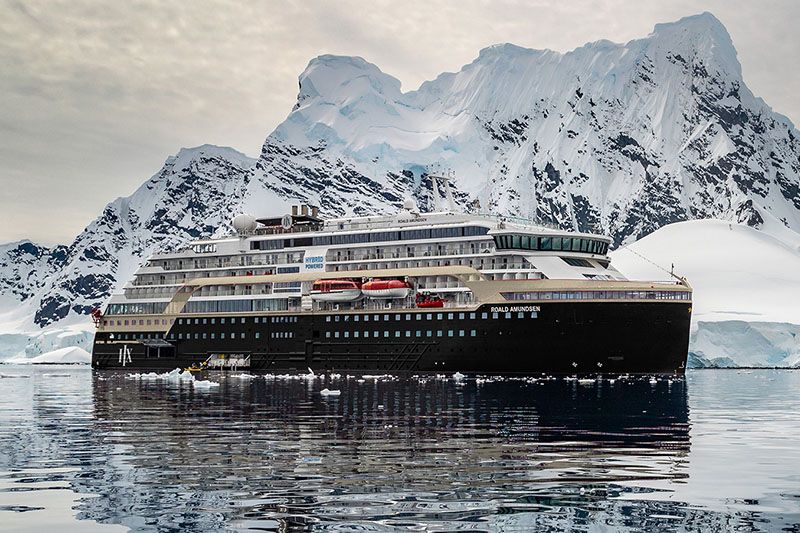
HX Expeditions continues to build on its Antarctica program, where it claims to carry more travelers than any other operator.
"Last season was our most successful to date," said Gebhard Rainer, CEO, "and with record guest satisfaction and significant enhancements across the entire journey. That includes launching the largest kayaking and camping program in the industry, more seamless pre- and post-expedition travel, upgraded charter flights, and elevated onboard experiences that better connect guests to the destination. We'll continue building on these product enhancements for next season."
HX is also sailing in Norway during the winter. A Northern Lights expedition sails roundtrip from Tromsø and is designed to adapt in real time to weather, wildlife, and aurora conditions, rather than following a fixed coastal route. It's also a return to where expedition cruising began for HX in 1896.
"To mark our 130th anniversary, we introduced the 1896 Cabin aboard Fridtjof Nansen," Rainer said. "It offers a fully immersive experience inspired by the early days of polar exploration. The concept draws directly from our first expedition in 1896, widely considered the world's first commercial expedition cruise."
This summer, HX also launched its second season in Alaska with new itineraries, designed to go beyond traditional coastal cruising, visiting ports that larger ships cannot access and offering deeper connections to wilderness, wildlife, and Indigenous communities, including new destinations like Klawock and Valdez.
"We will become the first commercial expedition operator to visit Katlian Bay in partnership with the Atiká Land Trust, as well as the first cruise line to visit Old Harbor on Kodiak Island in collaboration with the Alutiiq community," Rainer said.
"These opportunities are the result of years of relationship-building and reflect our commitment to creating access in a way that is intentional and respectful."
What sets an HX expedition cruise apart? Explained Rainer: "At its core, expedition cruising is built around flexibility and purpose. We don't follow a rigid schedule; every day is shaped in real-time by wildlife, weather and conditions. Guests can expect a genuine sense of adventure, where no two days are the same.
"Guests don't simply visit destinations. They travel alongside scientists, participate in research, and learn from and connect with local communities. That might mean enjoying a four-course meal prepared by local chefs using regional ingredients, visiting homes, or kayaking among icebergs. It's about creating experiences that are immersive, educational, and ultimately transformative.
"Our approach is grounded in a simple philosophy: going deeper, not just further," Rainer continued. "It's not about adding more destinations, but about strengthening our presence in the places where we already have long-standing relationships, operational expertise and community trust."
HX operates a fleet of five ships with four following a seasonal deployment model and the Santa Cruz II sailing year-round in the Galápagos.
During the Antarctic season, from November through March, three ships sail in Antarctica: Fram, Roald Amundsen and Fridtjof Nansen, the latter two are the world's first hybrid-powered cruise ships. At the same time, the Spitsbergen operates in Norway.
In the Northern Hemisphere summer, the fleet transitions north. The Fram and Spitsbergen sail in Svalbard, while the Roald Amundsen is in Alaska and Fridtjof Nansen in Greenland.
Later in the season, the Roald Amundsen and Fridtjof Nansen undertake Northwest Passage sailings (one eastbound and one westbound) before repositioning south for the Antarctic season.
Excerpted from the Summer 2026 Cruise Industry News Quarterly Magazine.