• 6 min de lectura
• 6 min de lectura
A coordinated biosecurity response involved many parties, and WHO detailed the latest information about the cases, contact tracing and ongoing quarantine.
June 1, 2026
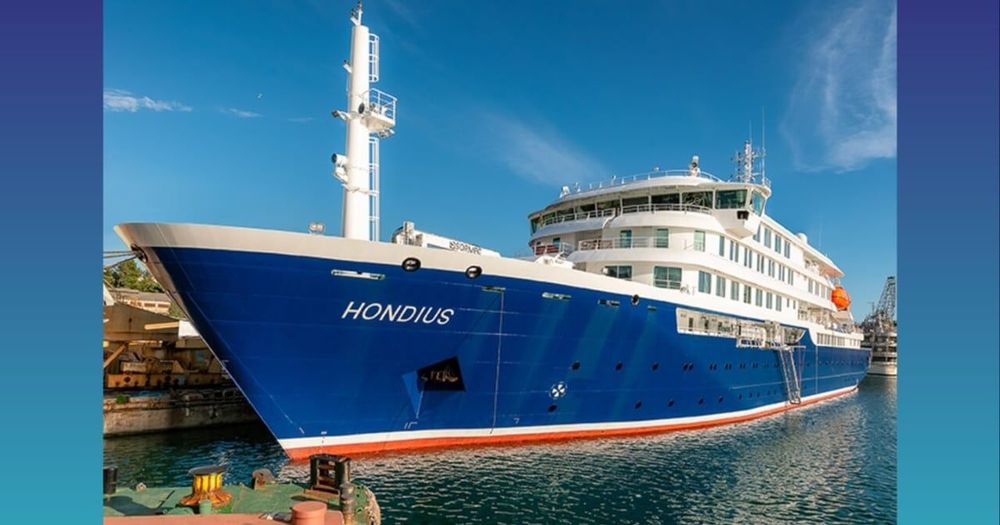
Oceanwide Expeditions' Hondius got the green light to resume service by GGD Rotterdam (the municipal public health service, Gemeentelijke Gezondheidsdienst), following a deep cleaning and disinfection. The ship was assessed May 29 and cleared on May 30.
The GGD has informed the chairman of the Rotterdam-Rijnmond Safety Region that, in the GGD's opinion, the vessel is free from infection and contamination. From a public health perspective, there are no objections to returning the vessel to service.
The ship is scheduled to embark on its Arctic season June 13 in Longyearbyen, Svalbard.
GGD assessed the ship, which experienced hantavirus outbreak during a long trans-Atlantic journey that originated in Ushuaia, Argentina April 1. As of May 27, a total of 13 cases, including three deaths, were associated with the voyage, according to the World Health Organization. That makes for a 23% case fatality ratio. Eleven cases have been laboratory-confirmed for Andes virus infection, and two are probable cases.
All confirmed cases are among passengers or crew who traveled aboard Hondius.
WHO said that, based on currently available information, the working hypothesis is that the first case acquired the infection prior to the cruise, through exposure on land. Investigations are ongoing in collaboration with authorities in Argentina and Chile, however, the time between the individual's visit to Chile and the onset of symptoms exceeds the maximum incubation period. So, based on the information currently available, exposure in Chile can be ruled out.
Current evidence suggests subsequent human-to-human transmission onboard the ship.
Follow-up and contact tracing for all contacts of hantavirus cases linked to Hondius is ongoing. This includes passengers who disembarked in Saint Helena on April 24, Ascension on April 27, Praia, Cabo Verde, on May 6 and Tenerife, Spain, on May 10 and 11 and the remaining 25 crew members and the two healthcare workers from the Netherlands who disembarked in Rotterdam on May 18 and May 23.
WHO said passengers on flights who may have had exposure to subsequently confirmed cases have been identified and contacted.
High-risk contacts are being quarantined and monitored by health authorities either in their respective countries or in the ship's flag country, the Netherlands, or third countries. As of May 22, more than 600 contacts, including 53% high-risk and 47% low-risk contacts, have been identified across 32 countries, territories and areas, and are either under close monitoring or self-monitoring.
Human-to-human transmission has currently only been reported for the Andes straing of hantavirus, endemic in South America, with circulation and human cases reported primarily in Argentina and Chile.
WHO said the exact mode(s) for human-to-human transmission in the Hondius outbreak and their relative contributions are yet to be fully understood. WHO is currently operating under the assumption that transition may include contact with an infected individual or contaminated surfaces, and/or through-the-air transmission directly to mouth, nose or eyes and/or airborne transmission via inhalation.
The virus does not exhibit dynamics consistent with highly transmissible airborne pathogens such as measles.
Using data from the previously documented human-to-human outbreaks in Argentina and the 13 cases so far recorded from the cruise ship, WHO estimates the mean incubation period is 22 days, corresponding to a probability of safe release from quarantine of 96% at 42 days, reducing to 91% at 35 days. This reaffirms WHO's recommendation of 42 days of quarantine for high-risk contacts and self-monitoring for low-risk contacts.
Using case incidence data from the Andes strain outbreak associated with the cruise ship, the effective reproduction number for this outbreak as of May 22 is estimated to be 0.7, where anything less than 1.0 indicates that the spread of disease is declining.
WHO continues to assess the risk for passengers and crew who were aboard Hondius as moderate since individuals exposed prior to the implementation of control measures may still develop illness during the incubation period and should be closely monitored.
The risk at the global level is assessed as low.
For the disinfection, Oceanwide Expeditions worked closely with public health authorities, maritime regulators, port stakeholders and specialist contractors to establish a controlled treatment and clearance plan for the ship.
The disinfection was carried out by a team of 13 biosecurity experts provided by EWS Group, a specialist in biosecurity, gas measurement, fumigation and critical safety operations. Over several days, all eight decks of the ship were systematically treated following an initial inspection and assessment. As part of this, the ship was declared rodent-free by qualified third-party professionals.
"What made this operation unique was the level of coordination required to develop and execute a controlled biosecurity response within a very short timeframe," said Marcel van den Brink, CCO, EWS Group.
The cleaning phase ensured the removal of residual organic matter before an in-depth disinfection treatment of all hard surfaces with registered disinfection products and hydrogen peroxide. Specialists also performed high-temperature steam cleaning on all soft surfaces. During the procedures, all specialists wore full PPE and followed strict protocols to establish clean and contaminated zones on the vessel.
"We are grateful for the professionalism and commitment shown by all parties involved. The close cooperation between our teams and the operational expertise provided by EWS Group played an important role in the successful completion of this complex disinfection operation and the vessel's preparation for return to service," said Rémi Bouysset, CEO Oceanwide Expeditions.
The company underscored that medical and epidemiological information confirmed hantavirus did not originate from the ship or onboard operations.
"The completion of this deep clean and disinfection of the vessel eliminates the possibility of future transmission of hantavirus, which has limited environmental stability compared to many other viruses," the company said.
All crew from the prior voyage were disembarked and are in quarantine. A crew change took place, with no crew members on board having had any contact with individuals currently in quarantine.
Hondius is now undergoing an annual survey and scheduled maintenance in Rotterdam before its planned departure on June 6 to Svalbard, where passengers will embark June 13.
Fuente: sea-trade cruise