• 5 min de lectura
• 5 min de lectura
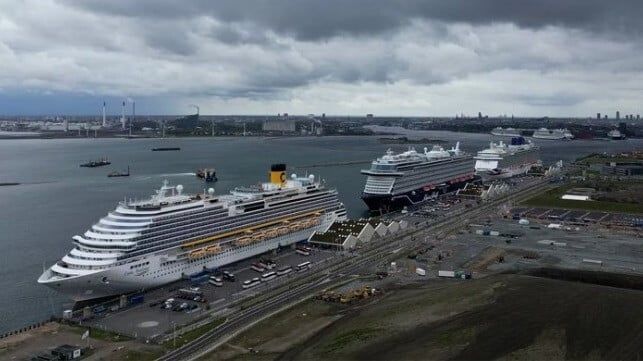
While Europe has long been a popular destination for cruises, it traditionally has been a three-season destination with few cruise ships willing to brave the cold winter climates. This was especially true for Northern Europe, but in part due to passenger interest and economic pressures, more cruise lines are positioning their ships year-round in Europe.
Many cruise ships, and even those operating from Northern European homeports, sail to warmer climates such as the Azores and Canary Islands. Others traditionally shift homeports into warmer regions. For the American-based companies, that means a long repositioning cruise, which is often harder to sell and requires discount prices in order to attract travelers.
Some premium cruise lines, such as Viking and broad market brands such as Costa and MSC Cruises, have long offered winter cruises in the Mediterranean. Viking promotes the trips as an opportunity to enjoy the destinations with fewer crowds and possibly at a more leisurely pace. Other premium brands, such as Celebrity Cruises and smaller firms including Windstar Cruises, followed.
"Over the past few years, we've seen growing interest in quieter, more immersive travel experiences, especially in destinations that are traditionally busy during peak season," Janey Bavam, Chief Commercial Officer for Windstar, told the trade group Cruise Lines International Association (CLIA). She highlighted that Windstar trialed its first Mediterranean winter cruises in 2023, and this year is launching its newest cruise ship, Star Explorer (9,900 gross tons), with a winter season in the Mediterranean.
While many of the cruises focus on the southern destinations such as the Mediterranean or the Atlantic islands during the winter season, a few of the cruise lines are expanding their deployments in Northern Europe. Cruise Baltic, a facilitator and B2B network designed to promote the region, released a report highlighting that seasonality patterns are changing. While summer remains the peak season, the number of travelers who visit the region during Q3 and Q4 is growing rapidly. In 2025, it reports that cruise calls in Q4 increased 33.2 percent compared to 2024. Looking ahead, Cruise Baltic's forecast indicates that growth is not temporary. It reports that passenger volumes are expected to grow by 9.2 percent in 2026.
The first examples were cruise lines, and especially river cruises, focusing on the Christmas markets of Northern Europe as a unique attraction. The larger cruise ships are also venturing into the Baltic and North Sea, but limit most of the trips to the north to latitudes such as Bergen, Norway. MSC Cruises, for example, is continuing its pattern of northern deployments, this year sailing its MSC Preziosa from Southampton and Le Havre to ports in the Channel, French Coast, and Hamburg.
Holland America Line recently announced it too is introducing year-round cruising in Europe employing its Nieuw Statendam (2,666 passengers) in 2027-2028. It notes that Europe continues to be one of the most sought-after destinations, and it will introduce new experiences with cruises for the Christmas markets and overnight stays in Helsinki and Stockholm to give passengers time to explore festive city centers after dark. Holland America, however, will shift to the Mediterranean, Greek and Canary island destinations in January and February 2028.
AIDA, which focuses on the German-speaking market, is offering passengers an even more "winter" experience with its AIDAprima, which sails from Kiel, Germany, and among its trips is offering a "Winter in Norway" cruise that will visit Bergen and Flam. This expands on the company's other 7-day cruises from Hamburg aboard AIDAnova in the North Sea or Baltic.
A few of the cruise lines are getting even bolder for the hardy passenger. Viking in January and February is offering a cruise "In Search of the Northern Lights," on one of its smaller luxury ships, the Viking Libra, which accommodates 998 passengers. Cunard is also sending its 90,000 gross ton Queen Elizabeth (2,081 passengers) on a cruise at the end of February 2027 that will go to the Arctic Circle, also in search of the Northern Lights.
Norway's coastal cruise operators have long promoted the opportunity to see the Aurora Borealis, i.e., Northern Lights, during their cruises. So confident is Hurtigruten that passengers will experience this unique phenomenon that it writes, "If the aurora doesn't occur on your 11-day or longer voyage during auroral season, we'll give you another chance to see it on a future sailing at no extra cost."
Cruise lines, says Cruise Baltic, are increasingly looking beyond the traditional peak seasons and seeking destinations that can offer passengers unique experiences throughout the year. It believes that cities and cultural destinations, such as Copenhagen and Stockholm, can play an important role in expanding the market. While for passengers who are increasingly seeking different experiences, the winter cruises in Northern Europe provide new experiences and a different perspective on well-traveled destinations familiar to cruising.
Fuente: MARITIME_EXECUTIVE