• 3 min de lectura
• 3 min de lectura
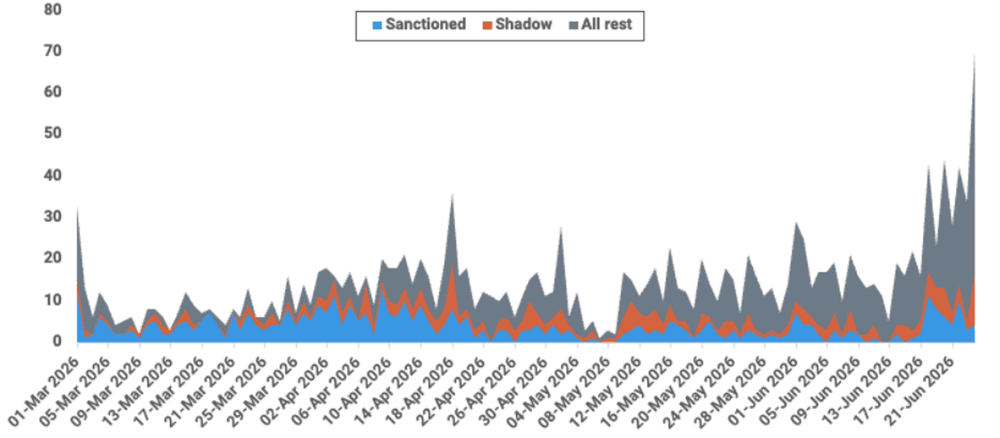
Table of physical attacks on vessels as of June 25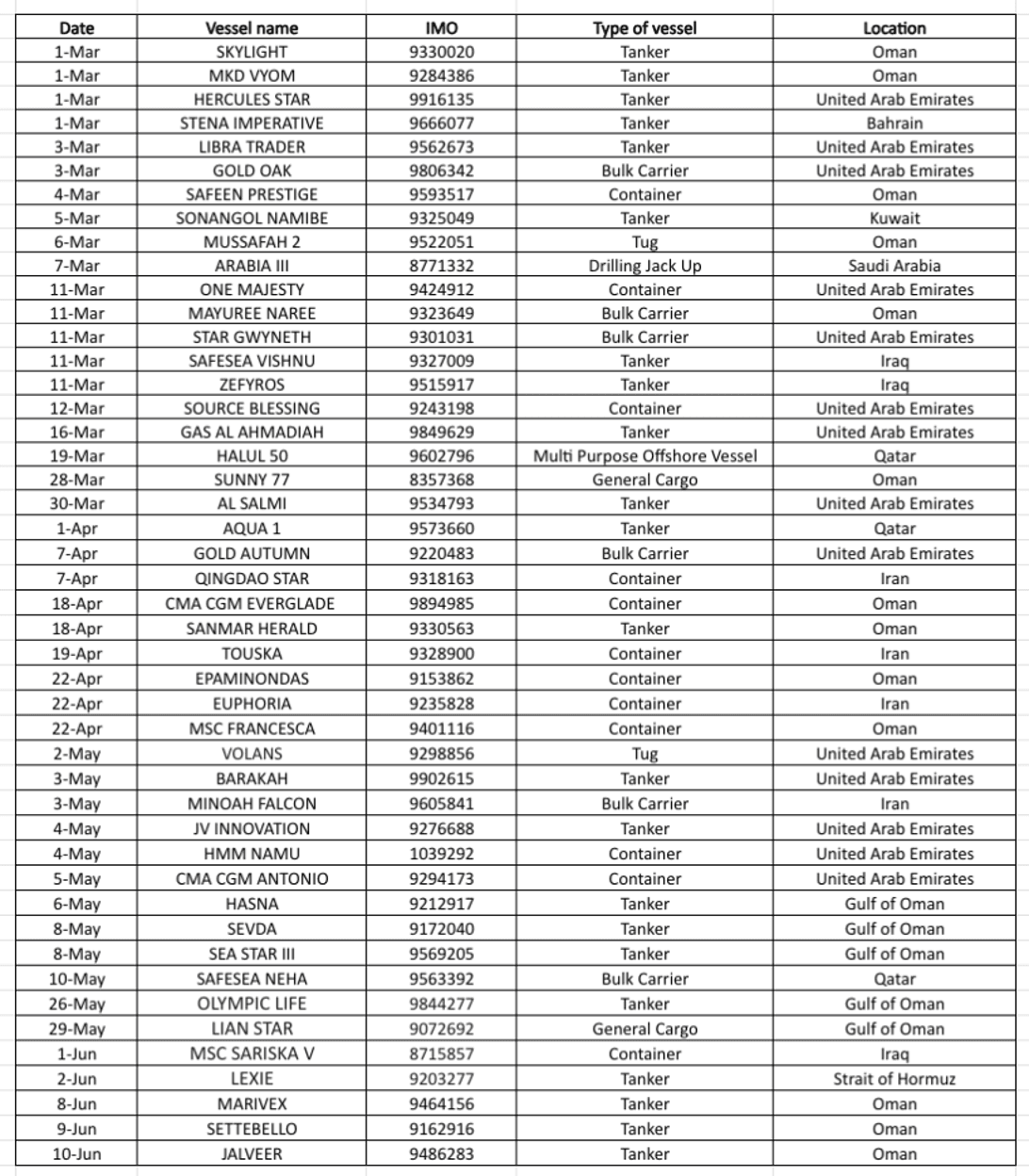 Source: Kpler Risk and Compliance, IMO
Vessels crossed SOH by risk level as of June 24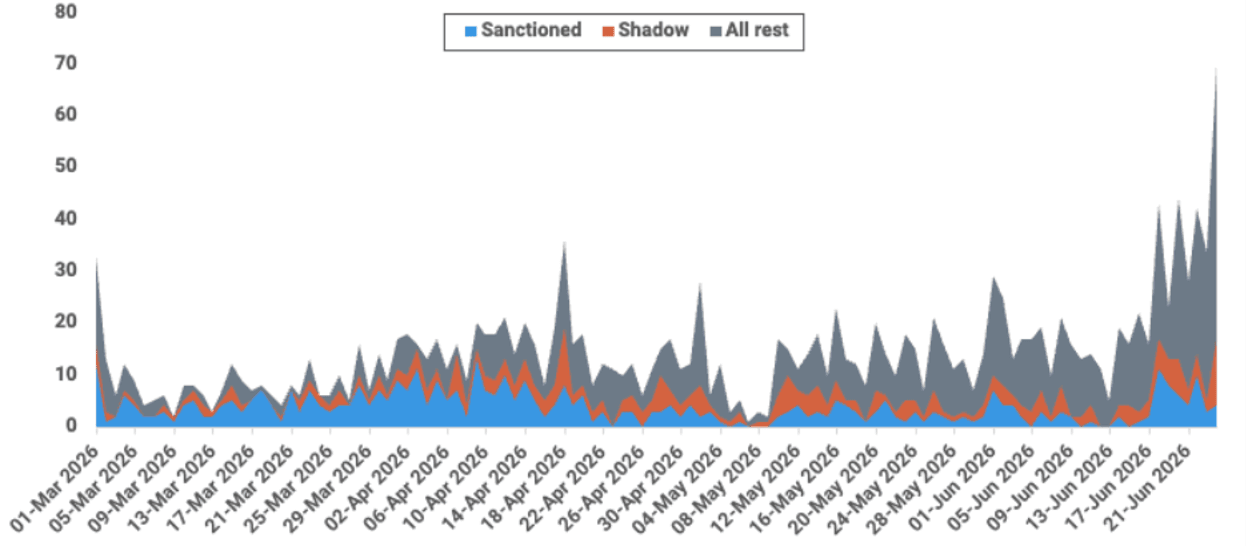 Source: Kpler Risk and Compliance; full traffic data is available including non-commercial vessel tracking from MarineTraffic
Vessels crossed SOH by direction of crossing as of June 24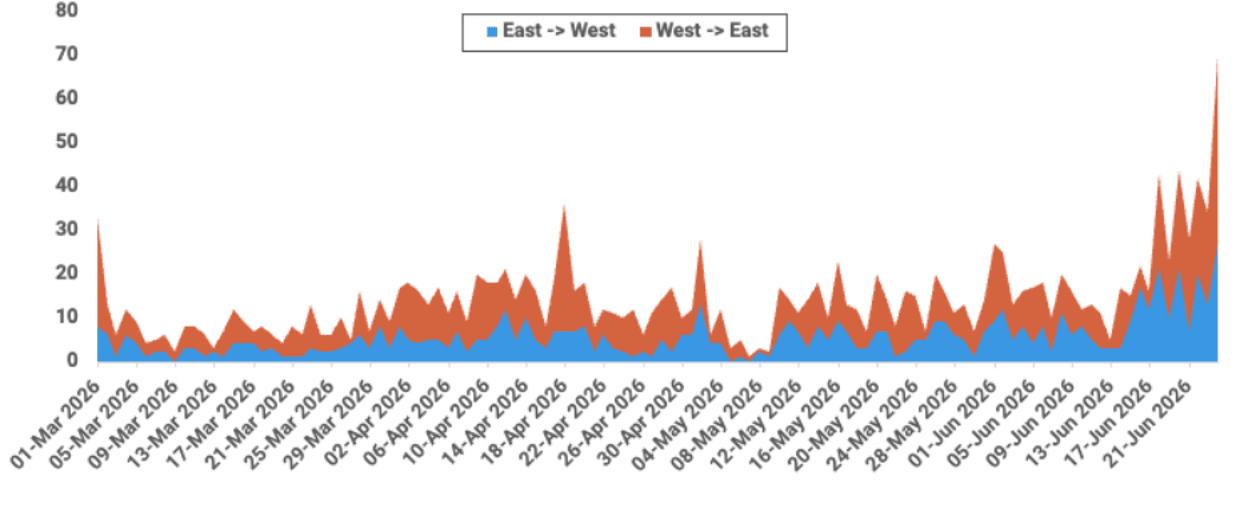 Source: Kpler Risk and Compliance
Confirmed Strait of Hormuz crossings picked up sharply on 24 June, with 70 verified transits recorded, up 105% d/d as demining efforts and use of the Omani route progressed. This marks a clear step-up in activity, but several days of follow-through are needed before treating the move as a new baseline rather than a post-deal release of delayed traffic. The bilateral US-Iran free-passage framework and lifting of the US blockade appear to have provided a temporary confidence boost, especially for commercial operators.
Commercial traffic accounted for the majority of crossings at 53 transits, including 33 laden passages carrying dry bulk, dirty products and clean products. Flows were skewed west-east, with 43 crossings, and low-risk vessels dominated the day's profile with 53 transits. Only seven Iranian-flagged vessels crossed, suggesting the rebound was not solely driven by Iranian-linked traffic.
Of the 70 verified crossings, traffic was more evenly distributed across the three noted route classifications, with a modest uptick in IMO-route crossings. Still, the IMO route remained subdued and was not the primary passageway, as vessels increasingly used a new UN-promoted route close to Oman's coast despite continued IRGC warnings - a potential new source of contention. The Omani-identified route saw the highest use, with 27 crossings, while Dark/Unknown crossings persisted, indicating that some operators continue to preserve opacity despite the improved security outlook. No new physical attacks have been recorded since 10 June, further reinforcing the short-term improvement in risk perception.
Diplomatically, the reopening remains tied to a fragile interim framework rather than a settled end-state. The IMO has said Iran and Oman, in coordination with the US and regional coastal states, are beginning a large-scale evacuation and transit coordination effort after securing safety guarantees. US-Iran talks remain exposed to unresolved issues around nuclear inspections, sanctions relief, future Hormuz governance and whether any post-60-day fee or toll mechanism will be allowed. The persistence of Dark routing, incomplete demining and unresolved governance of the Strait mean the rebound is still operationally fragile rather than a confirmed return to pre-crisis.
Fuente: MarineTraffic Maritime News