• 3 min de lectura
• 3 min de lectura
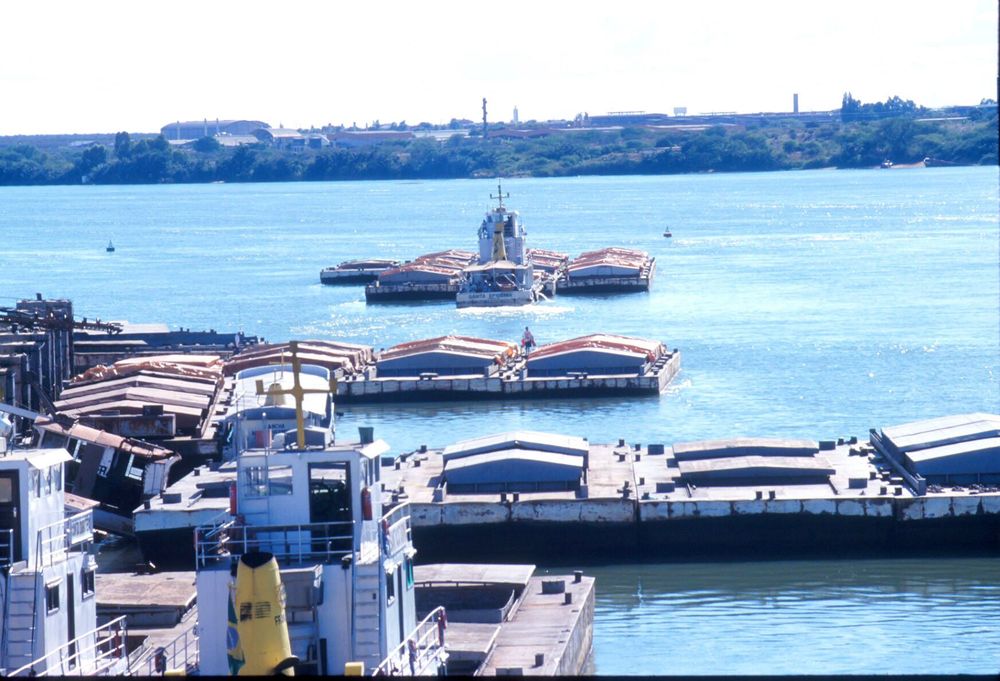
The renovation projects for the São Francisco and Parnaíba river channels aim to revitalize and increase the competitiveness of logistics development in the northeast of Brazil.
Details of both initiatives were provided on the website of the Ministry of Ports and Airports. Firstly, regarding São Francisco, it was reported that "the São Francisco River waterway project foresees the reactivation of commercial navigation along 1,371 navigable kilometers, between Pirapora (MG) and Juazeiro (BA)/Petrolina (PE). Under the coordination of the Port Authority of the State of Bahia (Codeba), it is expected to mobilize up to 5 million tons of cargo during the first year of operation."
Furthermore, it was communicated that "the ongoing economic modeling studies involve the participation of the National Waterway Transport Agency (Antaq) and the Brazilian Navy. The initiative seeks to consolidate a more efficient and environmentally sustainable transport model. A single river convoy, for example, can be equivalent to up to 163 trucks on the road, with the potential to reduce costs, emissions, and congestion."
"The project also foresees the integration of the waterway with railway, road, and port networks, connecting it with the Ferrovia Centro-Atlântica (FCA), the Ferrovia de Integração Oeste-Leste (Fiol), and the Port of Aratu (BA), increasing logistical efficiency for the flow of agricultural inputs, grains, minerals, gypsum, limestone, beverages, and salt," the publication added.
In this regard, Otto Luiz Burlier, National Secretary of Waterways and Navigation at the Ministry of Ports and Airports, assured that "the new São Francisco channel represents an advance for national logistics, as it promotes cleaner, more efficient, and competitive transport, in addition to expanding the movement of goods between the northeastern states."
Secondly, regarding the Parnaíba waterway, it was communicated that "with an extension of 1,344 kilometers, it covers the Parnaíba and Balsas rivers, crossing the states of Maranhão, Piauí, and Ceará, and serving 54 municipalities. This waterway integrates strategic logistical corridors and has great potential for transporting agricultural production from MATOPIBA (Maranhão, Tocantins, Piauí, and Bahia), one of the country's main agricultural frontiers."
It was also noted that "in May 2025, the Federal Government delegated the management of the channel to the state of Piauí, the first transfer of its kind in Brazil's history. This measure will allow for the restoration of the river's navigability and the modernization of its river infrastructure, under the coordination of the Porto Piauí company."
"According to current studies and preparatory work, when the waterway is fully operational, it will allow the navigation of vessels capable of transporting up to 2,100 tons of grain per trip, equivalent to about 50 double-trailer trucks," the communiqué added.
Finally, it was anticipated that "within three years of the start of operations, the waterway will transport between four and five million tons of grain per year. In addition to reducing dependence on road transport, the project will strengthen logistical integration with the Port of Piauí, generating jobs, attracting investments, and increasing the competitiveness of regional production," the statement concluded.