• 3 min de lectura
• 3 min de lectura
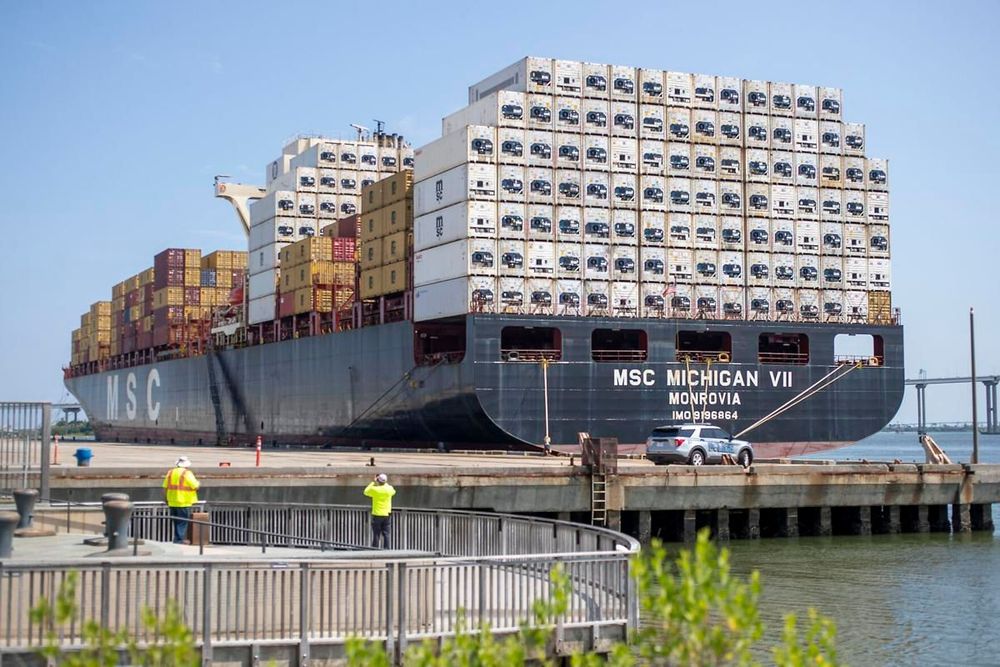
The U.S. Department of Justice reported that MSC Shipmanagement Limited must pay a USD 6 million fine after pleading guilty to failing to report a hazardous situation aboard the container ship MSC Michigan VII in the Port of Charleston in 2024.
According to the statement, the company obstructed an investigation by the National Transportation Safety Board (NTSB) and the U.S. Coast Guard (USCG).
Furthermore, Fernando San Diego San Juan, MSC's Chief Engineer, was sentenced to pay a USD 2,000 fine. He had previously pleaded guilty, also for failing to report a dangerous situation and for obstructing the investigation.
"The hazardous situation aboard this vessel, and MSC's failure to report it, could have led to a fatal bridge collision, as occurred months earlier in Baltimore. Had the MSC Michigan VII been headed for port instead of the open sea, the outcome likely would have been catastrophic," stated Adam Gustafson, Principal Deputy Assistant Attorney General of the Justice Department's Environment and Natural Resources Division (ENRD).
The incident occurred on June 5, 2024, when the MSC Michigan VII departed Charleston. The vessel was scheduled to travel up the Cooper River to a turning basin, and once it turned around, it would continue its route downstream, under the Arthur Ravenel Jr. Bridge, traversing the Port of Charleston to reach the sea.
During this outbound journey, the connecting rod became disconnected from the vessel's governor after the MSC Michigan VII crew performed a manual adjustment. The governor controls engine speed, and because it was not connected to its governor, the MSC Michigan VII's main engine could not reduce its speed and accelerated to approximately 16-17 knots.
In response, the Arthur Ravenel Jr. Bridge was evacuated due to fears that the vessel might collide with it, although it managed to pass under the bridge and reach open water. Local beaches were also cleared due to fears that the MSC Michigan VII's wake could cause injuries to people on the beach, and indeed, two people were injured. The vessel's wake also damaged boats and docks.
By pleading guilty, MSC and San Diego San Juan admitted that, at times, the exact revolutions per minute (rpm) indicated by the MSC Michigan VII's bridge telegraph could only be achieved by manually adjusting the length of the connecting rod between the governor and the fuel rack. Only trained technicians were supposed to manually adjust a vessel's governor and connecting rod, and none of the engineers aboard the MSC Michigan VII were qualified to perform such adjustments.
Despite this, during vessel maneuvers (when entering or leaving a port), engineering personnel were supposed to monitor the bridge telegraph order, visible in the engine control room. As needed, they would go to the governor and manually adjust the length of the connecting rod until the desired rpm was reached.
Additionally, bridge crew members would occasionally call the engine control room and request that the rpm be increased or or decreased to match the telegraph order. San Diego San Juan admitted that he knew this practice was dangerous because manually adjusting the length of the connecting rod could cause it to fail, yet he allowed the practice to continue.