• 2 min de lectura
• 2 min de lectura
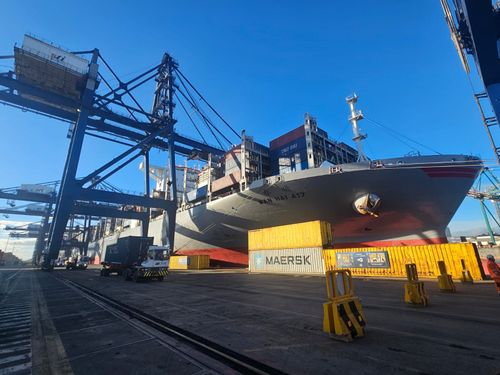
Late on 24 June and into the early hours of 25 June, the Maersk Baltimore and a vessel time-chartered to Maersk successfully exited the Persian Gulf.
The transits were completed in close coordination with our security partners and followed thorough security assessments. We are pleased to confirm that both journeys were successful, with no issues arising.
The decision to initiate transit through the Strait of Hormuz was taken following thorough security assessments and based on recommendations from security partners in the region.
With the departure of Maersk Baltimore and the time-charter vessel, we currently have three remaining vessels in the Gulf; and at a later stage, we will pursue one additional transit through the Strait of Hormuz.
We continue to prioritise the safety of our seafarers, vessels and customers' cargo.
Our customers' needs continue to be at the heart of our business. Throughout the current conflict in the region, we have continued to serve our customers to the best of our ability, resupplying our vessels and conducting crew changes without significant challenges. We also enacted alternative solutions, such as landbridges and air connections, to continue to serve our customer needs.
At the onset of the conflict, 47,000 containers bound for the Gulf region were aboard Maersk vessels.
Of these 47,000 containers, 44,000 have been delivered, while a further 3,000 are pending the final leg.
To keep trade flows between the Gulf countries moving, Maersk will deploy the two remaining vessels on intra-Gulf services serving customers and markets in the Persian Gulf.