• 4 min de lectura
• 4 min de lectura
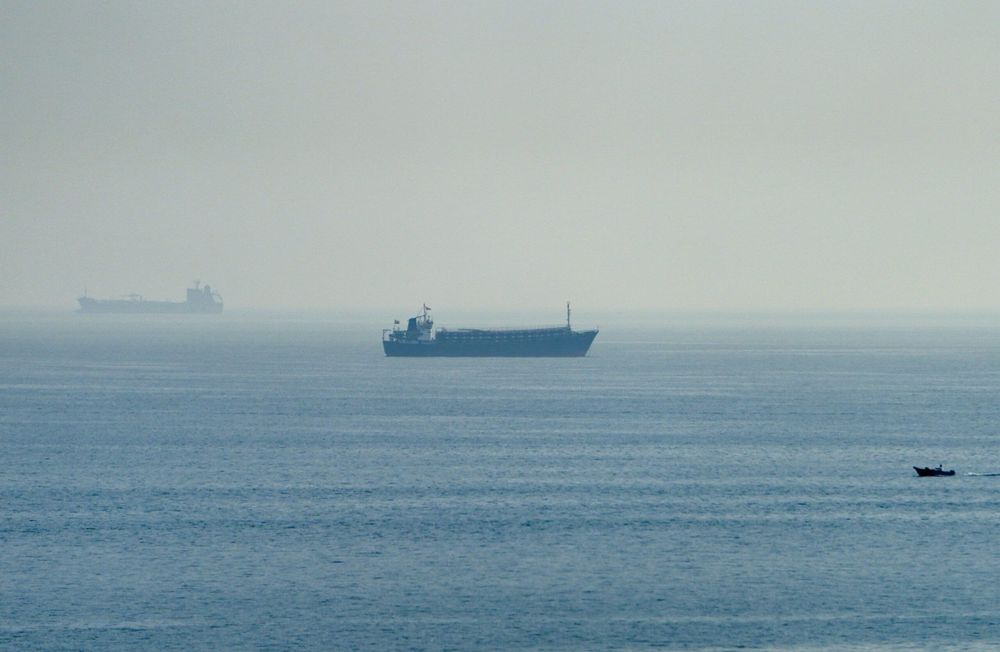
The wait for an Iran-Oman deal that partially reopens the Strait of Hormuz continued into Thursday, after the Islamic Republic said an agreement on proposed shipping lanes was in the final stages.
The two countries that border the crucial waterway have been negotiating a plan for the management of maritime traffic since last month. In recent days, Iran and the US have indicated a resolution is close.
"An understanding in principle has been reached on almost all the raised issues, including the map for maritime traffic entry and exit routes," Iran's Deputy Foreign Minister Kazem Gharibabadi said to the Islamic Republic News Agency on Wednesday. The arrangement may remain valid for "two to four months," he added.
Yet, he cautioned a bilateral deal with Muscat "does not mean the full reopening of the Strait of Hormuz." Tehran has insisted the US is not part of the agreement with Oman and hinted a normalization of the strait will depend on Washington lifting its blockade on Iranian ports.
US President Donald Trump repeated late Wednesday that a deal regarding the strait is imminent and his administration is in contact with Iran.
"We are talking," he said at a rally in Las Vegas. "Let's see what happens."
The president has claimed diplomatic breakthroughs in the past, only for a lasting agreement to prove elusive.
The waiting pattern was reflected in oil markets, where prices swung between small gains and losses as traders assessed the likelihood of a speedy increase in oil flows from the Persian Gulf. Brent crude traded up 1% at to $80.21 a barrel on Thursday.
Any deal for the Strait of Hormuz would have to be approved by Iran's Supreme Leader Mojtaba Khamenei, who has been in hiding since being injured in the initial attacks of the war by the US and Israel, in February. It's unclear if he's given his consent yet and Iranian officials have said that communicating with him takes time.
President Masoud Pezeshkian said in a televised interview on Wednesday that communication with Khamenei is "very difficult at the moment."
The developments follow months of deadlock between Washington and Tehran over how to conclude the war, with control over shipping a particular sticking point. Tehran has demanded that vessels obtain its permission to cross and possibly pay fees of some kind. It has continued to attack ships it deems to be in violation in recent weeks.
Fighting between the sides has largely paused for now, but a number of issues remain unresolved. The deal on Hormuz may enable them to get back to the negotiating table to address Iran's nuclear program.
Trump called off a new round of attacks on Iran over the weekend, which he said would have been the largest since World War II. The Washington Post reported that a shortage of key missiles and air-defense systems was among the reasons for the reversal.
According to the newspaper, Trump lashed out at Defense Secretary Pete Hegseth on the sidelines of a cabinet meeting last week, saying he had been misled about weaponry stocks.
"The U.S. has massive amounts of 'munitions'," Trump said in a Truth Social post on Thursday, denying that the country is running low. "Defense companies are building the largest number of plants and factories in our country's history."
While visible traffic through the strait has been limited, a few millions of barrels a day have continued to cross the waterway, even in recent weeks.
Middle Eastern producers have ferried cargoes out of the Gulf as part of a shuttle program involving help from the US military and vessels turning off their transponders. Some, such as Saudi Arabia and the United Arab Emirates, are managing to bypass the strait by piping a significant amount of their oil to ports outside the Persian Gulf.