• 3 min de lectura
• 3 min de lectura
The general coordinator of the Logistics Development Program (PDL) of the Ministry of Transport and Telecommunications (MTT), Antonio Dourthé, dismissed the plan to reactivate the railway connection between Chile and Argentina through the central zone, specifically between the Valparaíso Region and Mendoza, citing a lack of demand.
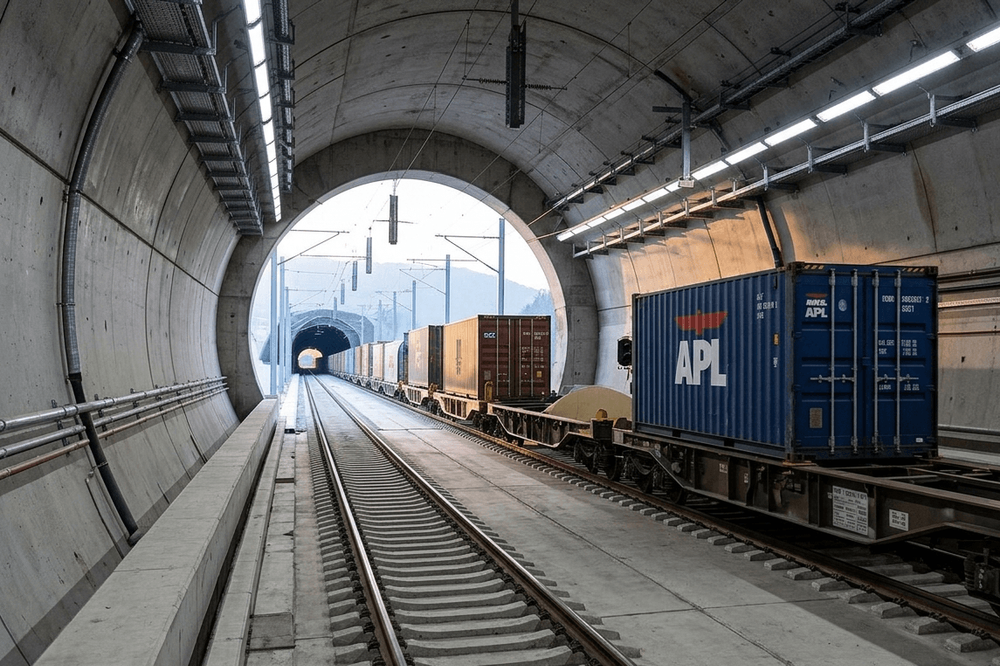
The initiative contemplates an investment of USD 9.6 billion to establish a 54-kilometer tunnel under the mountain range, between Uspallata and Los Andes, offering a new Pacific outlet for South American production. The project, named Longotoma Bioceanic Corridor, considers infrastructure for cargo and passenger transport and seeks to position itself as a logistical alternative to connect Argentina, Brazil, Paraguay, and Uruguay with Asian markets.
Within the framework of the Trains and Metro 2026 Congress, Dourthé explained to PortalPortuario that "for the moment there is no demand that justifies it - the initiative -, especially because it is a very complex project from an engineering point of view. It's not that we are against projects, but rather we are trying to advance with those that are more viable and that we can complete in the shortest possible time and, above all, in a timely manner."
The general coordinator of the PDL elaborated on his statement, noting that "if we arrive with the railway when the outlet for, for example, mineral products has already been solved by other means, then we have lost."
Dourthé stressed the importance of having adequate demand projections to identify the challenges to be addressed to boost the cargo railway sector. Likewise, the civil engineer identified the capacity of the railway to enter Chilean ports as an outstanding point to review.
"The first thing is to have a development of demand projections. Having that, we know what the gaps are. We have gaps in the port area, which we are covering with port tenders, and after that, we have to look at the railway capacities to reach the ports," he indicated.
"We are very lucky, we are reaching the ports of Iquique, Mejillones, Antofagasta, so there is possibility and potential to reach them with railway lines. Now, what we have to see is whether we need more capacity from the product's point of origin to the transit to the destination point, which would be the ports," said the general coordinator.
"The idea is to periodically review how this is developing and, above all, with more specific work on regional plans that allow us to see in detail what we need to analyze," said Antonio Dourthé.