• 2 min de lectura
• 2 min de lectura
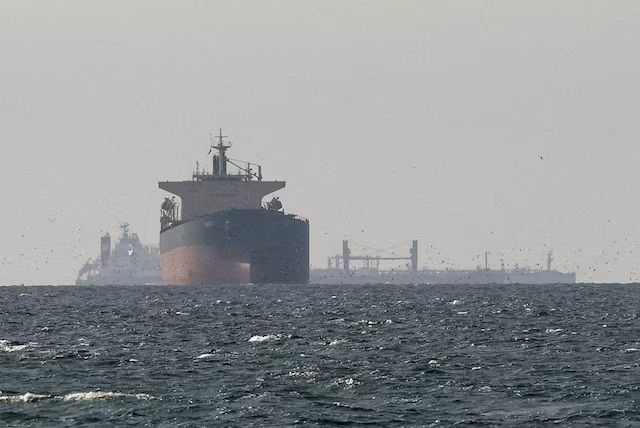
Japan will receive a boost in its crude oil supply from the Middle East in July following the departure of two Japanese-owned supertankers carrying Saudi oil that were held in the Strait of Hormuz, according to shipping data.
Both vessels joined a fleet of ships released the previous day, bringing the total volume of cargo aboard Japan-linked vessels that managed to cross the passage this week to 16 million barrels, thereby reducing the levels of crude held in the Persian Gulf.
One of the tankers is owned and operated by Nippon Yusen (NYK Line), while the other belongs to and is managed by Kawasaki Kisen Kaisha (K Line), LSEG data showed. Each loaded 2 million barrels of Saudi crude on March 1, according to Kpler data.
A spokesperson for the Japanese Shipowners' Association (JSA) recently noted that the number of Japan-linked vessels remaining in the Persian Gulf had decreased to 26, down from 45 recorded at the start of the conflict.
On Monday, July 6, six VLCCs loaded with 12 million barrels of Middle Eastern crude, two chemical tankers, a car carrier, and a container ship—all linked to Japan—exited the strait. The tankers are carrying crude from Saudi Arabia, the United Arab Emirates, and Qatar, loaded between late February and early March.
Most of these vessels are operated by the Japanese shipping company Mitsui O.S.K. Lines (MOL). In addition to the stranded ships, five VLCCs loaded with Saudi oil from the Port of Ras Tanura are provisionally destined for Japan, after the world's largest exporter resumed loadings in late June at its main port terminal located within the Persian Gulf, Kpler data showed.
Japan, which depended on the Middle East for 94% of its crude supply before the war with Iran broke out in February, saw its oil imports plummet in April to the lowest level in over 60 years, after supply from the Persian Gulf producing region fell by 68% year-on-year.