• 3 min de lectura
• 3 min de lectura
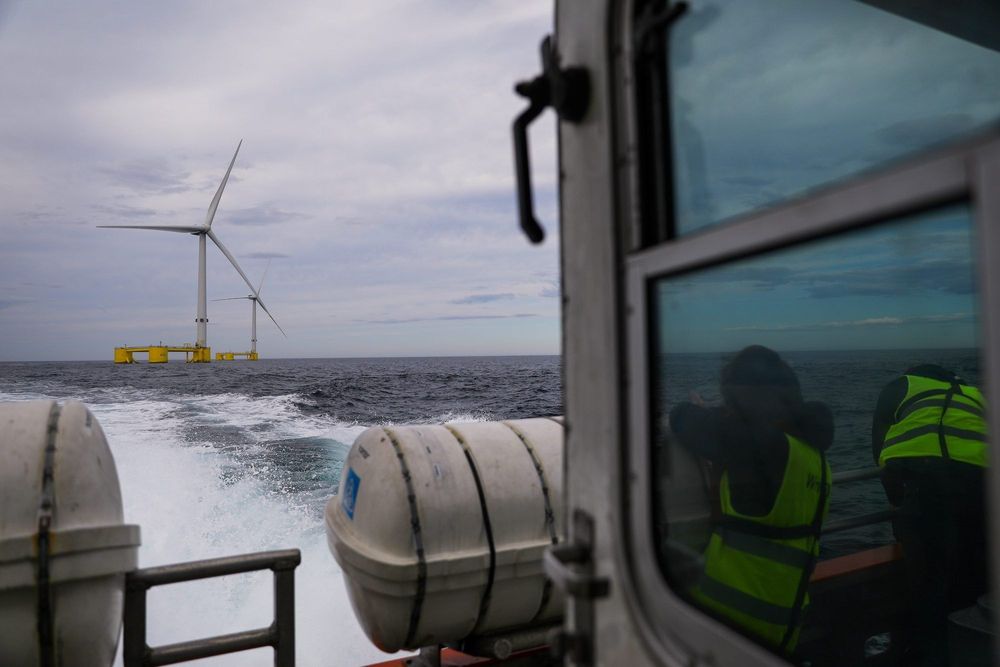
Floating offshore wind is set to create a new wave of demand for high-specification offshore support vessels, with supply constraints potentially emerging before the end of the decade, according to a new report from classification society ABS.
The report, Floating Offshore Wind and the Vessels That Support It, produced in collaboration with Intelatus Global Partners, concludes that demand for large anchor handling tug supply vessels (AHTSs) and multipurpose support vessels (MPSVs) will increase significantly as floating wind projects move from demonstration phases to commercial-scale deployment.
ABS says the industry's existing offshore oil and gas fleet provides a strong foundation, but many vessels will require upgrades—or be replaced by purpose-built tonnage—to meet the specialized requirements of floating wind installations.
"Floating offshore wind presents a distinct set of challenges, particularly around vessel capability, mooring systems and project execution," said Rob Langford, ABS Vice President, Global Offshore Markets. "This report highlights where existing offshore experience can be applied, while also identifying the areas where planning, investment and technical readiness will be increasingly important as projects develop."
The report forecasts that floating wind projects will drive demand for vessels involved in towing floating foundations, installing anchors and mooring systems, hook-up operations, subsea cable installation, and long-term inspection and maintenance. As commercial projects ramp up across Europe and Asia-Pacific, vessel availability is expected to become an increasingly important constraint.
According to the study, demand for capable AHTSs and MPSVs is expected to strengthen from the late 2020s, with shortages in certain vessel classes potentially emerging as early as 2029 if offshore oil and gas activity remains robust. ABS says the outlook should serve as an early signal for owners to evaluate fleet positioning and investment decisions before the market tightens.
The report also underscores the scale of floating wind's installation requirements. A typical 1 GW floating wind farm could require around 198 anchors and nearly 200 kilometers of mooring lines—far exceeding the mooring requirements of a single deepwater floating production, storage and offloading (FPSO) unit. That translates into greater demands on deck space, winch capacity, chain handling equipment, crane capability, and overall offshore construction functionality.
While floating offshore wind remains a relatively small segment of the global offshore wind market today, ABS expects steady growth over the next decade. Global installed floating wind capacity is projected to rise from roughly 270 MW in 2025 to about 5 GW by 2035 and more than 14 GW by 2040, led primarily by projects in Europe. South Korea, Japan and Taiwan are expected to drive growth in Asia, while commercial-scale projects are also anticipated in the United States, Canada and Brazil during the 2030s.
For vessel owners, the report recommends assessing whether existing offshore support vessels can be adapted for floating wind service or whether upgraded or purpose-built vessels will be needed to capture emerging opportunities. Companies that invest early in vessel capability, mooring expertise and offshore project execution are expected to be best positioned as the market expands, ABS said.