

• 2 min de lectura
• 2 min de lectura
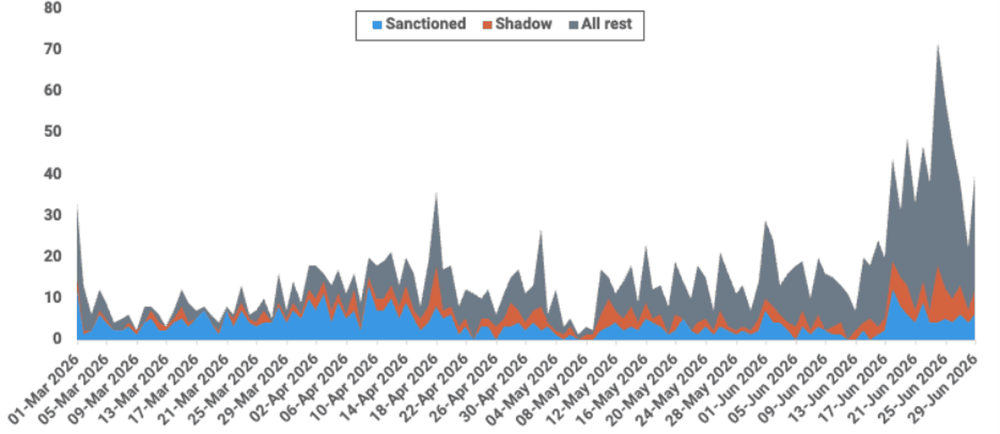
Table of physical attacks on vessels as of June 30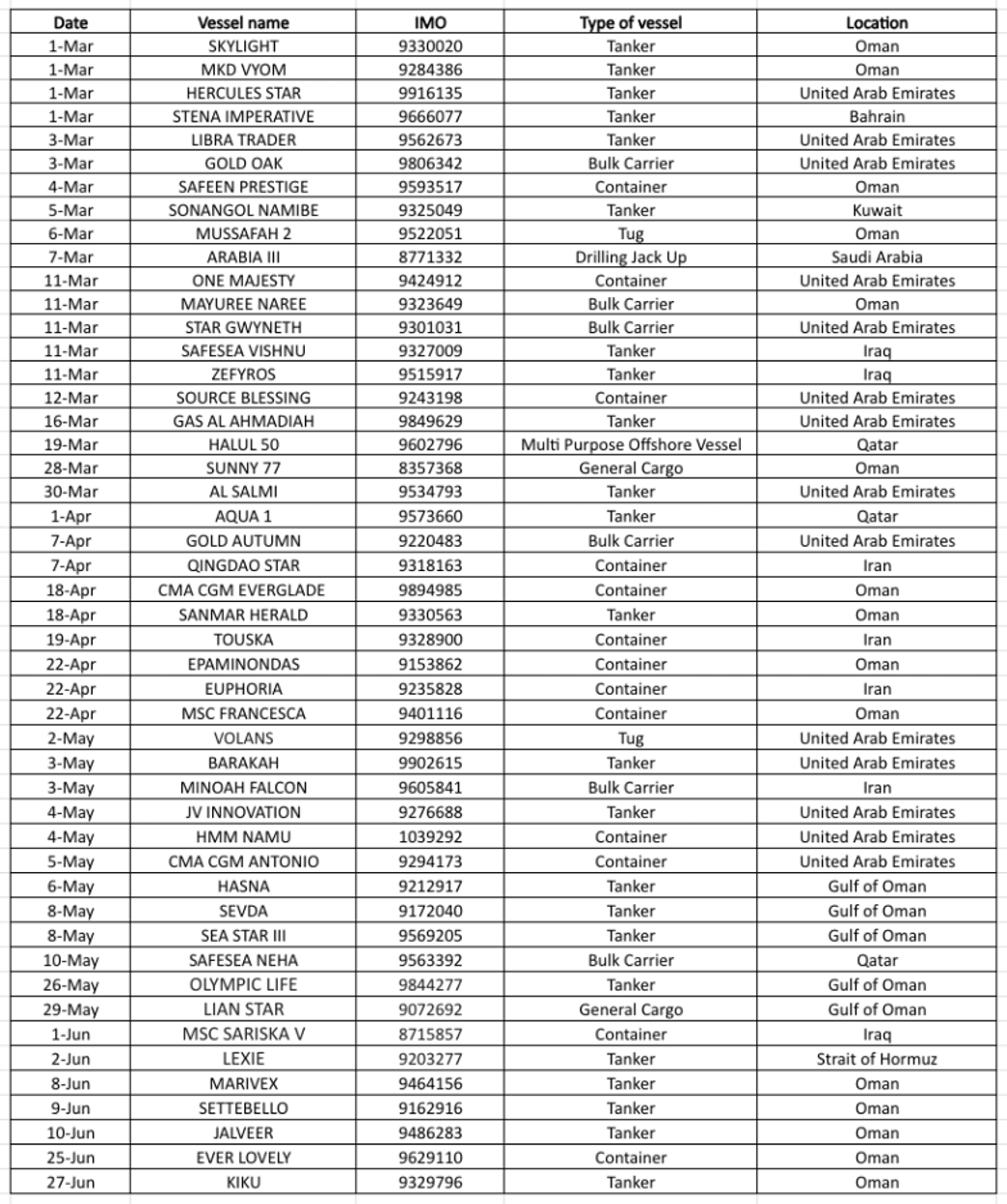 Source: Kpler Risk and Compliance, IMO
Vessels crossed SOH by risk level as of June 29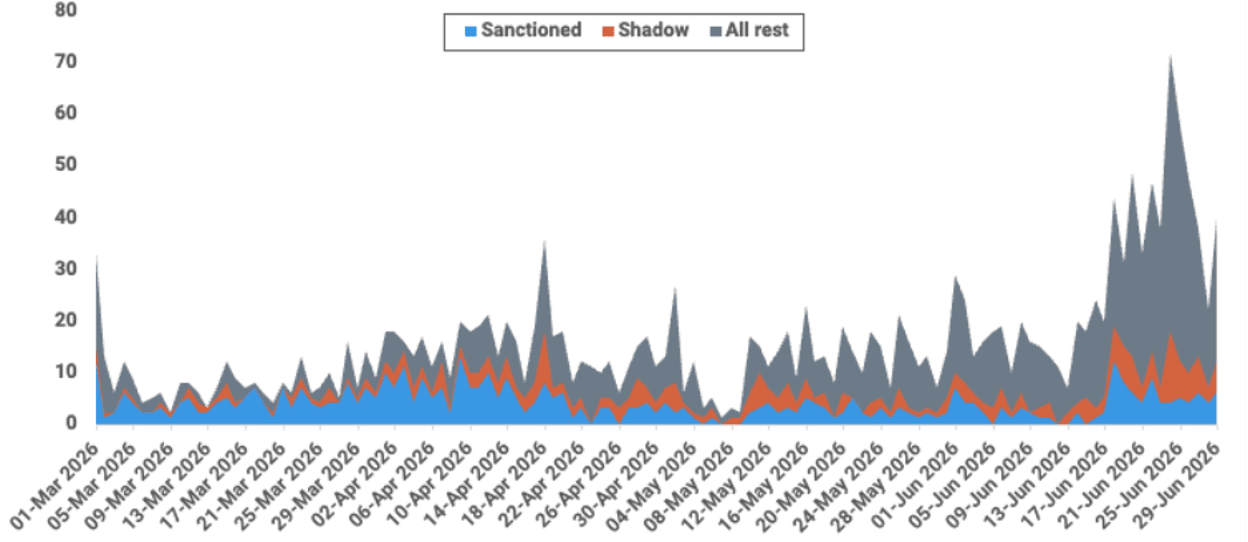 Source: Kpler Risk and Compliance; full traffic data is available including non-commercial vessel tracking from MarineTraffic
Vessels crossed SOH by direction of crossing as of June 29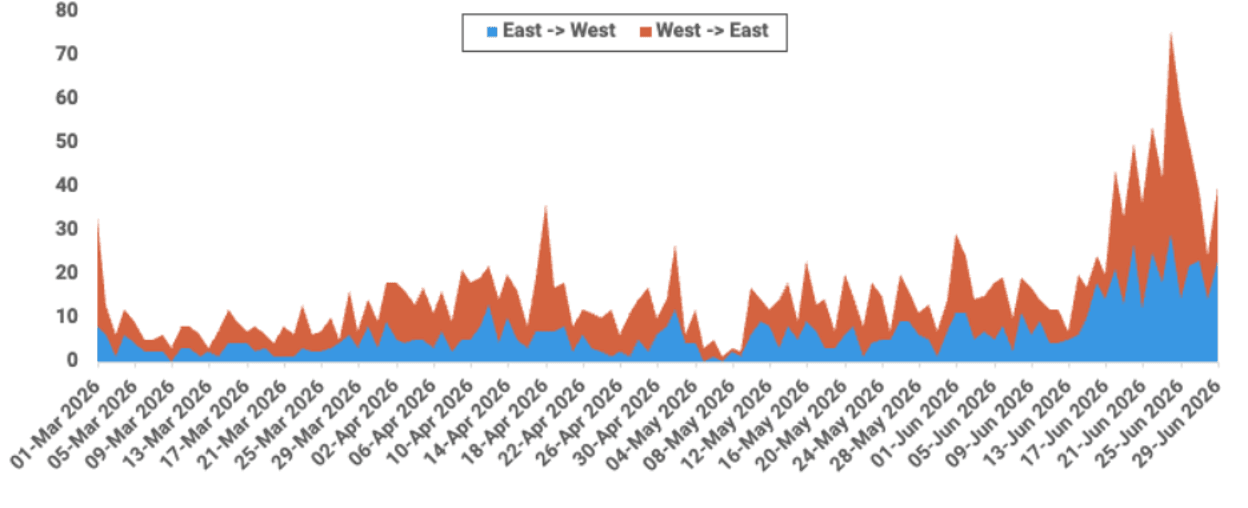 Source: Kpler Risk and Compliance
Confirmed crossings through the monitored Strait of Hormuz zone rose 66% d/d on 30 June, with 40 verified transits recorded. Traffic remained dominated by commercial movements, which accounted for 28 crossings, while direction was skewed east-west at 23 transits versus 17 west-east. Low-risk vessels continued to make up the majority of activity. Only two Iranian-flagged vessels crossed, while laden activity included three crude tankers alongside grains, CPP, LPG and DPP cargoes.
Routing patterns show that confidence remains uneven. The Iranian Route was the most used pathway with 16 crossings on 30 June, followed closely by the Dark/Unknown Route at 12, suggesting that a meaningful share of operators are still preserving opacity despite the interim reopening framework. The Omani route recorded 10 crossings, while the IMO TSS remained marginal at only two transits. This indicates that operators are not yet fully rotating back into the UN/IMO-recommended framework, particularly after recent vessel incidents and continued uncertainty around route security. No new IMO-verified attacks have been recorded since 27 June but operators are still proceeding cautiously.
Latest negotiations remain active but fragile. President Trump said US-Iran talks would resume in Qatar, but Tehran denied that direct negotiations were scheduled, underlining the gap between US signalling and Iran's public position. At the same time, Iran described the Strait of Hormuz situation as "sensitive and complex," while France and Oman moved to support demining cooperation with international partners. The broader dispute is now less about whether traffic can move and more about who controls the reopening. Public reporting indicates Iran and Oman remain at odds over decision-making authority, with Iran resisting alternative route proposals and continuing to treat control over Hormuz as a bargaining tool.

