• 2 min de lectura
• 2 min de lectura
Contributing author: Yuan Li, Junior Risk & Compliance Analyst at Kpler (yli@kpler.com)
Table of physical attacks on vessels as of July 3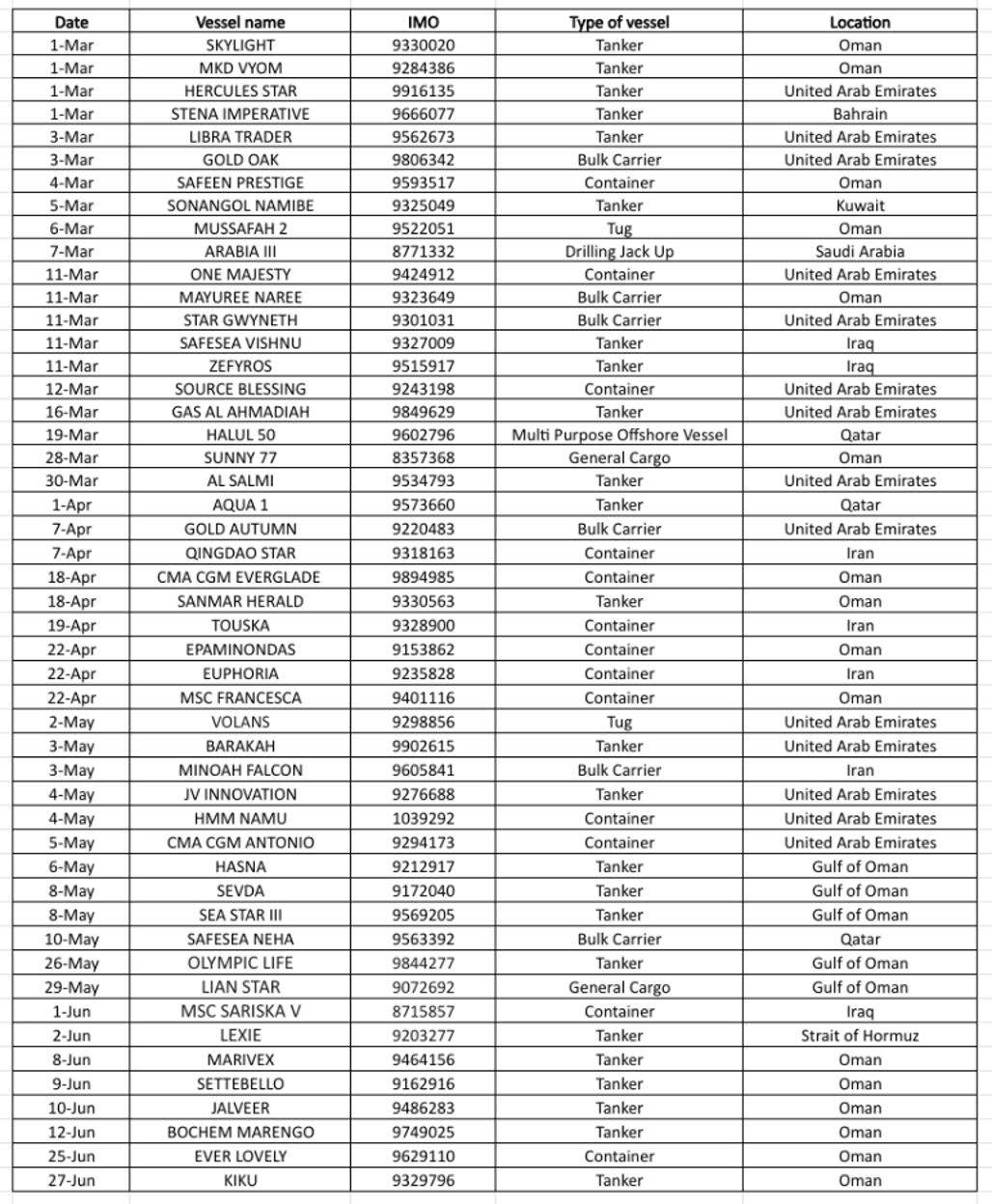 Source: Kpler Risk and Compliance, IMO
Vessels crossed SOH by risk level as of July 2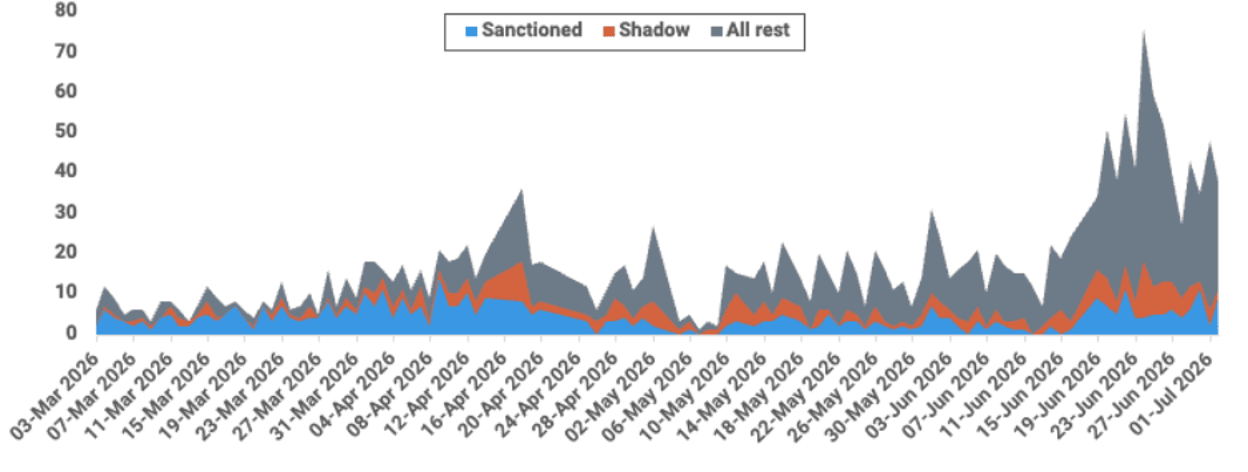 Source: Kpler Risk and Compliance; full traffic data is available including non-commercial vessel tracking from MarineTraffic
Vessels crossed SOH by direction of crossing as of July 2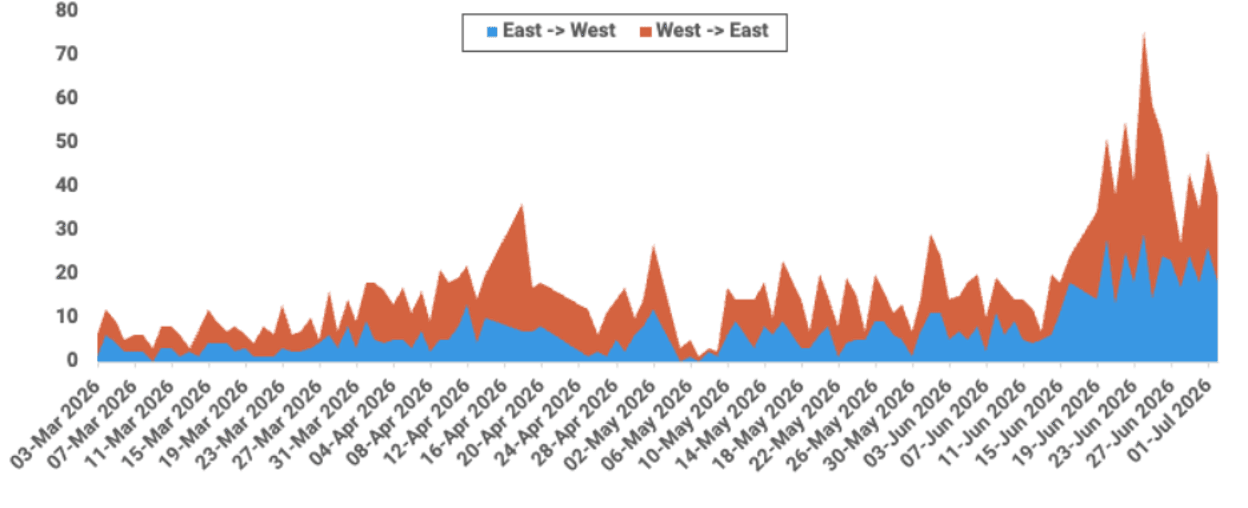 Source: Kpler Risk and Compliance
Confirmed crossings through the monitored Strait of Hormuz zone fell by 10 d/d to 38 as of 2 July. Commercial traffic continued to dominate, with mostly low-risk vessels observed, alongside nine sanctioned crossings. Flows were mainly west-east, while Iranian-flagged activity picked up sharply to 11 crossings from two the previous day. Laden activity remained broad, with 14 cargo-carrying transits, led by crude, CPP and dry bulk, alongside LPG and DPP cargoes.
The Iranian Route was the predominant passageway with 15 crossings, followed by the Dark/Unknown Route, while the Omani route lost momentum d/d. This suggests operators are prioritizing routes perceived as more immediately accepted by Iranian authorities over the greater legal and diplomatic assurance offered by the Omani/UN-backed corridor. No new attacks have been recorded since 27 June , but the continued use of Dark/Unknown routing also shows that confidence remains incomplete, with some operators still preserving opacity despite higher overall traffic.
Negotiations remain focused on route governance and fees rather than a simple reopening. Iran has warned tankers to use approved routes or face a "forceful response," while continuing to push for eventual fees or a service-charge mechanism for Hormuz passage. The US position remains opposed to any Iranian-controlled tolling system, although some form of fee arrangement as increasingly likely if it is framed as a navigation or service charge rather than a toll.
While traffic shows increased signs of being stabilized in a 30–60 crossings/day range, uncertainty remains over whose approval is required to transit and whether the interim toll-free framework can survive beyond the current deal window. The drop in Omani-route use and renewed reliance on Iranian/Dark routing therefore point to a recovery that remains politically managed, compliance-sensitive and vulnerable to any breakdown in talks.