• 3 min de lectura
• 3 min de lectura
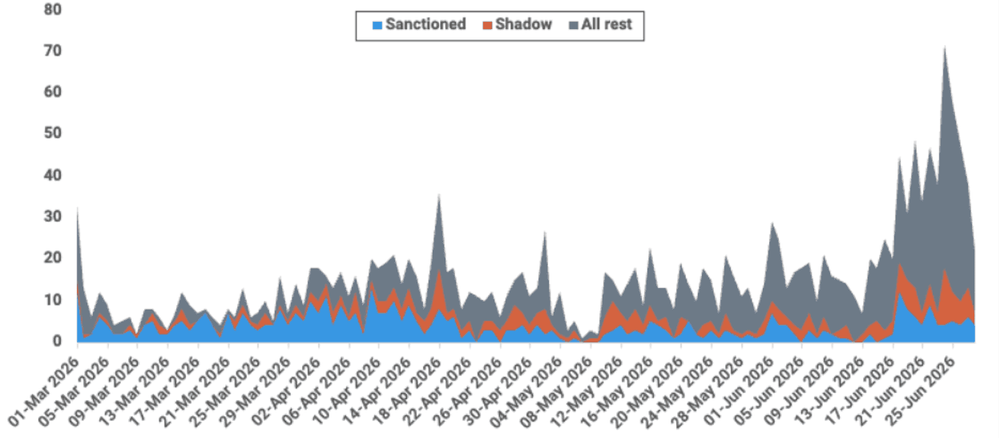
Table of physical attacks on vessels as of June 29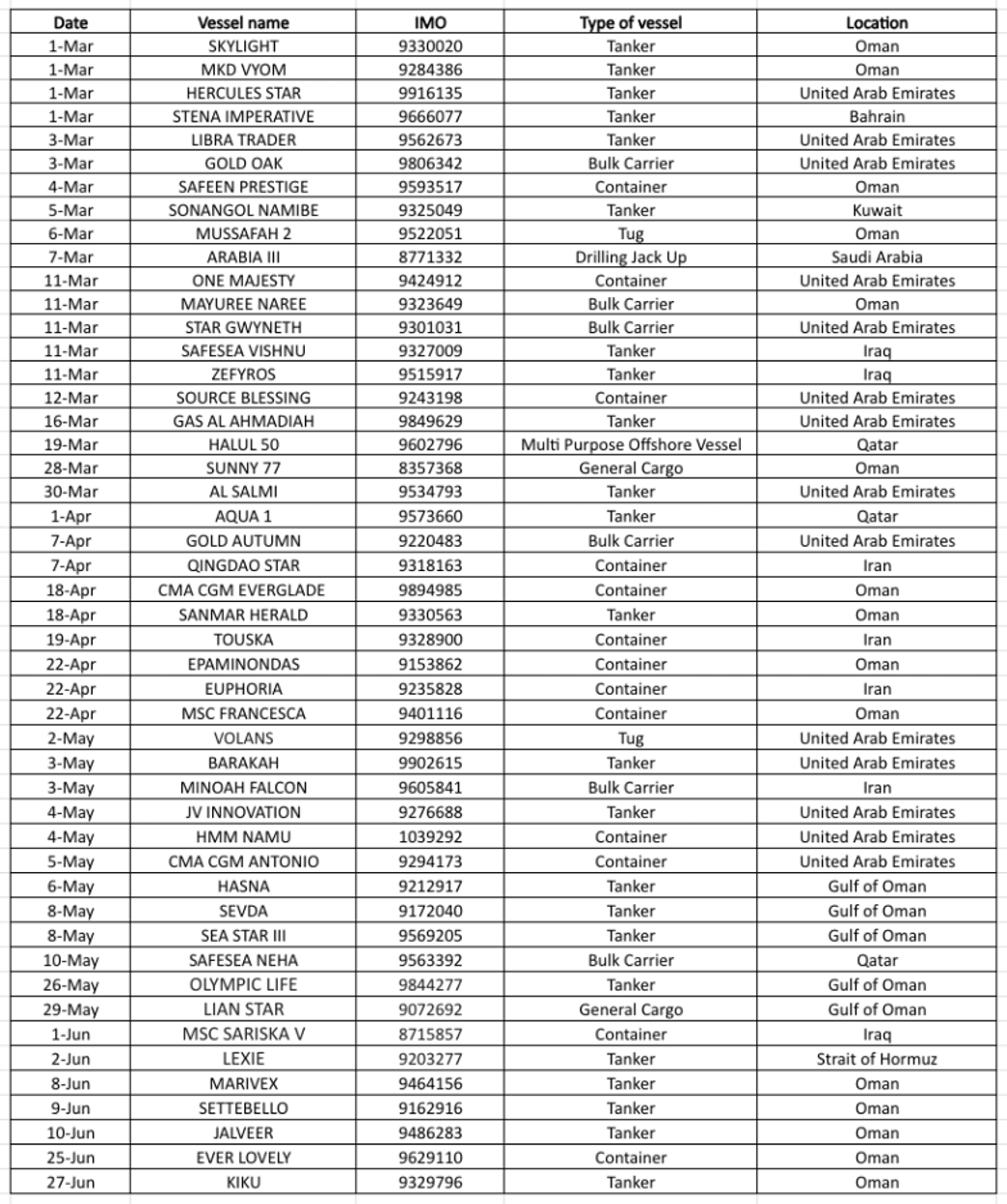 Source: Kpler Risk and Compliance, IMO
Vessels crossed SOH by risk level as of June 28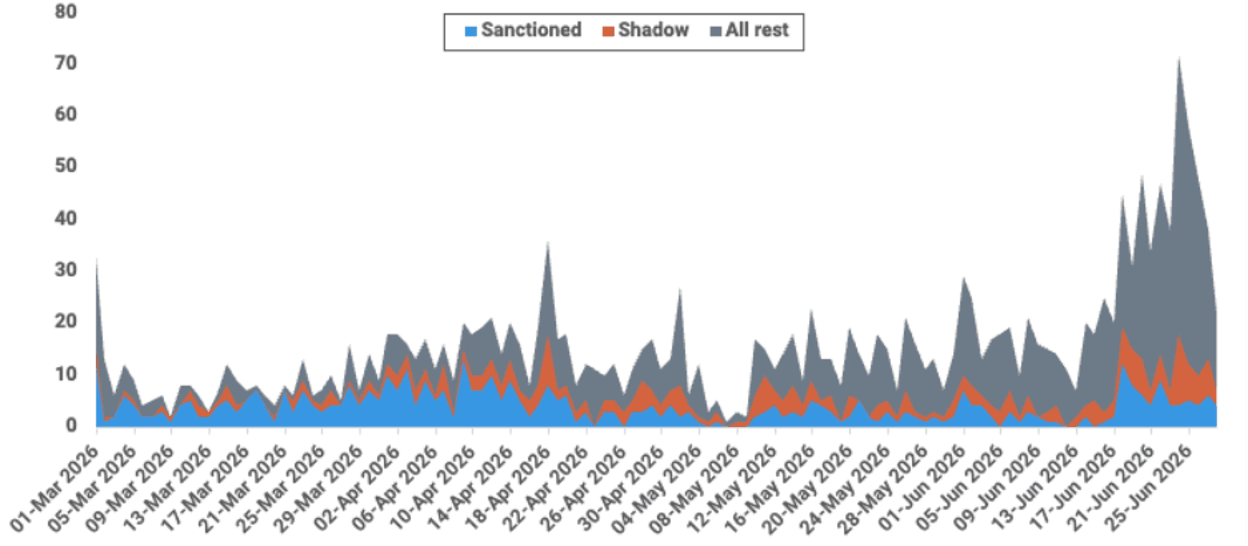 Source: Kpler Risk and Compliance; full traffic data is available including non-commercial vessel tracking from MarineTraffic
Vessels crossed SOH by direction of crossing as of June 28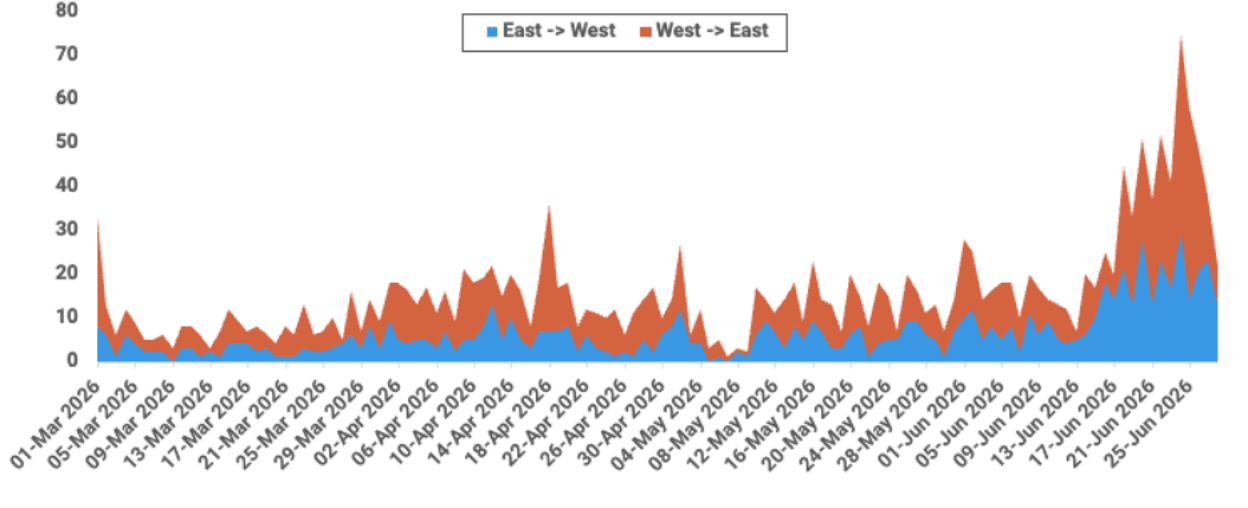 Source: Kpler Risk and Compliance
Confirmed Strait of Hormuz crossings remained active between 26 June and 28 June, with 108 verified transits recorded. Activity was highest on 26 June, with 48 crossings, followed by 38 crossings on 27 June and 22 crossings on 28 June. Directionally, traffic was broadly balanced but slightly weighted East to West, with 57 crossings moving East to West and 51 moving West to East. Included container, general cargo, landing craft, tug, service vessel, bulk carrier, crude, LPG, oil/chemical, asphalt/bitumen, LNG-linked, fertilizer, chemicals, methanol, metals and dry bulk movements.
Of the 108 crossings, 39 followed the Omani Route, 37 followed the Iranian Route, 23 were classified as Dark/Unknown Route and 9 followed the IMO Route. The strong use of the Omani Route is notable, particularly after the IMO-supported evacuation and transit planning had promoted routing closer to Oman. However, the continued use of Iranian Route and Dark/Unknown Route classifications shows that traffic remained fragmented rather than concentrated through one agreed corridor.
IMO's highlighted incident tracker lists 48 confirmed incidents in the Strait of Hormuz and wider Middle East as of 29 June, with the two latest entries recorded during the weekend window: EVER LOVELY (IMO 9629110) on 25 June, 7.5 NM southeast of Dahit, Oman, and KIKU (IMO 9329796) on 27 June, 8 NM off Oman. IMO reports both vessels as damaged, with no pollution recorded; for EVER LOVELY, IMO also reports no injuries. These latest confirmations show that physical risk around the Strait remained active during the same period as weekend crossings continued. The IMO evacuation plan was also paused following the renewed attack activity, adding a further operational constraint for vessels transiting the area.
The weekend crossing pattern should be read alongside the latest US-Iran talks. Public reporting indicates that, after renewed hostilities around the Strait, the US and Iran agreed to halt attacks and resume technical negotiations in Doha, with discussions focused on preserving the 60-day framework, safe passage through Hormuz, and the disputed interpretation of maritime-control provisions in the MOU. The high crossing count shows that the Strait remained operational over the weekend, while the attacks, the pause to the IMO evacuation plan, and the split between Omani, Iranian and Dark/Unknown routes show that implementation of the maritime-security commitments remains fragile.