• 3 min de lectura
• 3 min de lectura
The Panama Canal initiated a strategic phase of information, community outreach, and accompaniment in areas of interest located within elevations 100 and 260 of Gatun and Alhajuela lakes, including their islands and floodplains, with the objective of protecting human life, community assets, and the quality of water consumed by thousands of Panamanians.
These zones, known as elevations, correspond to strips of land measured in feet above sea level, 100 feet in Gatun Lake and 260 feet in Alhajuela Lake, which must be kept free of unauthorized occupations and uses. Their function is key to ensuring the operation of the Canal's water system, the safety of communities, and the supply of drinking water for more than half of the country's population.
The elevation areas act as natural buffer zones against floods, inundations, and other extreme events, which are increasingly frequent due to climate change. Their adequate protection helps reduce risks for people, prevent damage to homes and infrastructure, and preserve the quality and availability of water resources.
Community outreach and presence in the territory
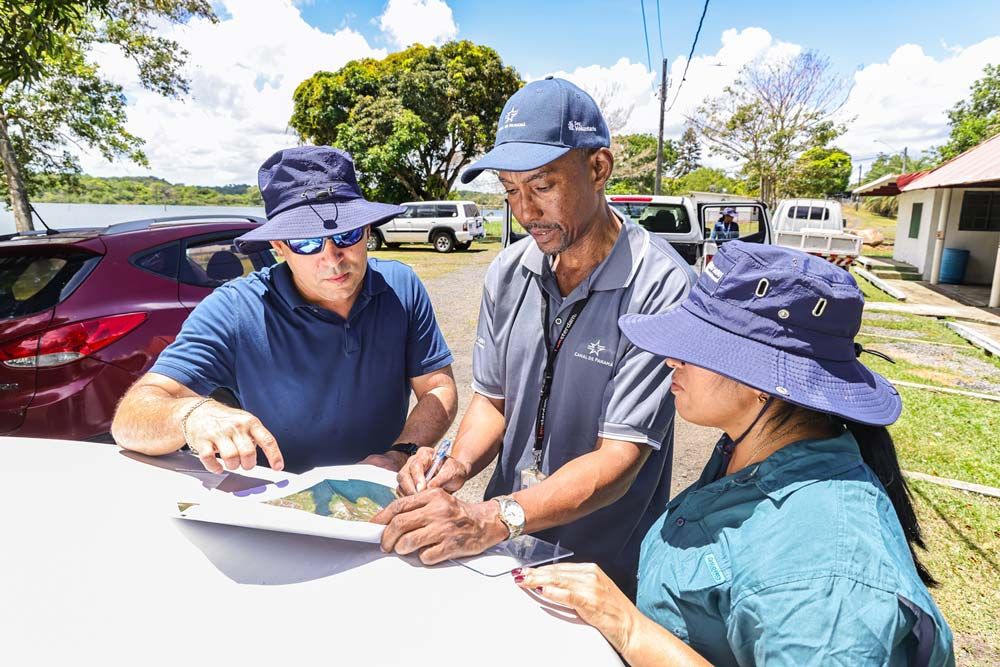
Since March, personnel from the Environmental Compliance Unit of the Vice Presidency of Water Resource Administration of the Panama Canal have conducted community outreach sessions in areas near the elevations of Gatun and Alhajuela lakes, with the purpose of informing the population about the importance of caring for these areas, clarifying permitted uses, and strengthening direct dialogue with communities.
Communities such as Arenosa, Nuevo Vigía, Isla Verde, Cuipo, Chorrillo, Marañoncito, Caña Brava, Río Gatún, Pueblo Nuevo, La Laguna, and La Represa, among others, will be visited, reaching over 350 homes.
During these meetings, information is provided on the mechanisms for inquiries and addressing concerns. Doubts about the Canal's responsibilities in its administered areas have been clarified, and the importance of community participation as part of responsible and transparent management has been reinforced.
Compatible uses and protection of water resources
In the elevation areas, only uses compatible with their function as a water reserve and safety zone are permitted, such as community water intakes, community docks, non-permanent neighborhood infrastructure, and subsistence crops, provided they do not pose risks to people or affect the reservoirs or the water supply for communities, their ecosystems, and the operation of the Canal.
Commitment to people and sustainability
The Panama Canal's management in these areas is based on the principles of life and safety protection, water sustainability, legality with social sensitivity, transparency, community participation, and continuous institutional presence in the territory.
The Panama Canal carries out these actions with the responsibility of working closely, preventively, and transparently, always prioritizing the well-being of communities and Panama's water resilience.
To ensure a transparent and citizen-friendly process, the Panama Canal reminds people who have complaints, reports, or inquiries related to the elevation 100 and 260 areas that they can call 276-2872 or write to unidad-ambiental@pancanal.com where they will receive timely guidance and information.