• 3 min de lectura
• 3 min de lectura
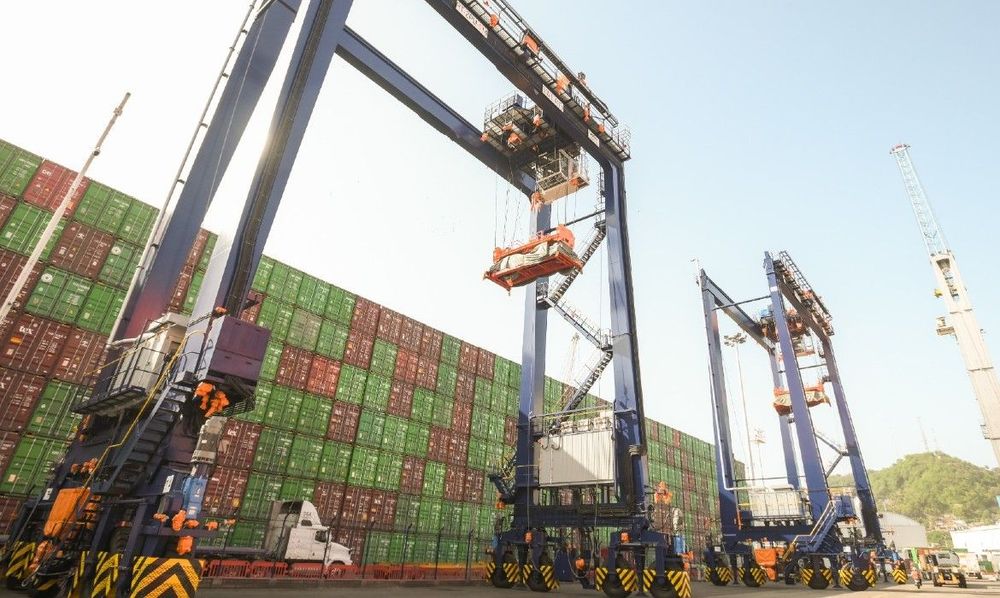
The modernization of port infrastructure continues to set the pace in Manzanillo. Hutchison Ports Timsa announced an investment to incorporate two new Rubber Tyred Gantry Crane (e-RTG) electric cranes, with which it seeks to increase the operational capacity of its terminal and address the sustained growth in container movement at Mexico's main Pacific port.
The new equipment arrived at the port aboard the vessel Xiang He Kou, from China, and will be used for yard operations at the terminal. With a lifting capacity of 45 tons each, the cranes will optimize container handling maneuvers, increase operational productivity, and strengthen response capacity in the face of increasing cargo volumes at the port facility.
The investment is part of the expansion process that Hutchison Ports Timsa is undertaking in Manzanillo, where equipment renewal is part of a strategy aimed at increasing the terminal's operational efficiency in an environment of greater demand for supply chains and international trade.
"We continue to invest in infrastructure and technology because we know that logistical competitiveness depends on having increasingly efficient, safe, and sustainable equipment. These new cranes will strengthen our operational capacity and allow us to continue offering reliable, world-class service to our clients," said Jaime Andrés García López, General Manager of Hutchison Ports Timsa.
In addition to the operational component, the company highlighted that the new equipment operates with 100% electric technology, which will contribute to reducing fossil fuel consumption and improving the environmental performance of the terminal's operations. This incorporation is part of Hutchison Ports' global sustainability strategy, which aims to reduce its absolute Scope 1 and 2 greenhouse gas emissions by 54.6% by 2033, taking 2021 levels as a reference, as well as achieving net-zero emissions across its entire value chain by 2050 through the incorporation of cleaner technologies and more efficient processes.
The acquisition of these cranes also adds to other investments the company is currently making in Manzanillo, including the commissioning of a new external yard aimed at expanding the terminal's logistical capacity, streamlining container flow, and responding to the growth in foreign trade recorded by the port. It is worth remembering that this project represented an investment of close to 690 million pesos and was conceived to increase the terminal's service capacity in response to the dynamism of containerized cargo.
The announcement comes in a context where Manzanillo maintains its national leadership in container movement. According to figures from the National Port System Administration (Asipona) Manzanillo, during 2025 the port mobilized 3.89 million twenty-foot equivalent units (TEU) and, in the first quarter of 2026 alone, exceeded one million TEU, driven by the strengthening of transpacific trade and logistical demand linked to nearshoring (relocation of production lines).