• 2 min de lectura
• 2 min de lectura
An Iranian anti-ship missile was likely involved in an attack against the HMM Namu, operated by shipping company HMM, in the Strait of Hormuz in early May, according to the South Korean Ministry of Foreign Affairs.
Saeed Koozechi, the Iranian ambassador to the Asian nation, denied Iran's involvement in the aggression against the vessel, stating that his country "had no involvement" in it.
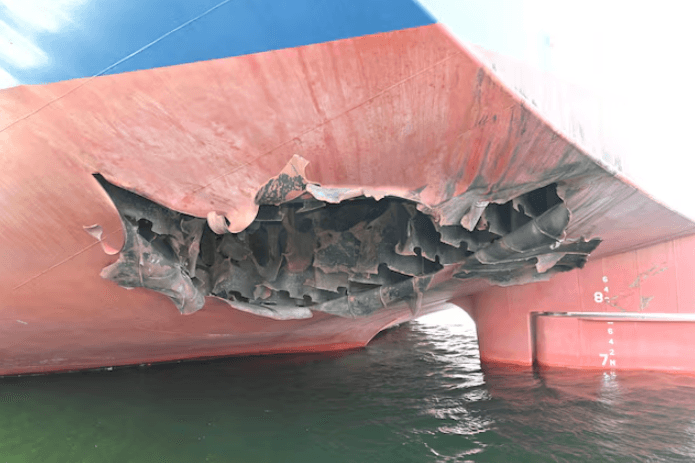
The ministry made this assessment at a press conference where it announced the results of a government investigation into the May 4 attack on the bulk carrier, which caused a fire and damaged the lower part of the stern hull.
"Various evidence points to Iran," said Vice Foreign Minister Park Yoon-joo, adding that Seoul had not conclusively determined who was responsible or if the attack was intentional.
The investigation examined the remains of unidentified objects found inside the ship after the attack. Analysis showed that the ship was attacked twice, and while the first warhead did not explode, the second one did.
Components found in the remains indicated that the objects had likely been manufactured in Iran, the ministry reported.
"Their engines were similar to turbojet engines manufactured in Iran," Park said, noting that one component had markings that appeared to be used by an Iranian manufacturer.
According to Park, the warheads resembled those used in Iranian Noor or Qader anti-ship missiles. South Korea summoned the Iranian ambassador to share the investigation results and convey a message of protest.
U.S. President Donald Trump indicated shortly after the incident that Iran had fired on the South Korean vessel and urged Seoul to join U.S.-led efforts to ensure the security of shipping through the strait.
Source: portalportuario