• 3 min de lectura
• 3 min de lectura
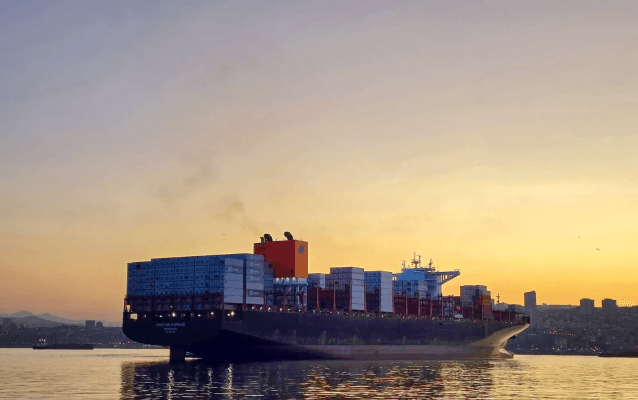
Ports on the Pacific coast of Latin America are reporting operational efficiency levels with berthing waiting times not exceeding two hours at most of their terminals, a scenario led by Mexico's agility and the rapid cargo rotation in Chile and Peru, according to Hapag-Lloyd.
The Mexican port system on the Pacific side is positioned as the most dynamic in the corridor, registering zero waiting times at strategic facilities such as Manzanillo, Lázaro Cárdenas, and Ensenada. This immediate flow of vessels is maintained continuously even at terminals reporting high levels of yard storage, such as SSA Holdings in Manzanillo (80%) and APM Terminals in Lázaro Cárdenas (83%).
In Chile, operations show differentiated behavior between the northern macro-zone and the central-southern zone. In the far north, Terminal Puerto Arica (TPA) and Iquique Terminal Internacional (ITI) report 100% occupancy in their container yards but manage to sustain high cargo rotation with only 2 hours of waiting time for vessel berthing.
Meanwhile, Antofagasta Terminal Internacional (ATI) operates with 70% yard occupancy and a 1-hour delay, while Puerto Angamos records 72% utilization with a 4-hour wait.
In the central zone of Chile, San Antonio maintains stable service with 2 hours of waiting time at both DP World (with 52% yard occupancy) and San Antonio Terminal International (with 80% occupancy).
In turn, Terminal Pacífico Sur Valparaíso (TPS) operates with 52% yard capacity utilized but registers a wider waiting range of 2 to 9 hours, while San Vicente Terminal Internacional (SVTI) - Bio Bio Region - presents 48% yard usage and delays of between 3 and 6 hours.
In Peru, the port system shows a relaxed performance with less pressure on its storage areas. DP World Callao operates with 65% yard occupancy and 2 hours of waiting time.
Meanwhile, the Port of Paita records 50% yard usage and a 1-hour wait, Terminal Internacional del Sur (Matarani) reports 45% occupancy and 2 hours for berthing, and the Port of Ilo registers the country's greatest agility, operating with 40% yard and zero waiting times for vessels.
For its part, Colombia's Pacific coast in Buenaventura maintains stable operations with 2 hours for berthing and 73% yard occupancy, similar to the Panamanian Pacific accesses in Rodman (PSA), which operate without waiting times.
On the Ecuadorian coast, Posorja records a delay of only 2 hours, while the Terminal Portuario de Guayaquil (TPG) raises the average for the area with waits of up to 8 hours.
The critical exception in the Pacific strip is concentrated in Central America, where Puerto Corinto in Nicaragua records a 40-hour wait with 90% yard usage, followed by Puerto Caldera in Costa Rica, a terminal that accumulates 21 hours of delay for vessel berthing and a 91% occupancy level. Conversely, on the Guatemalan Pacific, Puerto Quetzal provides fluid service with idle times of between 0 and 1 hour.