• 4 min de lectura
• 4 min de lectura
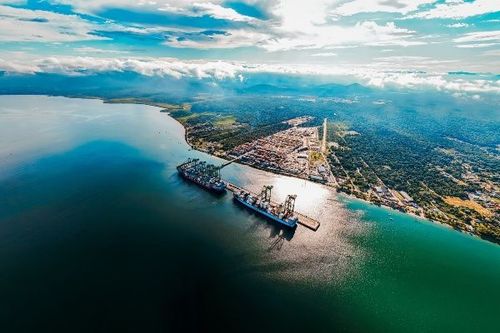
Paranaguá celebrates its 378th anniversary this Wednesday, July 29th, and TCP, the company that manages the Paranaguá Container Terminal, marks the date by reinforcing a sentiment that drives its operation: the pride of being "parnanguara" (a native of Paranaguá). All this growth of the Terminal accompanies, in the same proportion, the expansion of the city.
In 2018, TCP handled the equivalent of 813,000 twenty-foot equivalent units (TEUs), and by 2025, that figure reached 1.663 million TEUs—double in seven years—generating a trade flow that totaled R$ 28 billion between exports and imports. This result placed TCP, for the second consecutive year, as the largest port terminal in southern Brazil, according to the ranking of the National Waterway Transportation Agency (ANTAQ).
In exports, for example, TCP concentrates 47% of all Brazilian chicken meat shipments, meaning that practically one out of every two chickens exported by Brazil passes through Paranaguá before heading abroad. In addition to animal protein, the Terminal is the gateway for important agribusiness chains, connecting Paraná and other regions of the South, Southeast, and Central-West of Brazil with the main international markets.
As operations advance, job creation at the Terminal also follows an upward trajectory, and in the last five years alone, TCP increased its workforce by 20%, from approximately 1,300 to over 1,600 employees. To accelerate the number of hires, the Terminal also began seeking new talents through job fairs promoted by the National Employment System (Sine) in Paranaguá. The last initiative resulted in 15 new hires, and new fairs with opportunities to join TCP are expected this year.
For Rafael Stein Santos, institutional and legal superintendent of TCP, Paranaguá's anniversary also symbolizes a shared development path between the city and the Port. "Paranaguá has always had port activity as one of its main drivers of development. Over the past few years, the city grew, the Port modernized, and the Paranaguá Container Terminal accompanied that transformation. Therefore, TCP is very proud to be part of this history and to contribute to the municipality continuing to connect the Brazilian market with the world," he states.
This growth also translates into investments. In the last three years, TCP invested over five hundred million reais in equipment and infrastructure, including the purchase of new terminal trucks and yard cranes, the modernization of the gate (access), and the expansion of the area for refrigerated container storage, in addition to initiatives focused on the decarbonization of operations, such as the electrification of equipment and the acquisition of two electric buses. For the next three years, over R$ 300 million in new investments are already planned, which should generate an increase in movements and new jobs.
Pride of being parnanguara
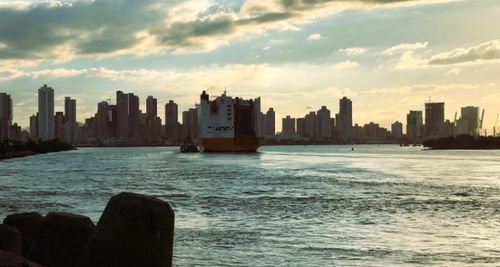
For those born in Paranaguá, port activity has been part of the landscape and routine from an early age. This was the case with Rafael Machado, TCP's warehouse manager. He grew up watching ships arrive and trains cross Paranaguá, fueling the dream of one day working at the Port. "This was always a childhood dream. Being part of a company like TCP is a source of pride and responsibility, knowing that it values its workers and generates jobs that mobilize the city, the state, and Brazil," he recounts.
For Machado, the Terminal's growth is felt in the daily life of the city. "More operations mean more jobs; higher volume means more money circulates in the local economy, creating opportunities and generating investments in training and social projects. When the Port grows, the city grows with it," he affirms.
According to Felipe de França, TCP's human resources manager, this is a structural movement for the company. "We invest in training local professionals through young apprentice programs, internships, and technical training. Many employees started in entry-level positions and today hold leadership roles. It is proof that it is possible to grow professionally without leaving Paranaguá," he says.
Commitment to the city also includes over 20 socio-environmental projects underway in Paranaguá Bay and on the islands in the Terminal's area of influence, among them the Troca Solidária (Solidary Exchange) program, which celebrates 11 years, initiatives for the preservation of caiçara culture (traditional coastal communities), and the most recent, the Leme Paranaguá Project. "May we grow together, proud of our history and looking towards a prosperous future," Machado summarizes as he celebrates the city's anniversary.