• 3 min de lectura
• 3 min de lectura
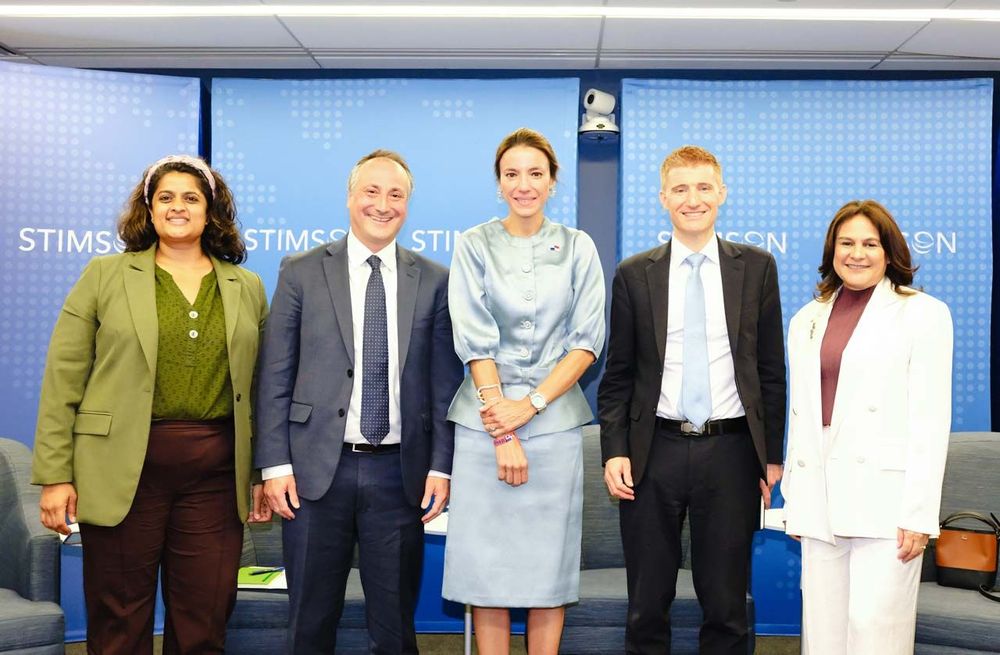
Panama Canal Deputy Administrator, Ilya Espino de Marotta, concluded a series of engagements in Washington, D.C., where she met with public policy leaders, academics, business representatives, members of the international affairs community, and media to discuss the Panama Canal's role in global trade, sustainability, and supply chain resilience.
"The Panama Canal remains committed to serving global trade with reliability, transparency, and innovation," Espino de Marotta stated at the Council on Foreign Relations (CFR), where she participated in a dialogue focused on the strategic importance of the Panama Canal for international trade and hemispheric connectivity. She highlighted the Canal's operational adaptability and ongoing investments to ensure long-term water sustainability and infrastructure reliability.
"As international trade continues to evolve, collaboration among governments, industry, and research institutions is essential to strengthen resilient and sustainable supply chains," she explained.
In addition to her visit to the CFR, Espino de Marotta also participated in discussions at the Stimson Center headquarters and the University Club of Washington, where she addressed current challenges facing global maritime trade, including climate variability, infrastructure resilience, decarbonization, and the Panama Canal's long-term sustainability strategy.
At the Stimson Center, Espino de Marotta analyzed the intersection of climate resilience, maritime logistics, and global economic security, and highlighted the Panama Canal's efforts to develop sustainable solutions that support both international shipping and the country's water resources. She shared insights into the Canal's historical commitment to reliability, especially given current climate variability, and how the institution's Vision 2035 will contribute to that commitment.
"Panama is one of the five rainiest countries on the planet. Therefore, for us, storing that water is key. The creation of a new reservoir will help us store that abundance of water so that, when there is scarcity, it guarantees the operation of the Canal and the supply of drinking water," she noted.
The Río Indio Lake project is a social development initiative that seeks to ensure water provision for the Canal's operation in a context of climate change and for the water system that supplies more than half of the national population.
In the evening, Espino de Marotta addressed members of the diplomatic, academic, and business communities during a dinner event at the University Club of Washington, where she reflected on the Canal's transformation over the last century and the institution's ongoing modernization initiatives.
Throughout the visit, Espino de Marotta reaffirmed the Panama Canal Authority's commitment to maintaining open dialogue with international stakeholders, transparency, and promoting initiatives that contribute to a more sustainable and, overall, more efficient global maritime industry.