• 2 min de lectura
• 2 min de lectura
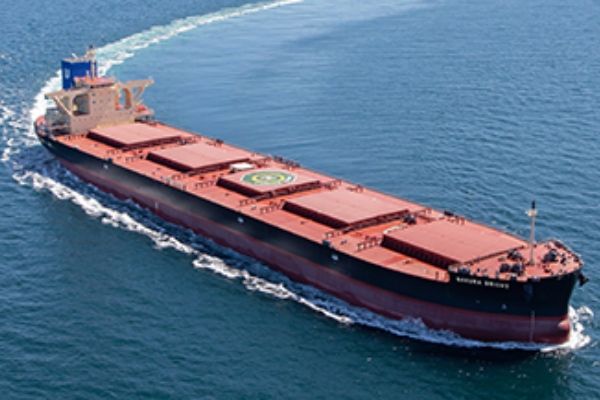
NS United Kaiun Kaisha and Kawasaki Heavy Industries launched a joint demonstration with the aim of improving and optimizing the safety of mooring management by installing Kawasaki's Mooring Line Tension Monitoring System on the bulk carrier Sakura Bright (DWT: 99,623 metric tons), operated by NSU.
The system allows remote monitoring of the tension of mooring lines (ropes) used to secure a vessel to a dock, even from locations far from the mooring winch.
The format contributes to improving safety at the berthing site and operational efficiency. If excessive tension is applied to a mooring line due to sudden changes in weather or sea conditions and the line breaks, the resulting recoil force can be extremely strong, potentially leading to a serious and life-threatening accident if it hits crew members or nearby workers.
Furthermore, since mooring line tension continuously changes due to tides, wind, and cargo operations, crew members must patrol the ship's deck every one or two hours, regardless of whether it is day or night and the weather conditions, to visually and audibly check the status of the mooring lines. Consequently, mooring line management places a significant burden on crew members.
In collaboration with domestic shipping companies, Kawasaki conducted demonstration tests on coastal vessels operating on domestic routes in Japan to verify the system's basic performance and commercialized it in 2024.
Through this joint demonstration, the companies aim to evaluate the system's effectiveness on ocean-going vessels as well and move towards its practical application. In particular, many Australian ports frequented by vessels operated by NSU are characterized by significant fluctuations in mooring line tension due to tidal currents and changes in draft.
Therefore, the demonstration will focus on converting mooring line tension management, which previously relied on crew experience, into data, and verifying whether it can be accurately managed and operated, with the goal of practical implementation.
Through these initiatives, NSU and Kawasaki seek to achieve safer maritime operations and reduce crew workload, thus contributing to a more attractive and sustainable development of the maritime industry.
Source: portalportuario