• 2 min de lectura
• 2 min de lectura
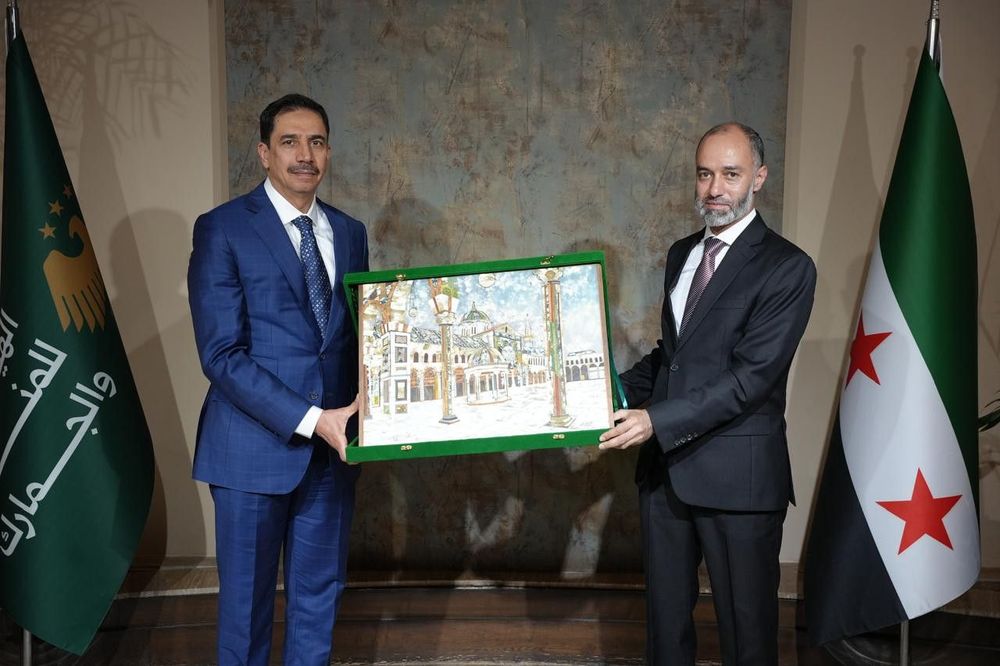
Essa Kazim, Chairman of DP World, met with Qutaiba Ahmed Badawi, in charge of the Syrian General Authority for Borders and Customs (GABC), to discuss the latest developments in the Tartus Port project.
The meeting, held in Damascus, the Syrian capital, explored opportunities to improve infrastructure and logistical efficiency, aiming to ensure that Tartus Port is well-equipped to handle the anticipated increase in trade and cargo volume. These efforts seek to consolidate Tartus's position as a key regional gateway connecting trade routes from Southern Europe, the Middle East, and North Africa.
DP World's plans to develop Tartus Port are part of a 30-year concession agreement signed in July 2025 with the Syrian government. Under this agreement, DP World has committed to investing $800 million to modernize infrastructure, expand capacity, and introduce modern cargo handling systems and advanced digital systems.
DP World is leveraging its extensive capabilities to revitalize Syria's maritime sector and overall economy. By accelerating the development of Tartus Port, DP World aims to increase its operational efficiency and its capacity to handle various types of cargo, including general cargo, containers, breakbulk, and roll-on/roll-off (Ro-Ro) traffic, thereby expanding Syria's commercial potential.
Essa Kazim stated that "DP World is committed to significantly contributing to the development of Syria's maritime sector by modernizing Tartus Port, in accordance with the highest international operational standards. Our discussions focused on accelerating implementation, enhancing the port's role in boosting trade, and strengthening Syria's trade links with regional markets."
"The redevelopment of Tartus Port is considered a strategic step to re-establish key trade corridors and stimulate economic activity. The modernization of port operations is expected to improve efficiency, facilitate trade flows, and support Syria's reconstruction efforts," Kazim added.
Located on Syria's Mediterranean coast, Tartus is the country's second-largest port and a key maritime gateway for trade routes crossing Europe, the Levant, and North Africa.