• 3 min de lectura
• 3 min de lectura
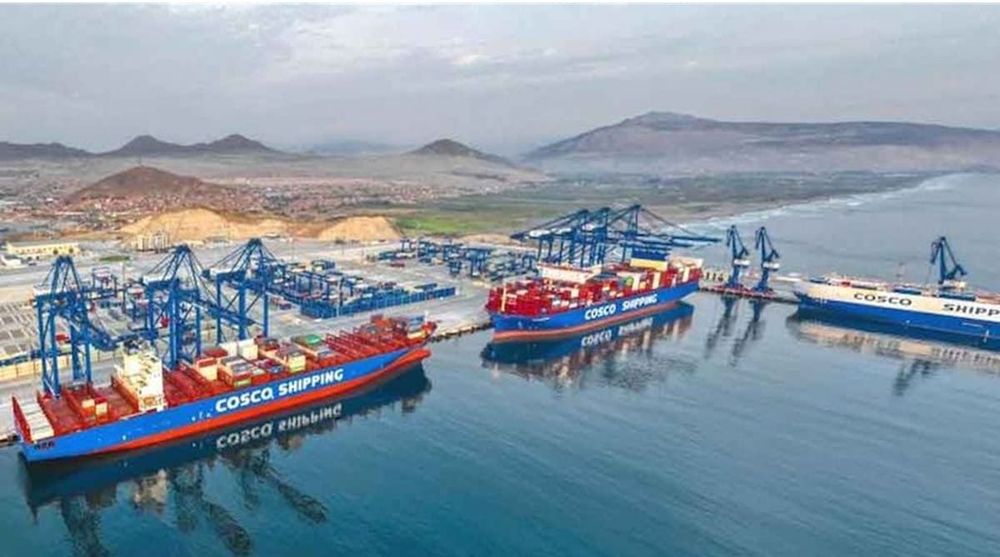
Ositrán's lawyer, Víctor García Toma, warned that Cosco Shipping's refusal to submit to state oversight jeopardizes national sovereignty. The jurist considered that, although the port terminal is privately owned, the services it provides are for "public use"; therefore, exempting the company from control and fee collection would set a dangerous precedent for the country.
The Supervisory Agency for Investment in Public Use Transport Infrastructure (Ositrán) maintains its stance in its legal battle to guarantee its supervisory power over the Chancay megaport.
In this regard, Víctor García Toma, lawyer for the regulatory entity and former president of the Constitutional Court, supported the arguments of the recent appeal filed before the Judiciary and questioned the attitude of the company managing the terminal.
The new approach of the state's defense not only focuses on regulations but also on the institutional message projected by the Asian corporation's refusal to be supervised. García Toma asserted that the true core of the matter is the systematic rejection of any form of state interference or control.
The central conflict lies in the position of Cosco Shipping Ports, a private corporation structured with 60% Chinese state capital. The company maintains that, by not operating under a concession model and having purely private ownership, it is not obliged to submit to Ositrán's regulations or to pay supervision fees.
In response, García Toma clarified that the Peruvian legal framework does not exempt the company. As he explained, although it is respected and recognized that the port's ownership is private, the use, purpose, and activities to be developed in the port complex are for "public use." This characteristic grants direct competence to Ositrán, backed by Law 26917, to intervene and protect users' rights.
To demonstrate that the company's position lacks support within the country, the lawyer mentioned the case of the Pucallpa terminal. This port operates with identical characteristics—mixed capital with foreign participation, private ownership, and public use—and, nevertheless, is subject to state oversight without this representing a violation of business freedom. If Cosco Shipping achieves its goal, the port of Chancay would be the only port facility in Peru free from this state supervision.
The legal dispute is currently on appeal, after Judge Juan Carlos Núñez Matos issued an initial ruling favorable to Cosco Shipping, arguing an alleged violation of the right to property and free enterprise.
García Toma described the resolution as "curious" and highly questionable, pointing out that the magistrate declared inapplicable administrative acts of Ositrán that were never issued or executed.
Furthermore, the former president of the Constitutional Court revealed that the alleged "threat" denounced by the Asian corporation to initiate the amparo process was merely a formal letter sent by Ositrán, inviting them to an institutional "coordination meeting."
The lawyer warned that yielding to this demand from the port company would mean a 40-year setback in the country's institutional consolidation and would affect one of the pillars of the social market economy.
This constitutional model, he concluded, defends private investment and free competition but inevitably requires the presence of regulatory bodies to guarantee national sovereignty and the common good in the provision of public services.