• 4 min de lectura
• 4 min de lectura
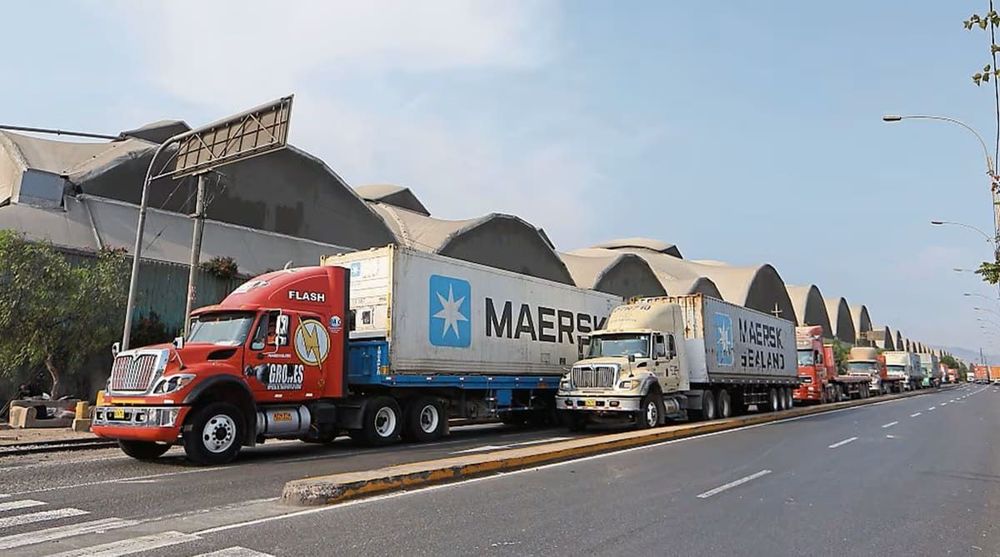
This Tuesday, the Government issued Urgency Decree 006-2026, which establishes a subsidy for urban passenger service transporters in Lima and Callao, following the announced strike they had planned days earlier due to the rise in diesel prices.
According to the regulation, the subsidy will be calculated based on the mileage covered during the provision of the aforementioned service for 60 days, at a rate of S/0.50 for buses, S/0.40 for minibuses, and S/0.30 for microbuses.
This direct economic benefit, whose application will be handled by the Urban Transportation Authority for Lima and Callao (ATU), will involve an outlay of S/44.1 million, charged to the Contingency Reserve resources of the Ministry of Economy and Finance (MEF).
This is the second subsidy applied within a week, after the Executive approved on May 28 to disburse S/33.8 million to compensate cargo and passenger transporters in the interior of the country for increases in diesel prices.
On that occasion, the Government issued D.U.004-2026, which provided for a compensation of S/4.00 per gallon of diesel consumed, also for two months from the day after that norm was issued.
However, according to Martín Ojeda, director and spokesperson for the International Chamber of Transport Industry (CIT), which represents various transport guilds, the subsidies approved for the interior of the country are meager and do not solve the problem of high costs for transport.
He indicated that with this monetary benefit, a transporter was recovering only 16% of the additional fuel costs they were incurring after the price increases recorded since last March, following the crisis in the supply of vehicular natural gas (VNG).
Before that crisis, he recalled that the ex-plant price of diesel, the most consumed fuel by transporters, was S/12.60 per gallon, and that it later increased to S/20 to S/21 per gallon, but at gas stations it reached S/25 per gallon in the capital, and was even more expensive in the provinces.
However, this Tuesday, Petroperú published a new list of ex-plant (wholesale) prices, which for vehicular Diesel B5 S-50, set it at S/17.61 per gallon, a reduction of -3.73% compared to the S/18.30 it showed on May 29.
Furthermore, between May 5 and the current date, the state oil company has applied a diesel reduction of approximately S/2.47 per gallon, having gone from S/20.09 to S/17.61 per gallon, among other derivatives that also saw downward price adjustments, such as gasohol, industrial petroleum, and LPG.
The contraction of this and other fuels is in line with the downward trend in the price of WTI crude oil, used as a reference for Peru, which today stands at US$90.13 per barrel, given a possible framework agreement in the Middle East between the United States and Iran.
Nevertheless, at the retail level, in metropolitan Lima, the average price of vehicular diesel still remains around S/23.89 per gallon, meaning it is S/6.27 higher than Petroperú's wholesale level, while its maximum price is around S/27 per gallon.
For his part, in a dialogue with Gestión, Javier Marchese, president of the Union of Truck Cargo Transporters (UNT-Peru), stated that while the subsidy somewhat alleviates the transporters' overhead costs, it does not necessarily solve the sector's problems.
The leader indicated that there are other measures pending implementation by the Executive, addressing the demands of the sector's guilds, such as the refund of toll collections by road concessionaires, to which the Government had committed.
Likewise, Marchese mentioned that they are asking the Executive to finish implementing and applying the Land Transport Observatory (OTT), which allows for determining cost structures and reference freight values, to establish a technical tariff floor.
The creation of the OTT was agreed upon between cargo transport guilds and the Ministry of Transport and Communications (MTC), being created by law in 2023, and its regulation approved in November 2025.
However, the leader stated that so far this mechanism, which would allow regulating freight rates in the sector and solving the problem that they often operate below their costs and work at a loss, is not functioning.
Furthermore, Marchese indicated that they are holding conversations with the parties that are candidates for the second round, Fuerza Popular and Juntos por el Perú, to make them aware of the transport sector's problems and to hear their proposed solutions.